
Seyðisfjörður to Mývatn – Fire, Steam and Dancing Lights
Day 6 – Iceland’s Most Extraordinary Day
If someone asked me to choose just one day that captured everything Iceland is about, this would probably be it.
The previous five days had taken us through waterfalls, glaciers, black sand beaches and dramatic fjords.
Today, the landscape changed again.
The ice disappeared.
The earth began to breathe.
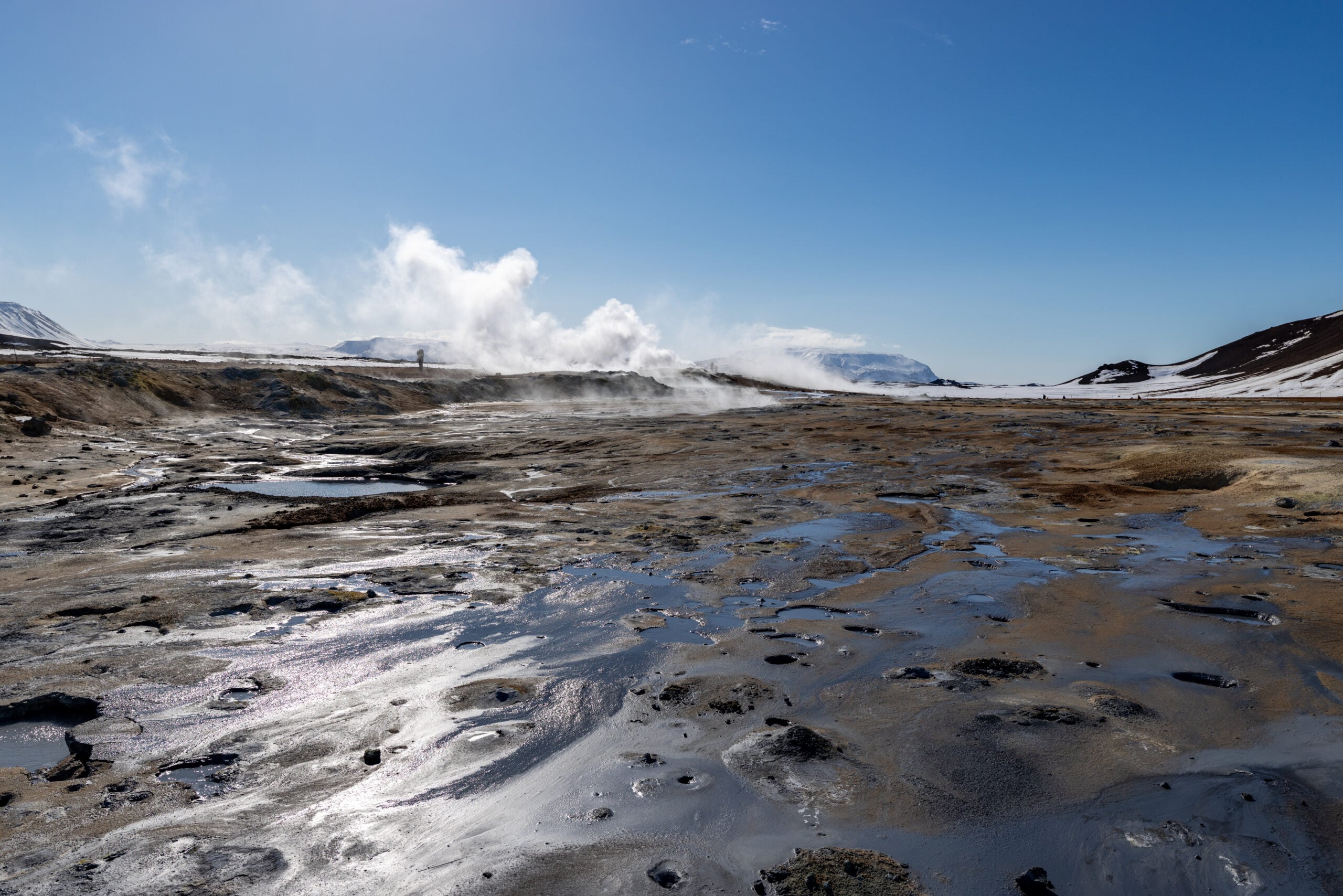
Steam rose from hillsides.
Mud boiled beneath our feet.
Sulphur drifted through the air.
It felt less like driving across a country and more like travelling across another planet.
And somehow, by the end of the night, Iceland still had one final surprise waiting for us.
Farewell to the Eastfjords
We woke to another crisp morning in Seyðisfjörður.
The harbour was perfectly still, colourful timber houses reflected in the calm water as though painted onto glass.
Leaving wasn’t easy.
It’s one of those towns that quietly works its way into your heart.
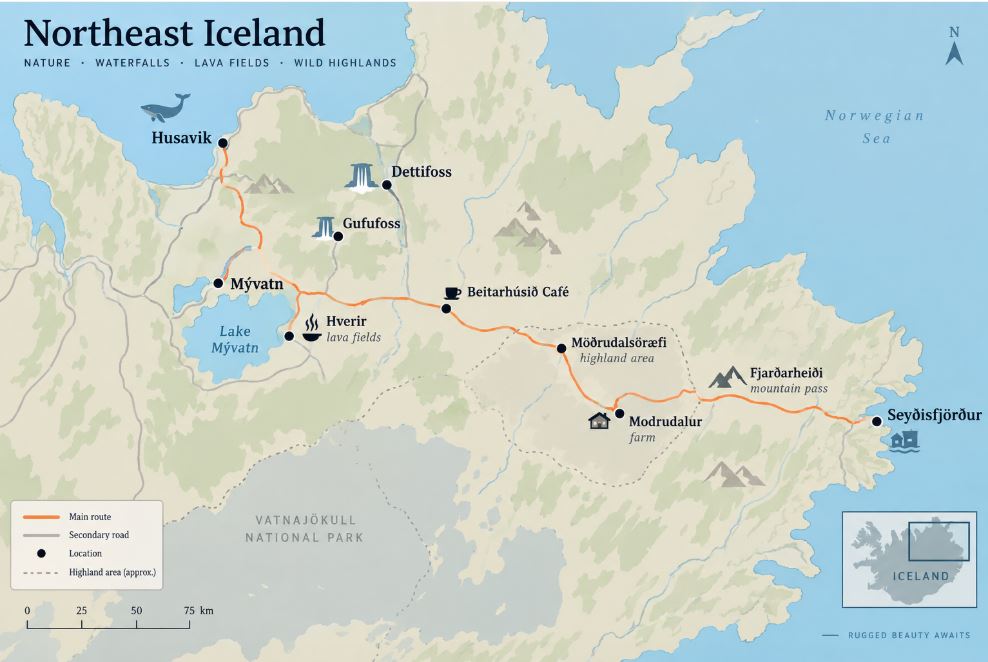
As we climbed back over the Fjarðarheiði mountain pass, the scenery looked completely different from the previous afternoon.
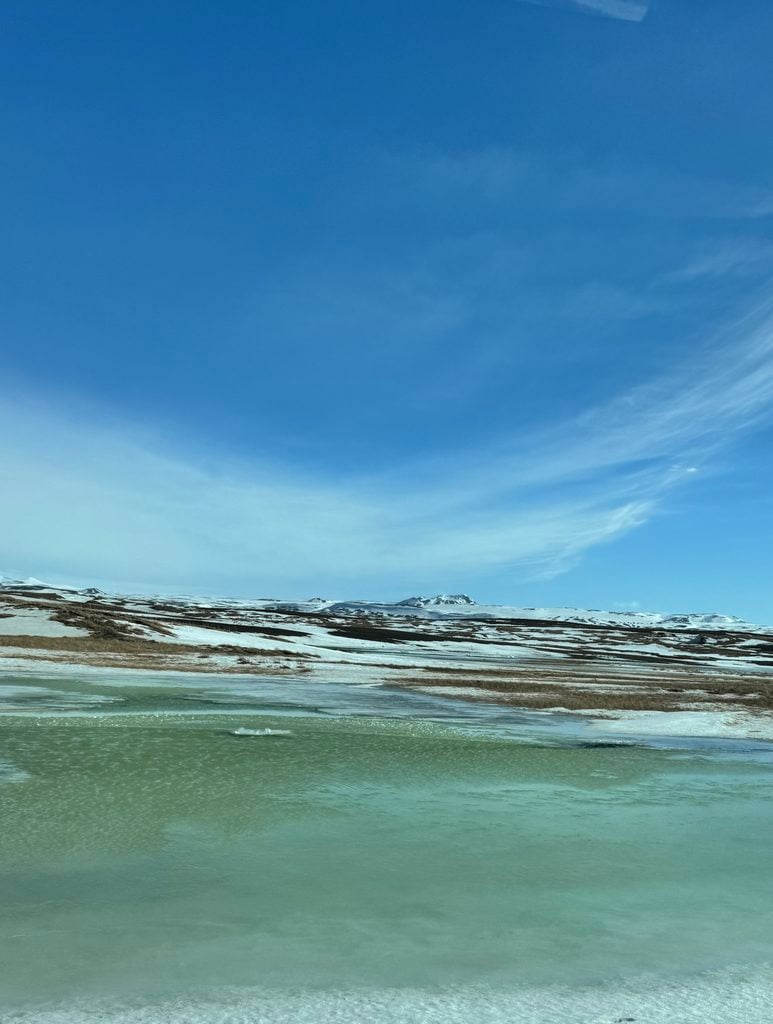
Fresh snow still lined the road, but the morning light transformed everything.
Frozen lakes sparkled beneath the sun – they appeared to be sprinkled with diamonds.
The mountains looked almost silver.
It was difficult to believe this was late April.
Another Missed Waterfall
One stop had remained firmly on our wish list.
Gufufoss.
We’d hoped the road closure from the previous day might have reopened overnight.
Unfortunately, it hadn’t.
Once again, Iceland gently reminded us that not every plan works out.
By now we’d stopped measuring our trip by what we missed.
Instead, we appreciated everything we were fortunate enough to experience.
Besides, there was another lesson we’d learned.
There will always be a reason to come back.
Into Iceland’s Volcanic Heart
The further west we drove, the stranger the scenery became.
The forests disappeared.
The farms vanished.
Instead, vast volcanic plains stretched towards distant mountains, broken only by isolated farms and the occasional lonely petrol station.
This was Möðrudalsöræfi, one of Iceland’s highest inhabited areas.
The landscape was beautiful in a stark, minimalist sort of way.
Nothing felt wasted.
Nothing felt artificial.
There was simply space.
Endless space.
It was one of those drives where conversation naturally became quieter.
The scenery didn’t demand words.
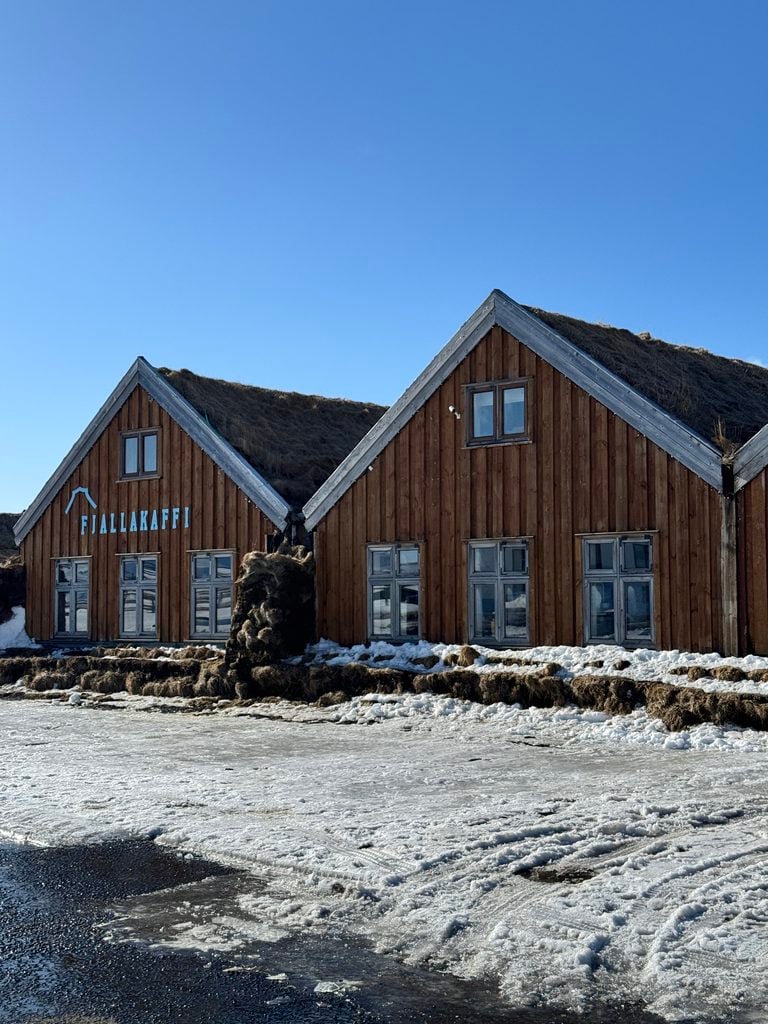
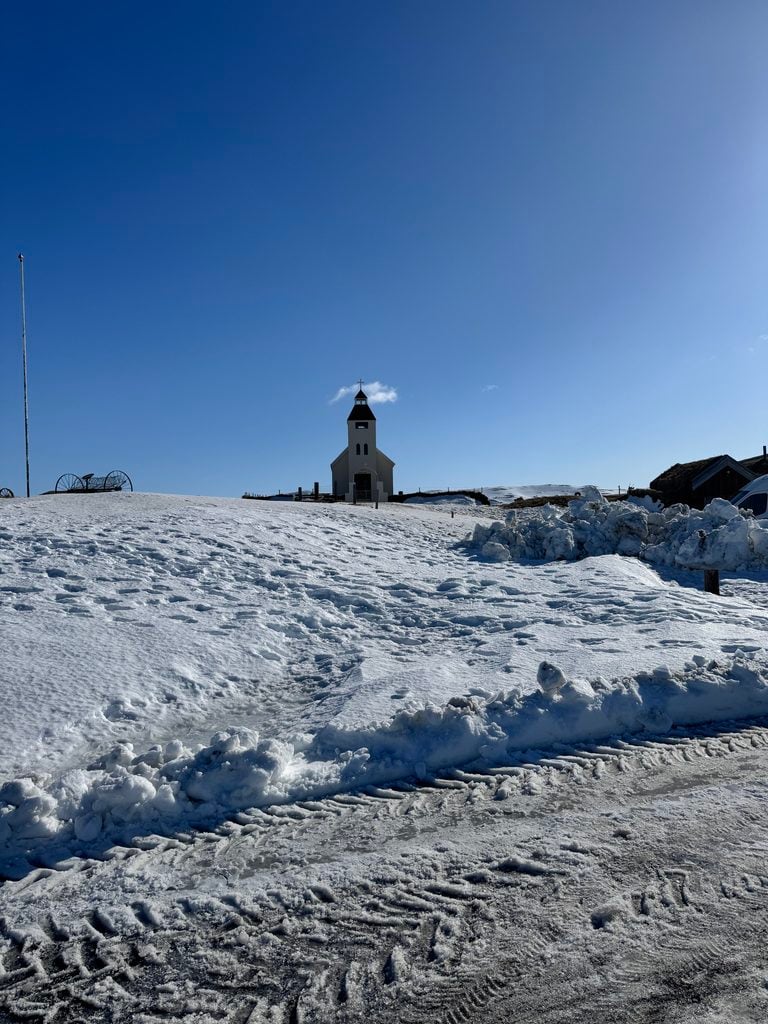
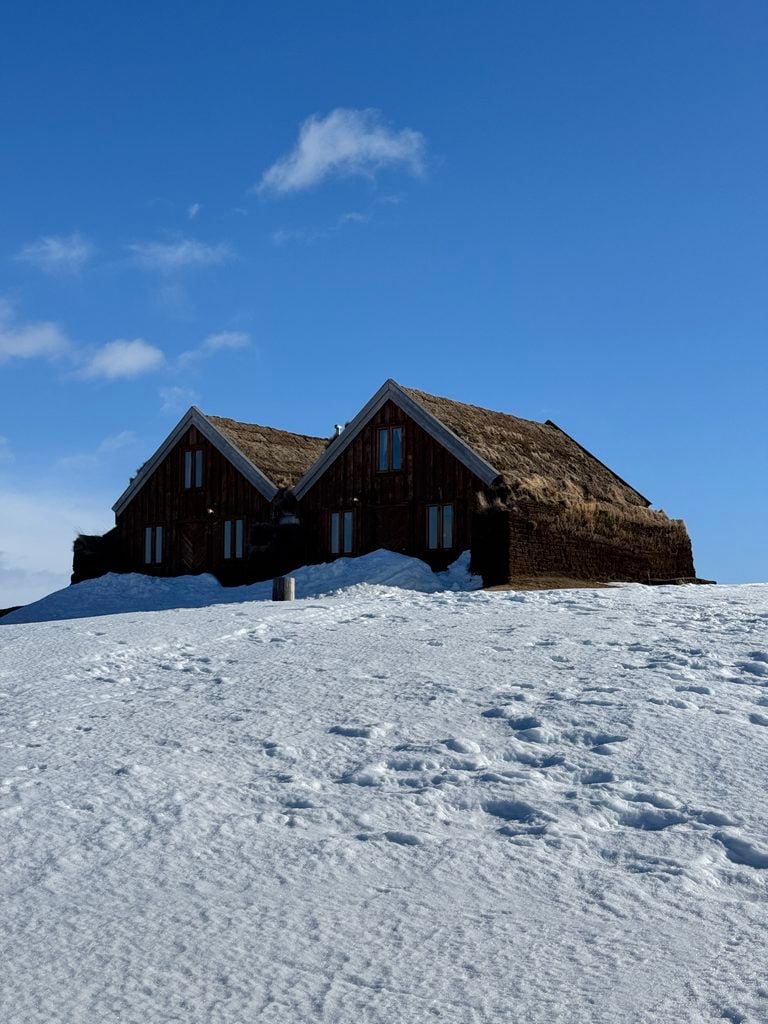
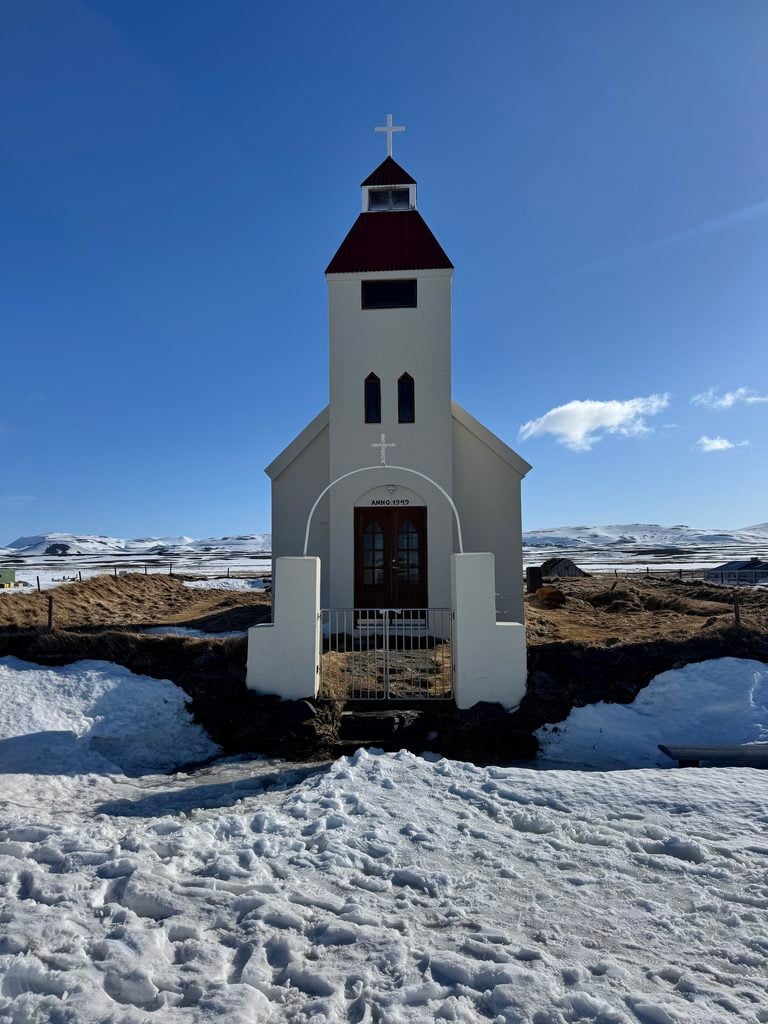
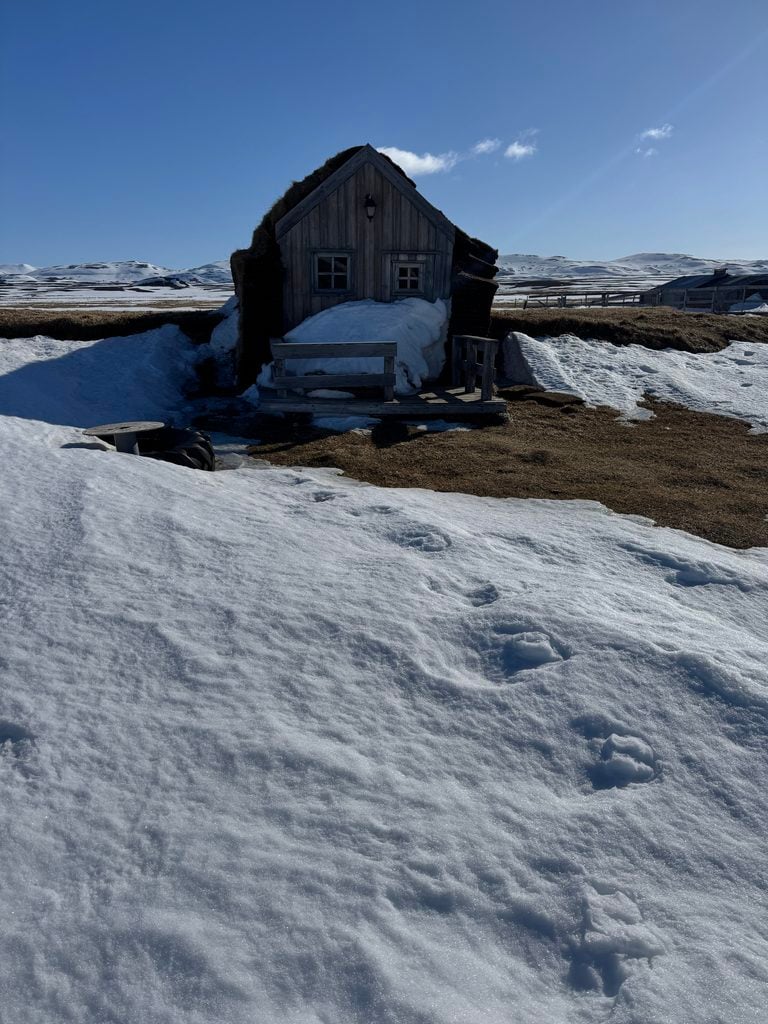
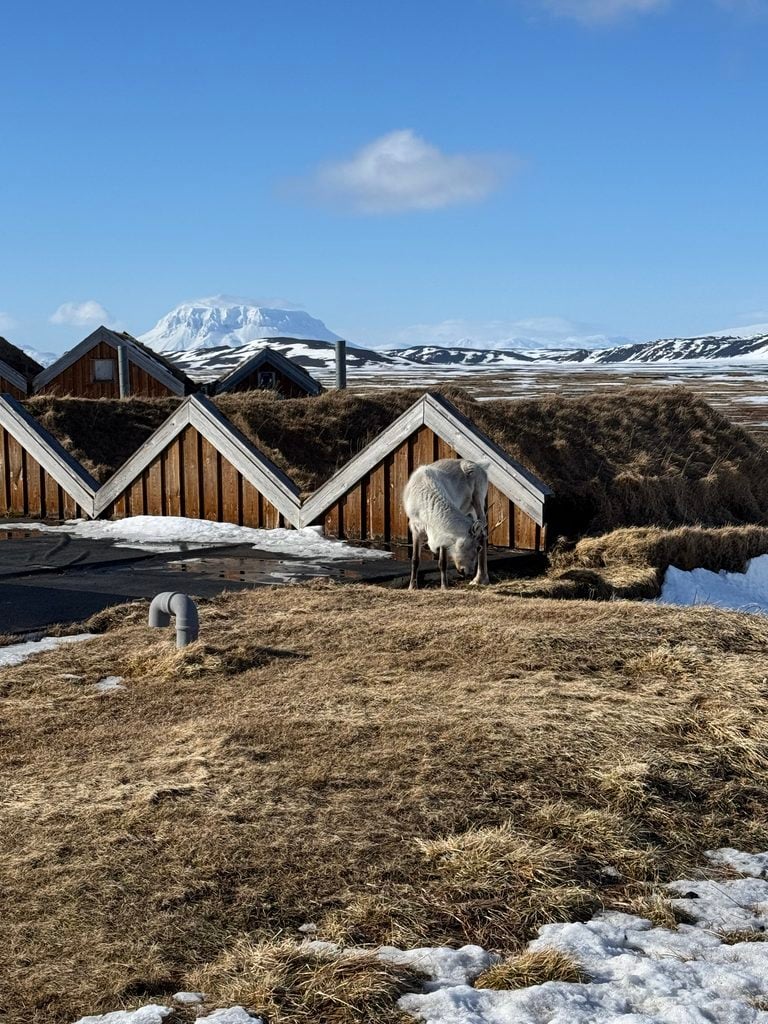
It was along this route we stopped at Beitarhúsið Café located in the remote historic settlement of Modrudalur in northwest Iceland. Just off the Ring Road, the café is about an 8-kilometre drive down Route 901 (a gravel detour loop that runs parallel to Route 1 – Ring Road).
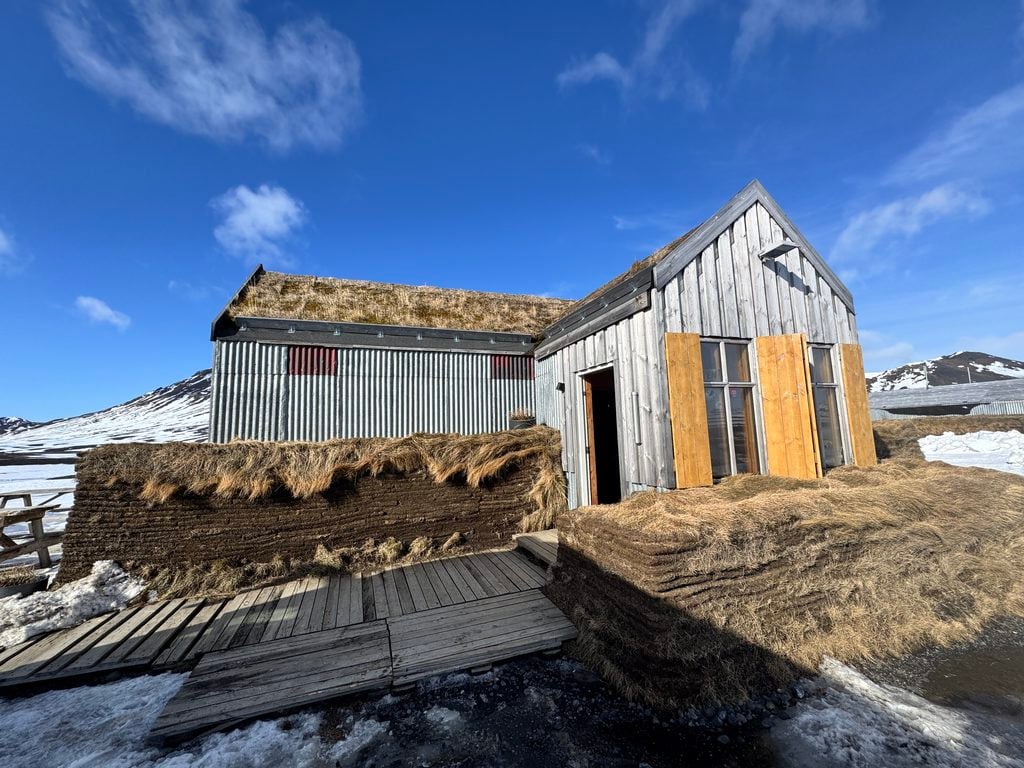
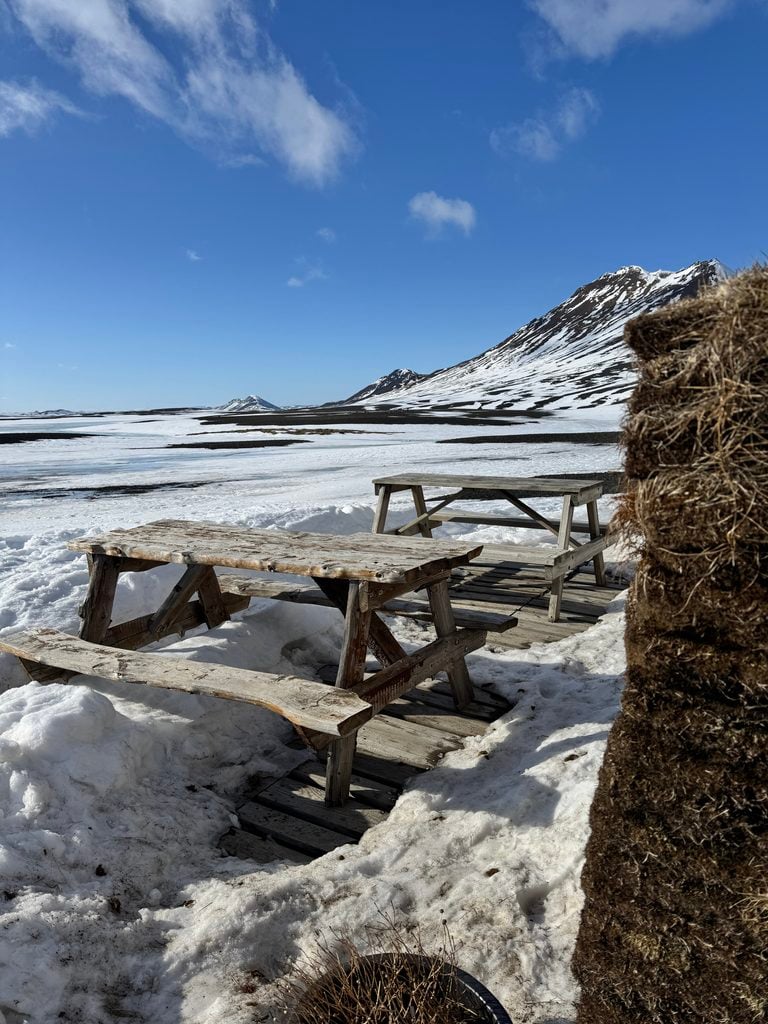
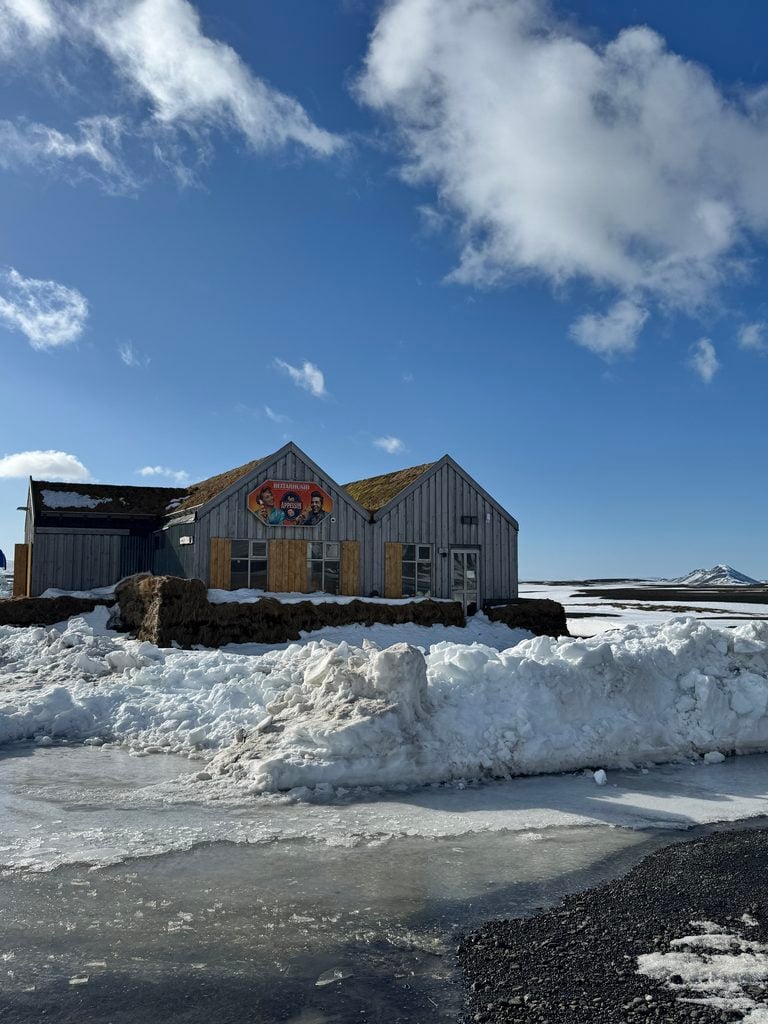
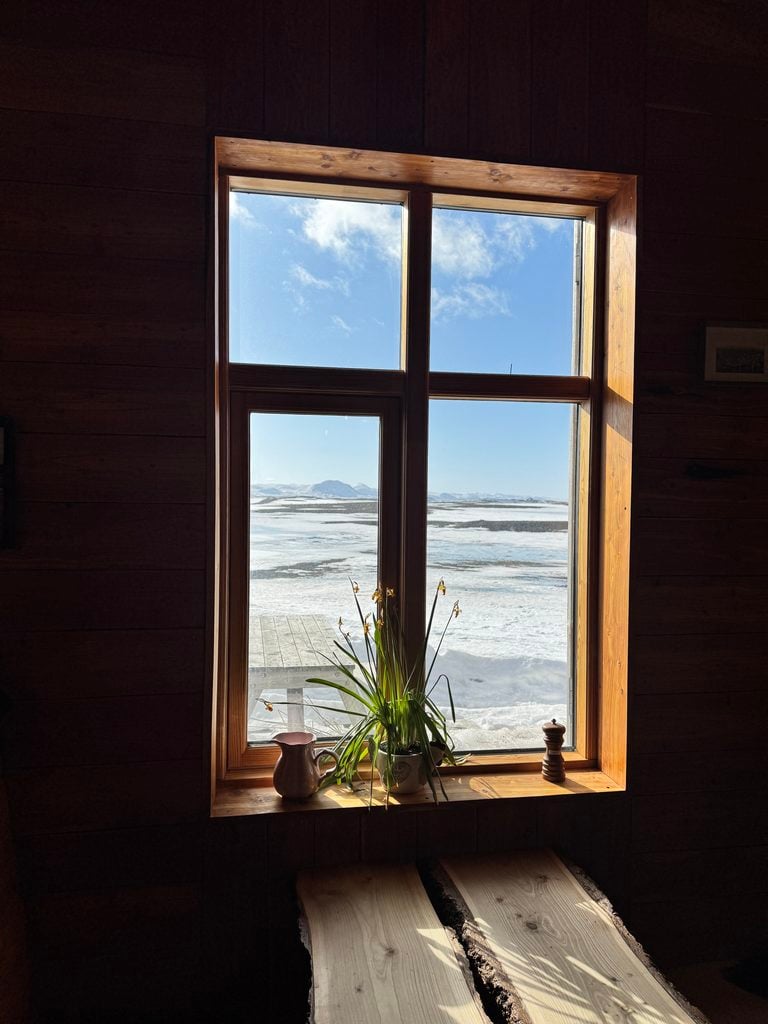
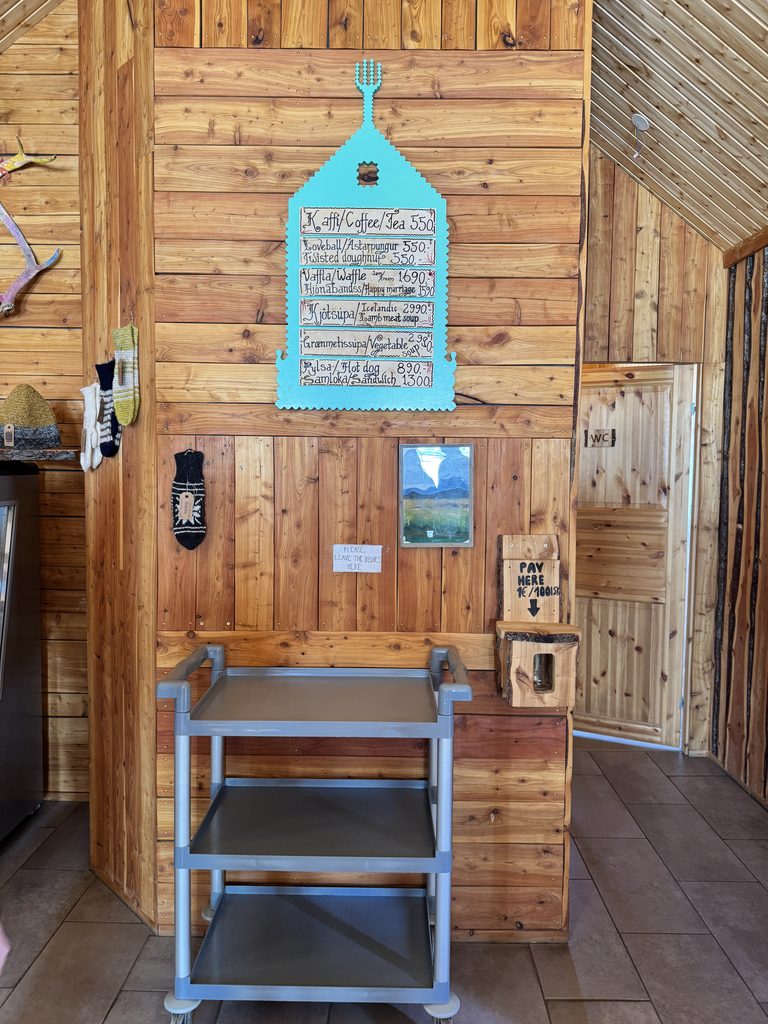
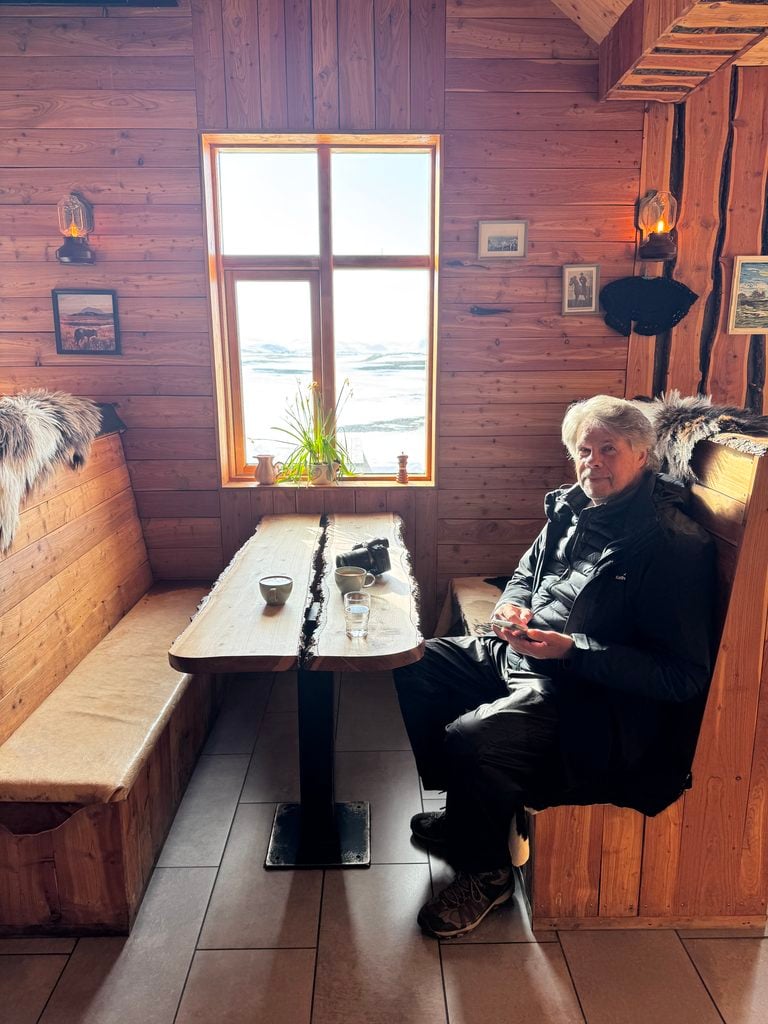
Images above: Beitarhúsið Café
Nearby is Modrudalur Farm. We hadn’t planned it – we simply came across it in our travels. How lucky were we.
Another Road Closure
Another destination we’d planned to visit was Dettifoss, Europe’s most powerful waterfall.
Unfortunately, Iceland wasn’t finished testing our flexibility.
Road access remained closed.
Both routes leading to the falls were inaccessible, making the decision for us.
Initially there was disappointment.
After all, Dettifoss regularly appears on every “must-see” Iceland itinerary.
Then we reminded ourselves of something we’d already learned.
You can’t see everything.
Not even in Iceland.
Instead of dwelling on what wasn’t possible, we continued towards the geothermal region surrounding Lake Mývatn.
It turned out to be exactly the right decision.
Hverir – Where the Earth Breathes
Nothing prepared us for Hverir.
Even before opening the car door, we could smell it.
Sulphur.
The unmistakable scent of rotten eggs.
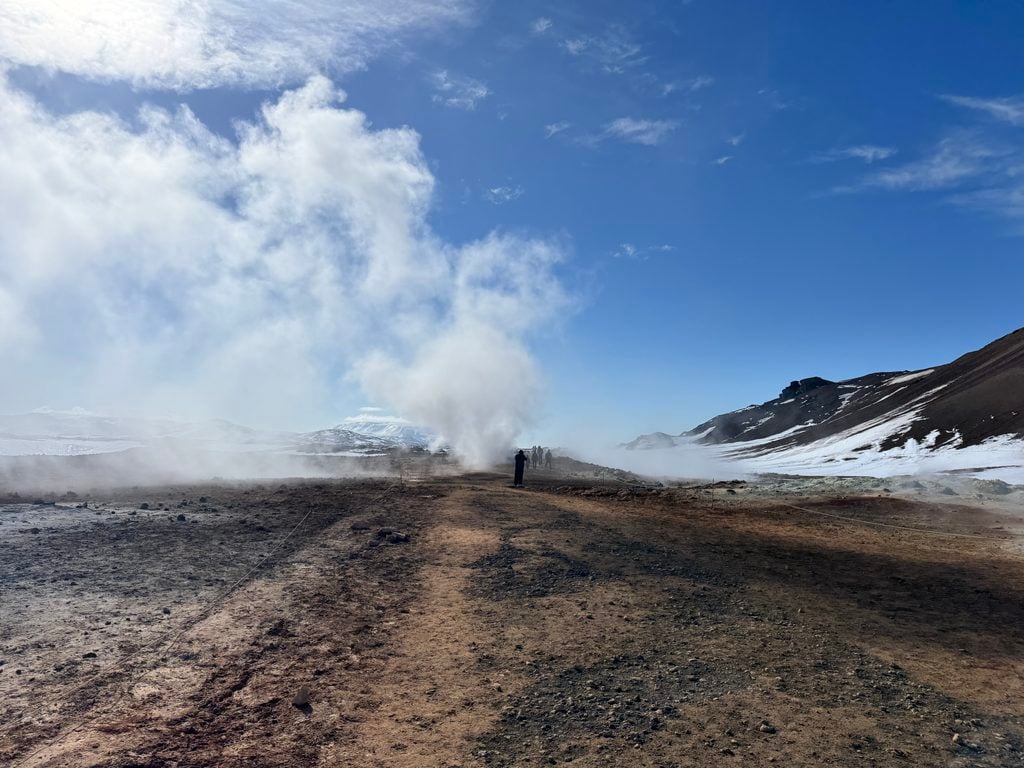
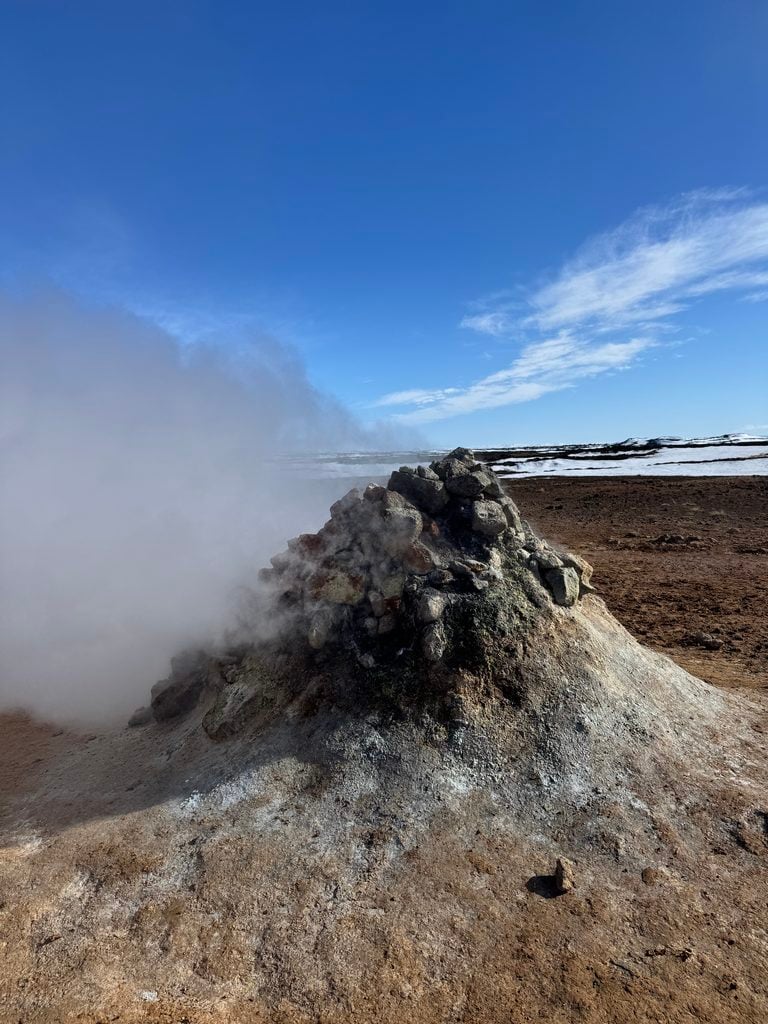
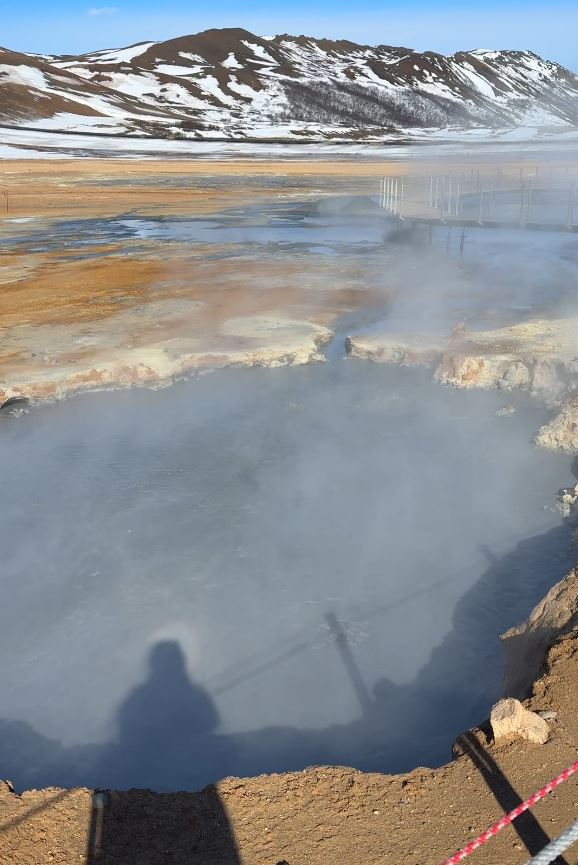
Then came the steam.
White plumes drifted skywards from cracks in the earth while pools of thick grey mud bubbled continuously beneath the surface.
Orange, yellow and rust-coloured minerals stained the ground in every direction.
There wasn’t a blade of grass.
Not a single tree.
It looked as though the earth had been turned inside out.
Walking along the marked paths felt surreal.
Every few metres another fumarole hissed loudly into the cold air.
Steam drifted across the trail before disappearing into the wind.
It was impossible not to stop every few minutes simply to absorb the scene.
This wasn’t beautiful in the traditional sense.
It was raw.
Powerful.
Alive.
For the first time, Iceland truly felt volcanic.
Grjótagjá – A Hidden Blue World
Just a few minutes away sat one of North Iceland’s hidden gems.
Grjótagjá.
From the outside it appears almost insignificant.
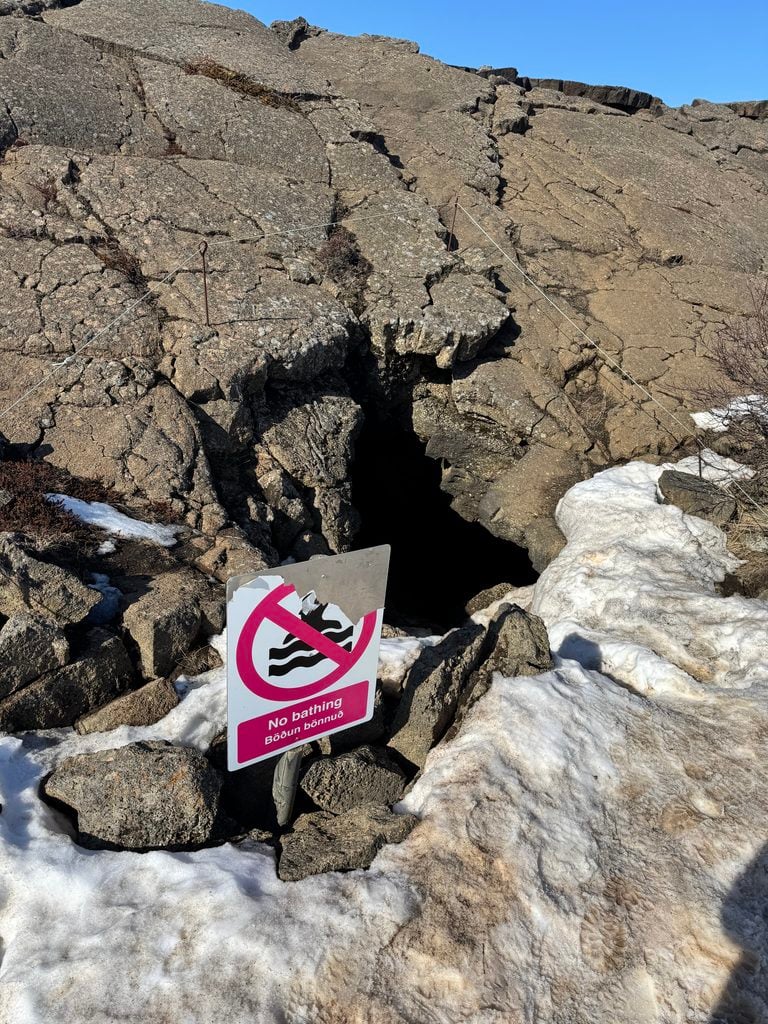
Inside lies a small lava cave containing crystal-clear geothermal water of an almost impossible shade of blue.
The cave became famous after appearing in Game of Thrones, although long before television crews arrived it had been a popular bathing spot for locals but bathing has been prohibited since the 1970s; you can venture inside and see if for free. However, I didn’t enjoy this experience; it felt claustrophobic and I feared slipping into the pool, which can get dangerously hot.
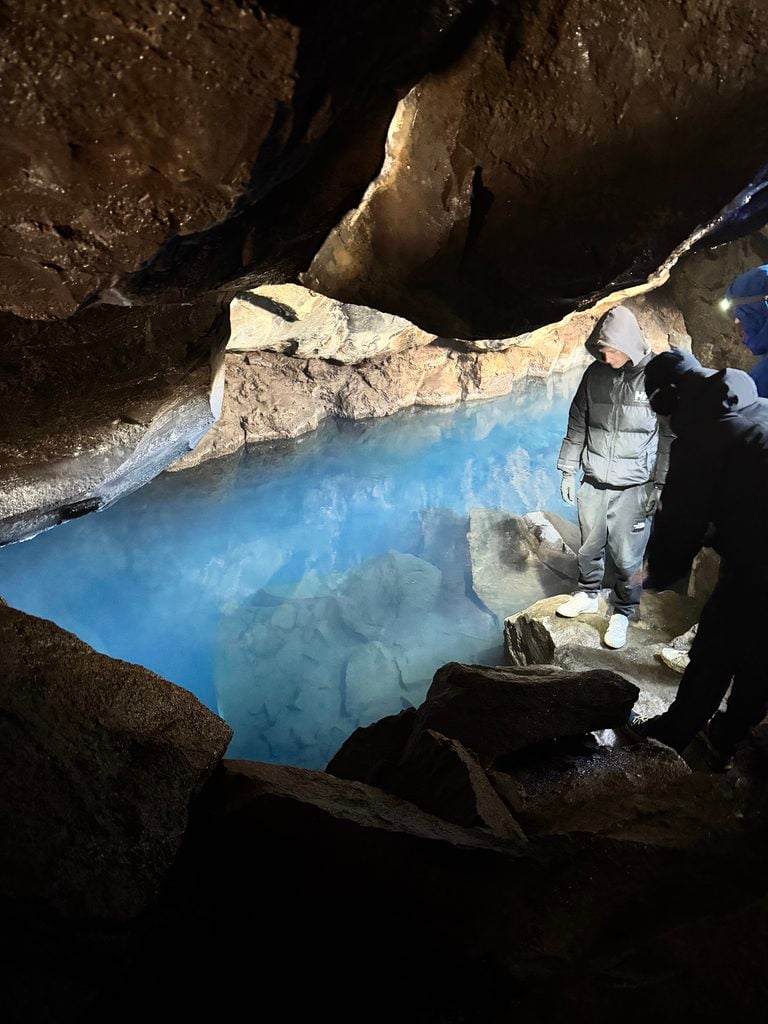
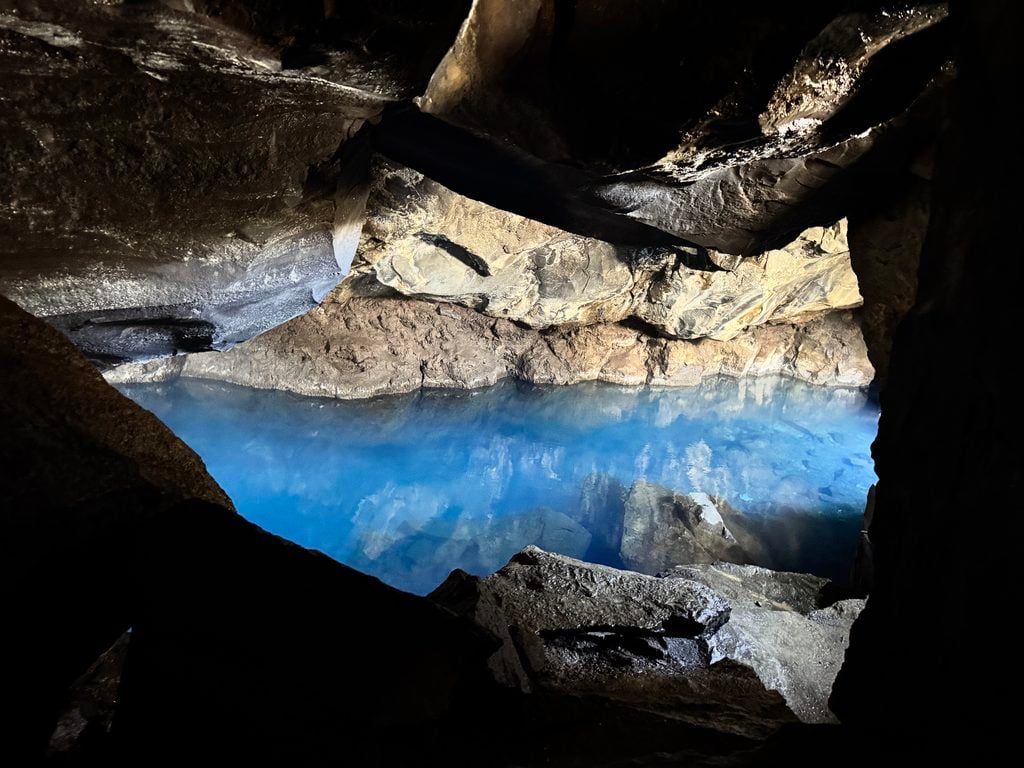
It was another reminder that Iceland constantly surprises you.
Even the smallest attractions possess something extraordinary.
Hverfjall – Knowing When to Say No
Nearby stood Hverfjall Crater.
Its enormous volcanic cone dominates the surrounding landscape.
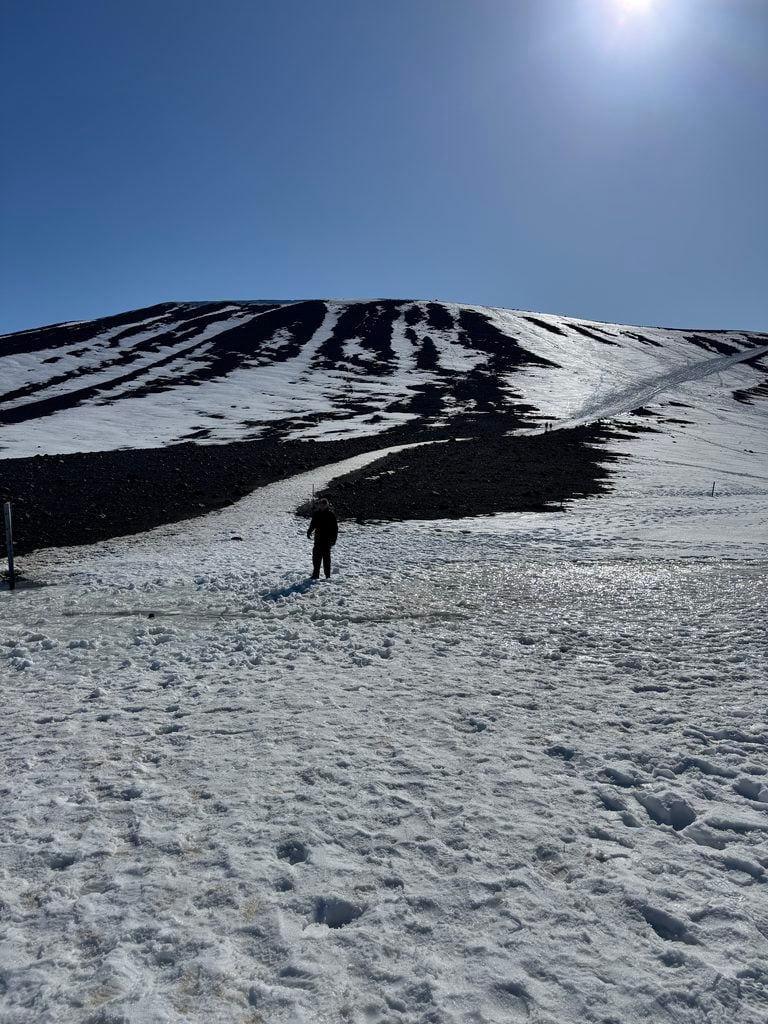
Many visitors climb to the rim for spectacular views across Lake Mývatn.
We seriously considered joining them.
Then we watched.
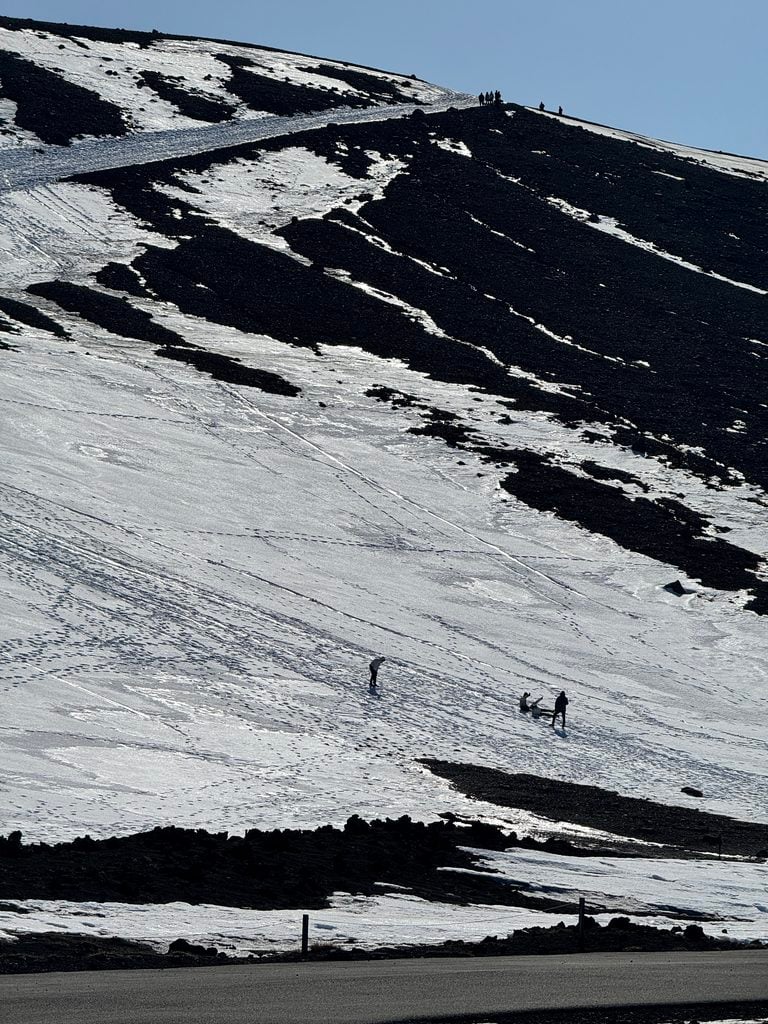
Recent weather had left the steep trail slippery.
Several hikers struggled for footing before sliding backwards down the loose volcanic ash.
One after another they abandoned their attempt.
Sometimes travel isn’t about proving you can reach every viewpoint.
Sometimes it’s about recognising when conditions aren’t right.
We admired the crater from below.
There will always be another opportunity.
A Eurovision Detour
After checking into our accommodation at Lake Mývatn, we made one final, completely unnecessary—but thoroughly enjoyable—detour.
Húsavík.
Most visitors know it as Iceland’s whale-watching capital.
We had a different reason.
We’re both fans of Eurovision Song Contest: The Story of Fire Saga.
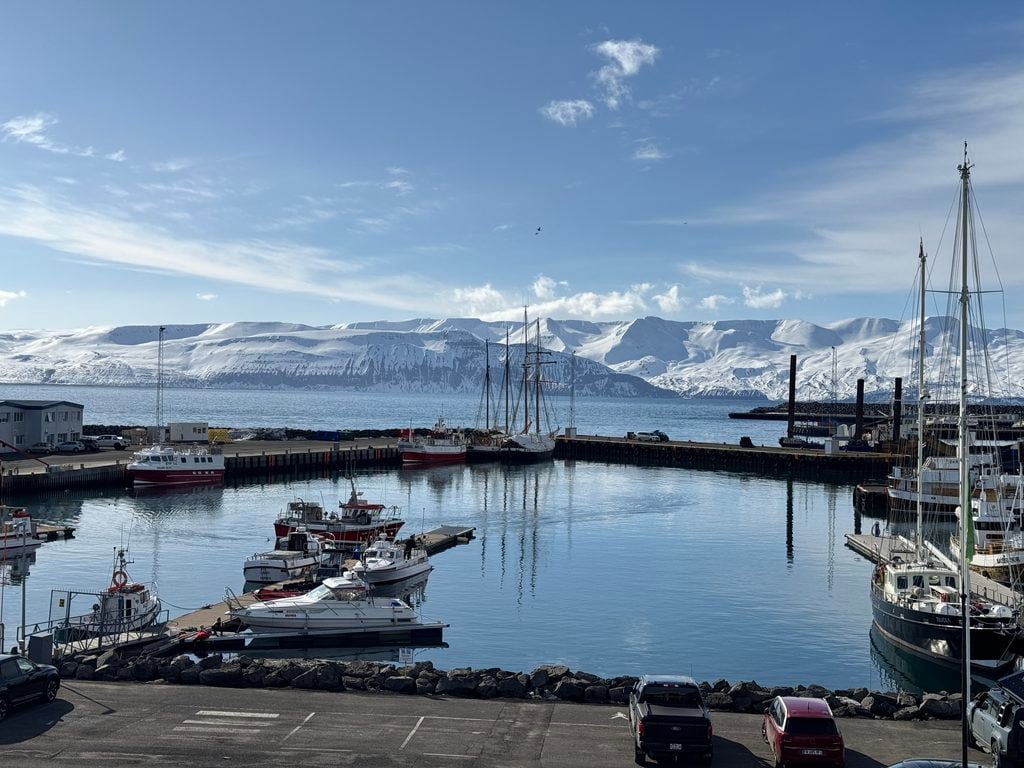
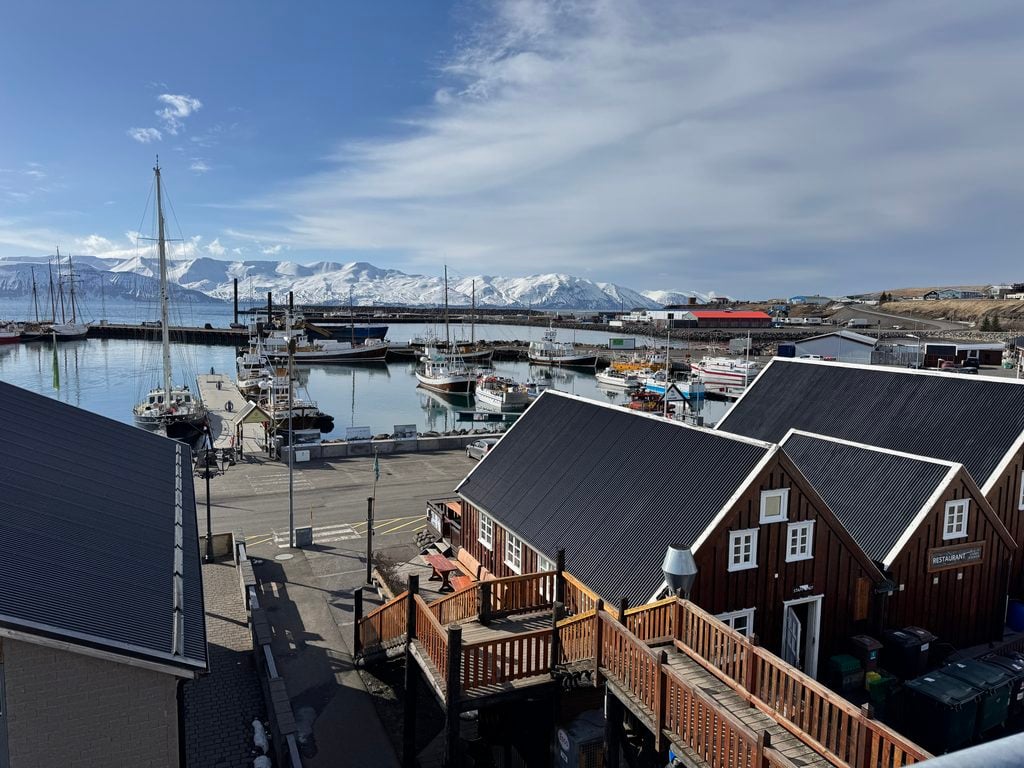
Much of the movie was filmed in Húsavík, so naturally we couldn’t resist visiting the locations featured throughout the film.
Walking around the harbour instantly brought scenes from the movie flooding back.
It was impossible not to smile.
Sometimes it’s fun being a tourist for entirely different reasons.
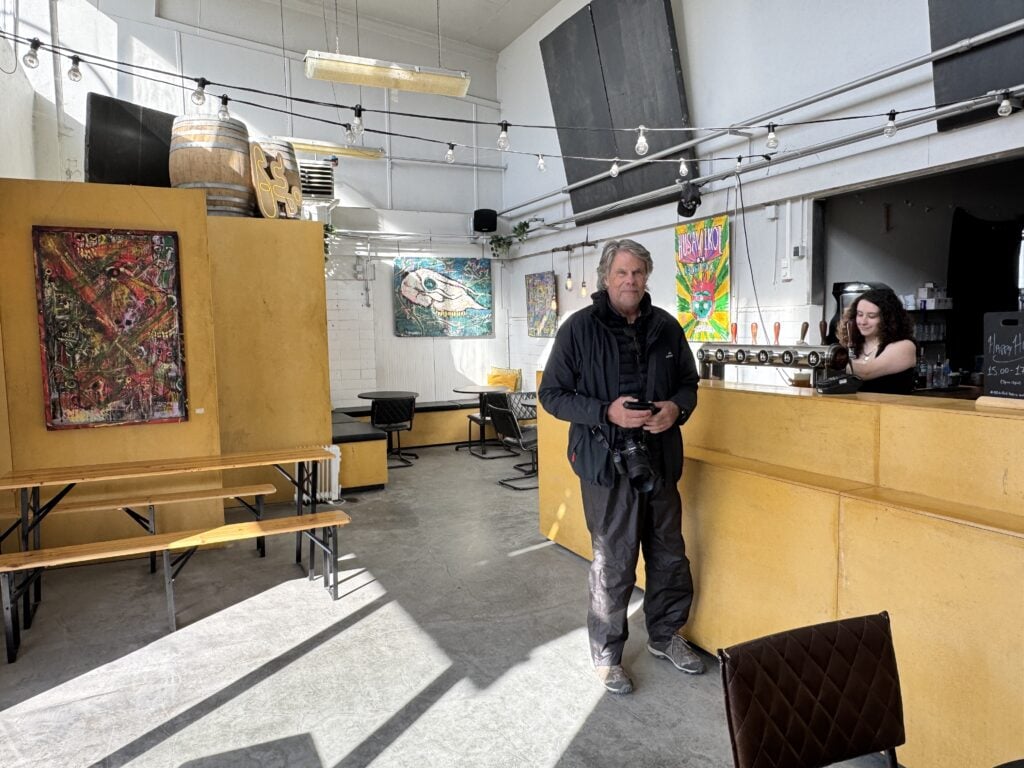
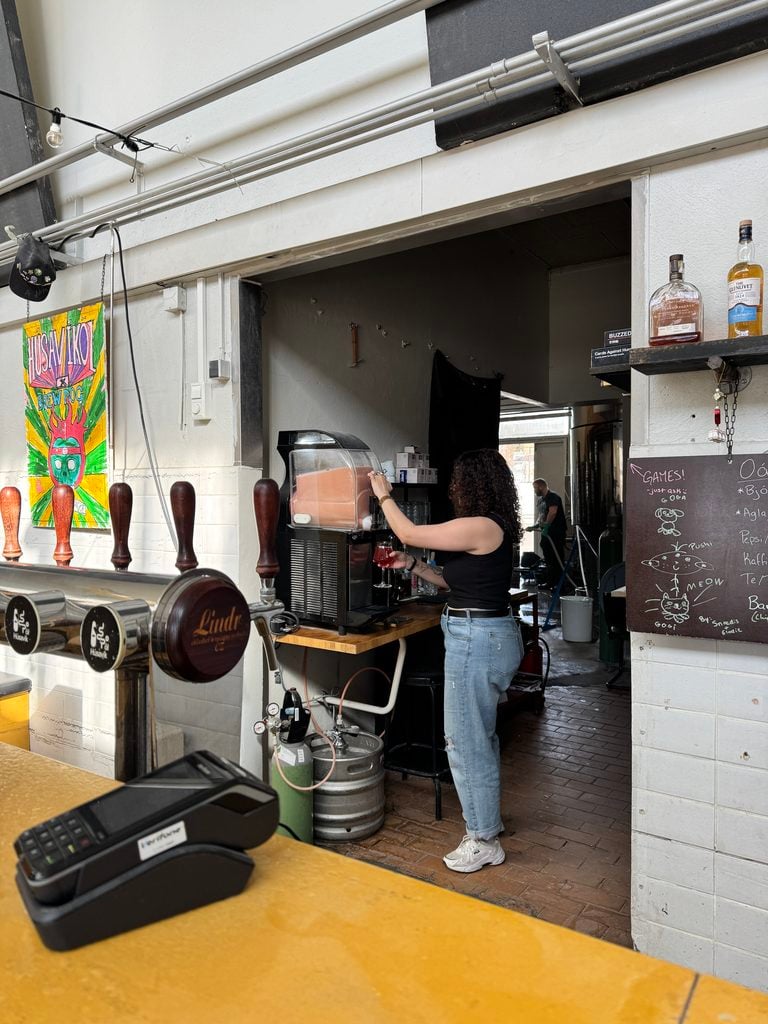
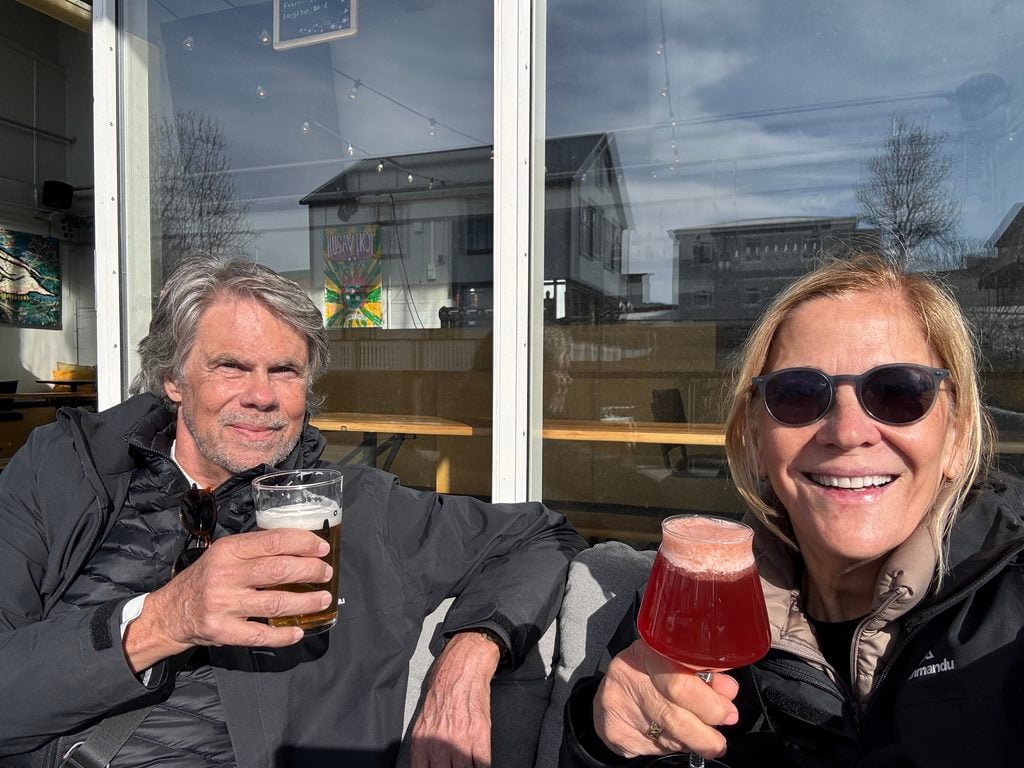
Even better, we stumbled across a small boutique brewery.
Sitting near the front door of Húsavík Öl, cold local beers in hand, warm sunshine on our faces, it was perfect.
It was one of those completely unplanned moments that often become one of the most memorable.
The Night We’d Been Waiting For
Back at Lake Mývatn, we settled in for the evening.
Around 11 o’clock, I looked outside.
“Is that…?”
We hurried outdoors.
Above us, faint ribbons of pale green stretched across the northern sky.
The Northern Lights.
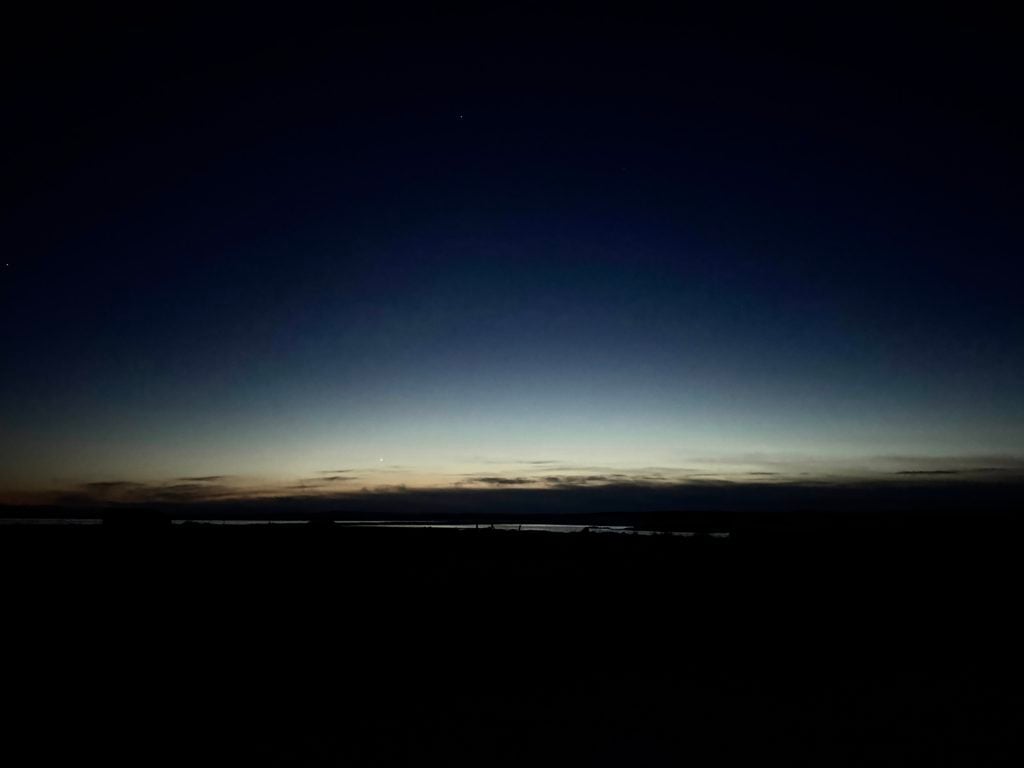
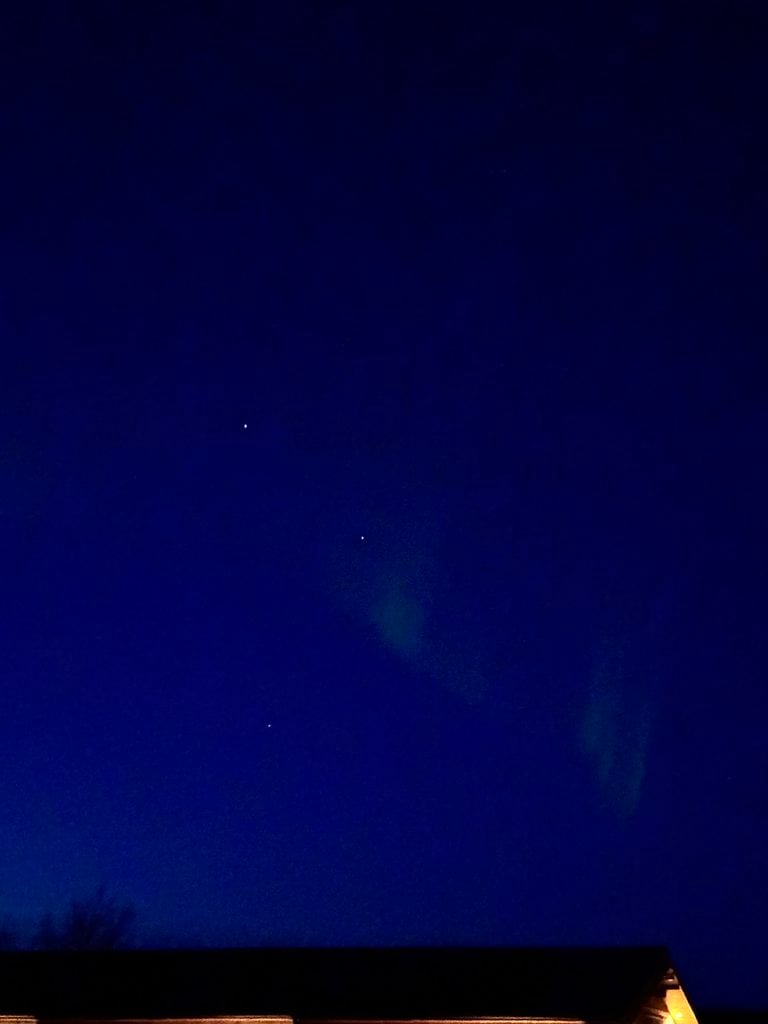
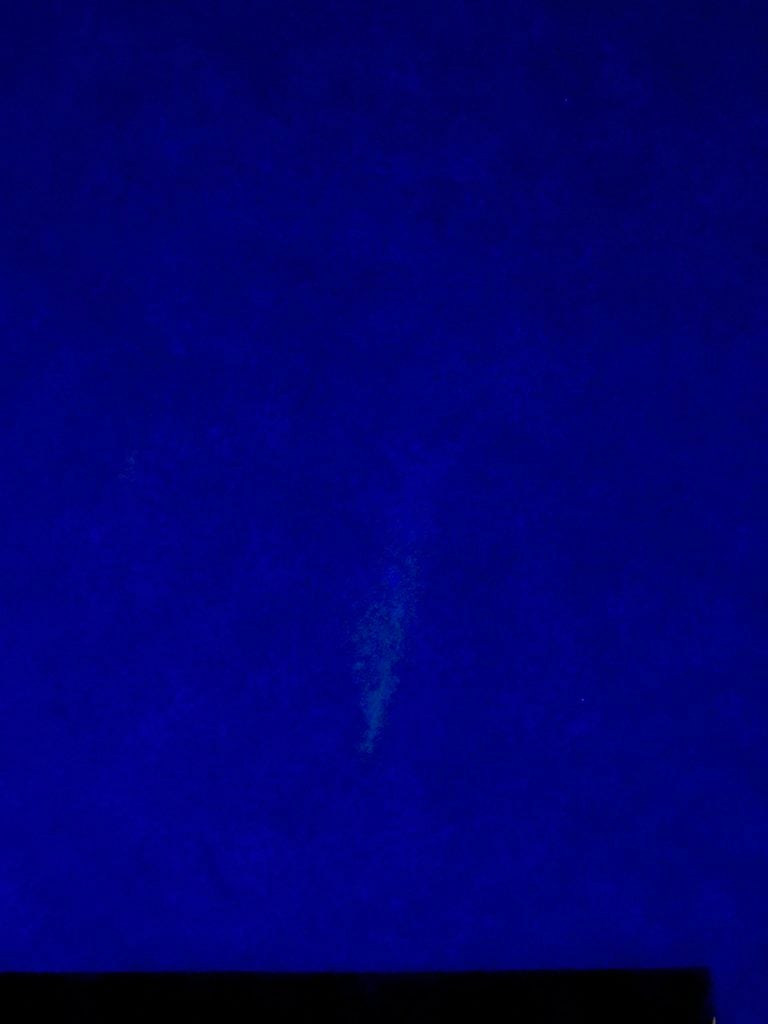
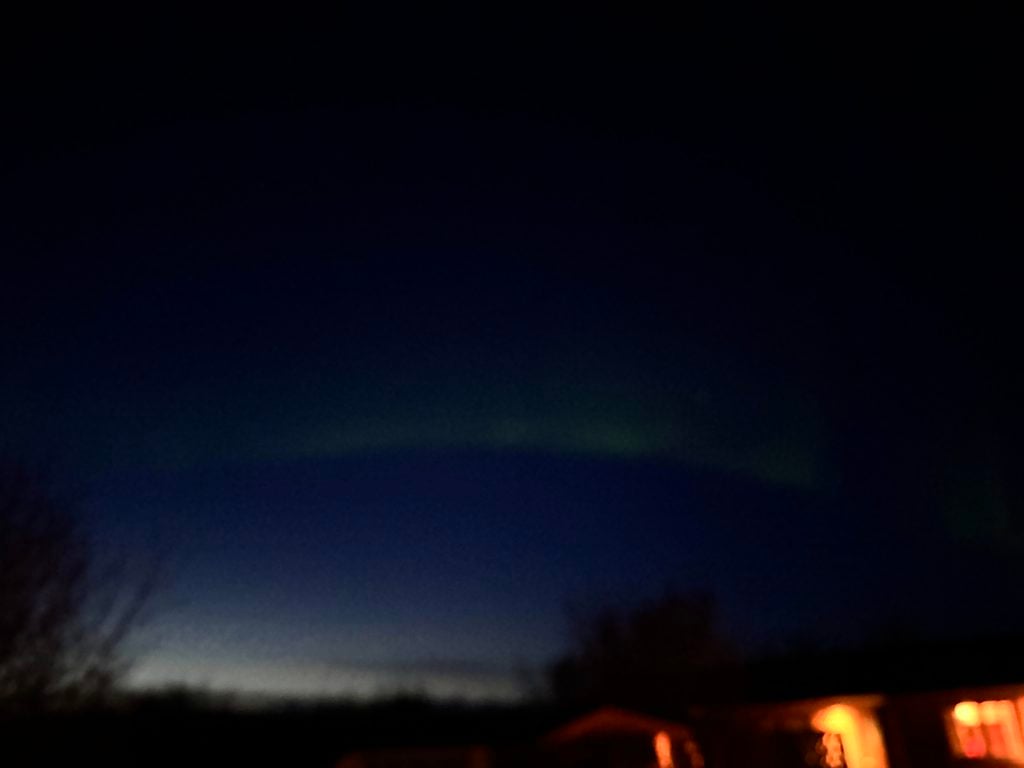
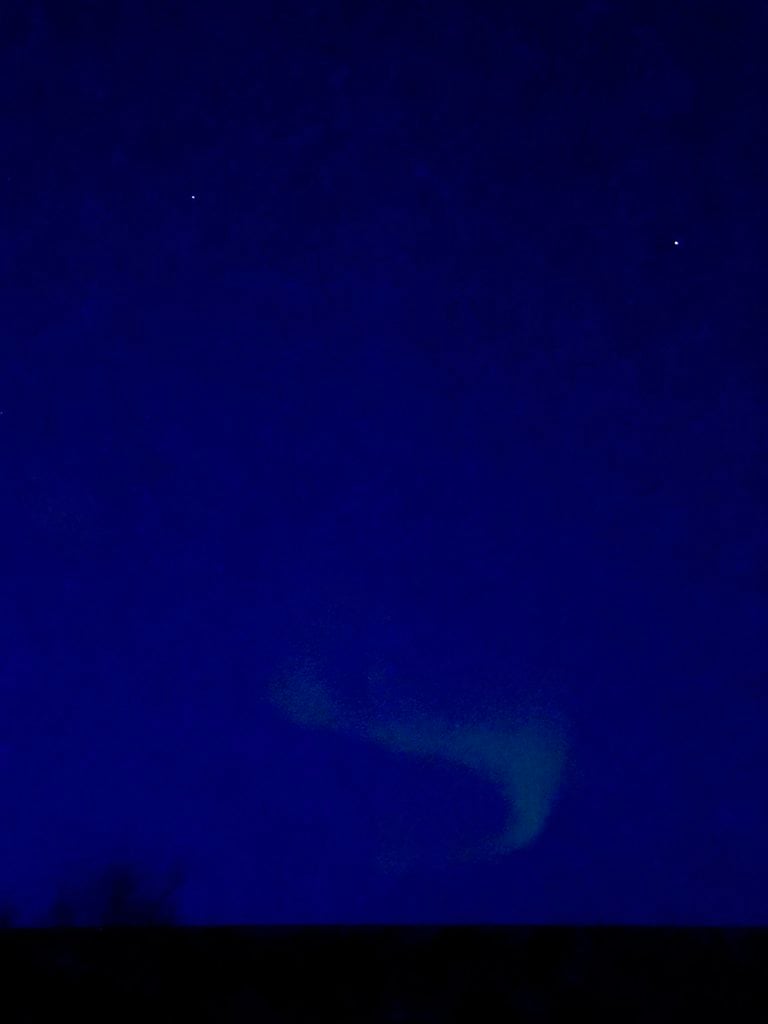
Not the dazzling display often seen in professional photographs.
Something quieter.
More subtle.
Almost ghost-like.
But unmistakably there.
For several minutes we simply stood in silence.
No one spoke.
We just watched.
After travelling halfway around the world, enduring changing weather, road closures and constantly rewritten plans, Iceland had rewarded our patience.
It wasn’t dramatic or overwhelming.
It was perfect. We hadn’t dared dream we would see them.
Highlights
Crossing the snowy Fjarðarheiði mountain pass once more.
Driving through the volcanic wilderness of Möðrudalsöræfi.
Exploring the surreal geothermal landscape at Hverir.
Discovering the brilliant blue waters inside Grjótagjá Lava Cave.
Seeing the enormous Hverfjall Crater.
Visiting Húsavík, made famous by Eurovision Song Contest: The Story of Fire Saga.
Enjoying local craft beer.
Witnessing our first Northern Lights.
Practical Travel Tips
Fuel up and buy supplies in Egilsstaðir before heading inland.
Check access to Dettifoss before leaving. Spring road closures are common, especially on the eastern approach.
Expect a strong sulphur smell at Hverir—it’s completely normal.
Stay on the marked paths in geothermal areas. The ground can be unstable and dangerously hot.
Don’t feel obliged to complete every hike if conditions are poor. We chose not to climb Hverfjall because the surface was very icy and slippery and we didn’t have the correct foot gear.
Even a faint Northern Lights display is unforgettable. Keep checking the sky after dark—you never know what might appear. Although we didn’t use them, there are apps to check.
Driving Route:
Seyðisfjörður → Egilsstaðir → Möðrudalsöræfi → Lake Mývatn → Hverir → Grjótagjá → Hverfjall → Húsavík → Lake Mývatn
Distance: Approximately 250 km
Driving Time (without stops): Around 3½–4 hours, with plenty of time needed for sightseeing.
Worth Knowing: Iceland Rewards Flexible Travellers
Road closures meant we missed Gufufoss and Dettifoss, but those disappointments faded quickly once we experienced the geothermal wonders of Mývatn and, later that evening, the Northern Lights. One of the biggest lessons of our trip was to stop measuring success by ticking attractions off a list. Some of our most memorable experiences were the ones we never expected.
Coming Next: Day 7 — Waterfalls, Turf Houses and Iceland’s Friendly Capital of the North
The volcanic landscapes gave way to fertile valleys as we left Lake Mývatn behind. Along the way we visited one of Iceland’s most beautiful waterfalls, explored a centuries-old turf farm, and arrived in Akureyri—a charming northern city that provided a welcome pause before one final drive across the country back to Reykjavík.
Disclaimer:
This blog post is based entirely on our own experiences during our trip to Iceland in April 2026. Everything we share reflects what we personally saw, did, learned and experienced during our holiday.
We have done our best to make sure the information is correct. However, things can change, including prices, road conditions, weather etc. If you are considering travelling to Iceland, we recommend you check current information with official Icelandic sources before making bookings.
Any opinions, recommendations and suggestions shared on Monty&Me are our own.

vicki@montyandme.com.au
Vicki Montague is a freelance writer with a predilection for travel, European fashion, architecture that oozes history and charm, and objects that tell a story. She and her partner John are empty nesters - their three adult children have left the comforts of home to carve out their own paths in life. Vicki’s professional background is in marketing and public relations.

Leave a Reply