
Reykjavik to Vik – Iceland in Full Force: Falls, Black Sands & Wild Horizons
The Day Iceland Finally Unveiled Itself
It was Day 3 Three of our nine-day Iceland adventure. This was the day we’d been waiting for.
After two days in Reykjavík—one spent recovering from long-haul flights and the next watching our carefully planned itinerary dissolve under storm clouds—we finally packed the car, checked the weather one more time and pointed the Dacia Duster east along Route 1.
Our Ring Road adventure had officially begun. Yes the weather was rainy and dismal but that wasn’t going to stop us. All roads were open. We were excited and we soon discovered the rain wasn’t set in.
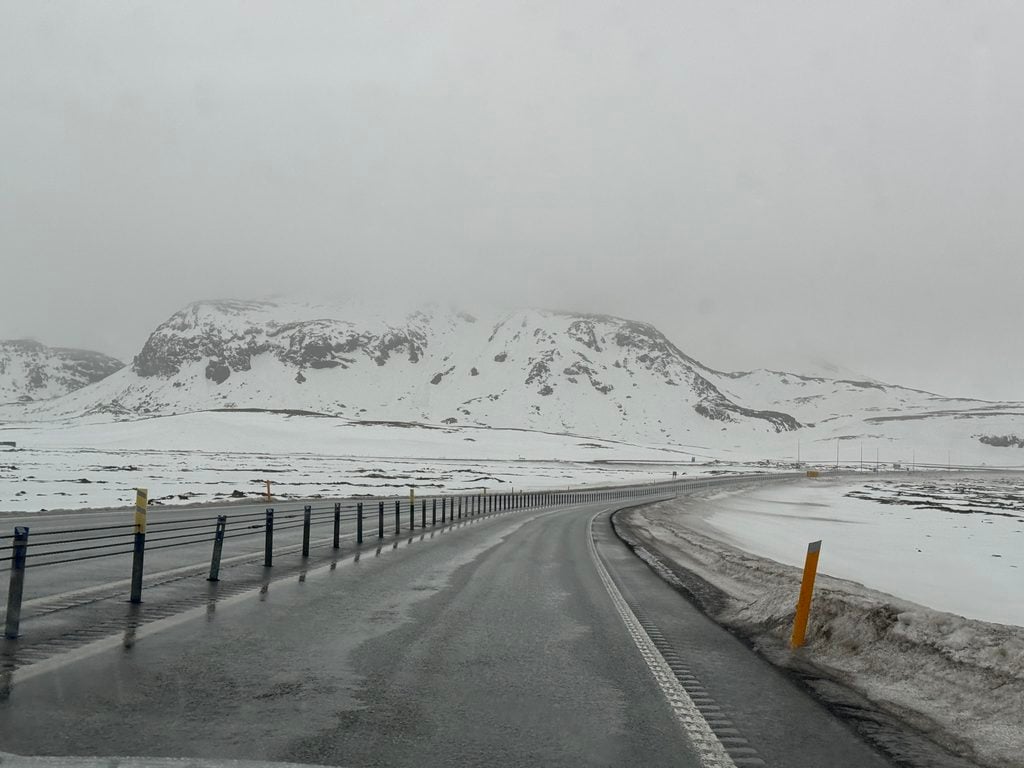
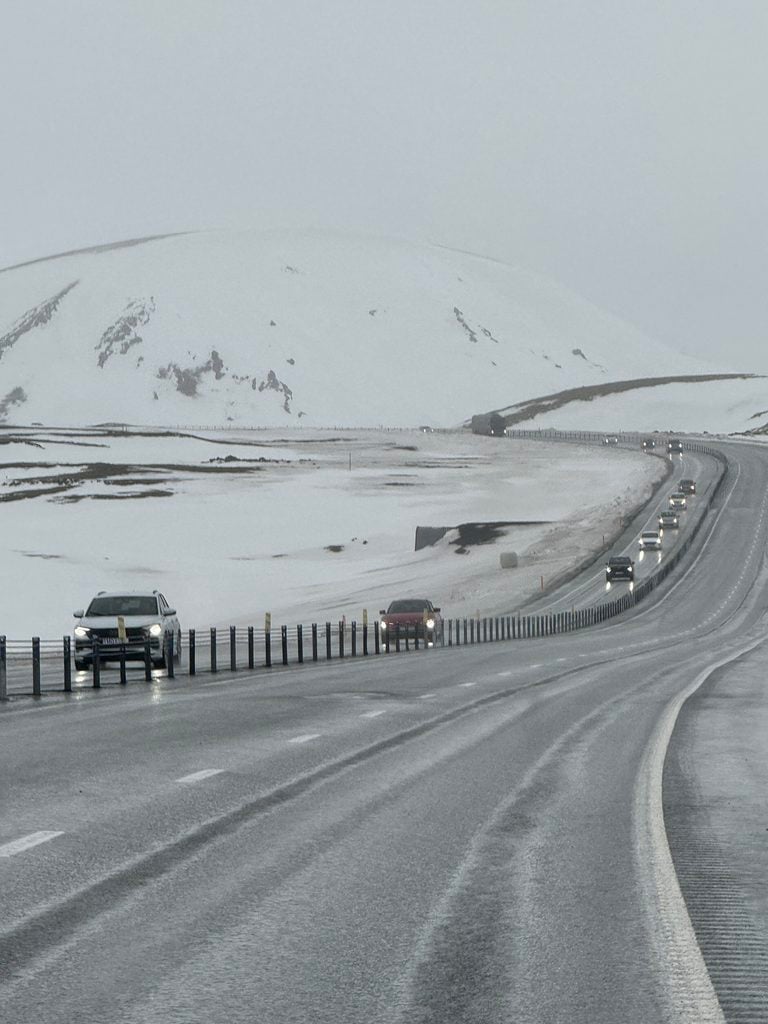
Experienced travellers often recommend driving the Ring Road in an anti-clockwise direction. Tour buses generally head clockwise, meaning you’ll often arrive at popular attractions before the larger crowds. Whether that’s always true is debatable, but it certainly worked in our favour.
Almost immediately, Reykjavík disappeared in the rear-view mirror, replaced by wide open farmland framed by distant glaciers and snow-covered mountains. Every few kilometres another waterfall appeared beside the highway, tumbling down cliffs often framed by black volcanic rock.
The further we drove, the more it became obvious why Iceland consistently ranks among the world’s greatest road trips.
Every bend in the road revealed another postcard.
Seljalandsfoss – Walking Behind a Waterfall
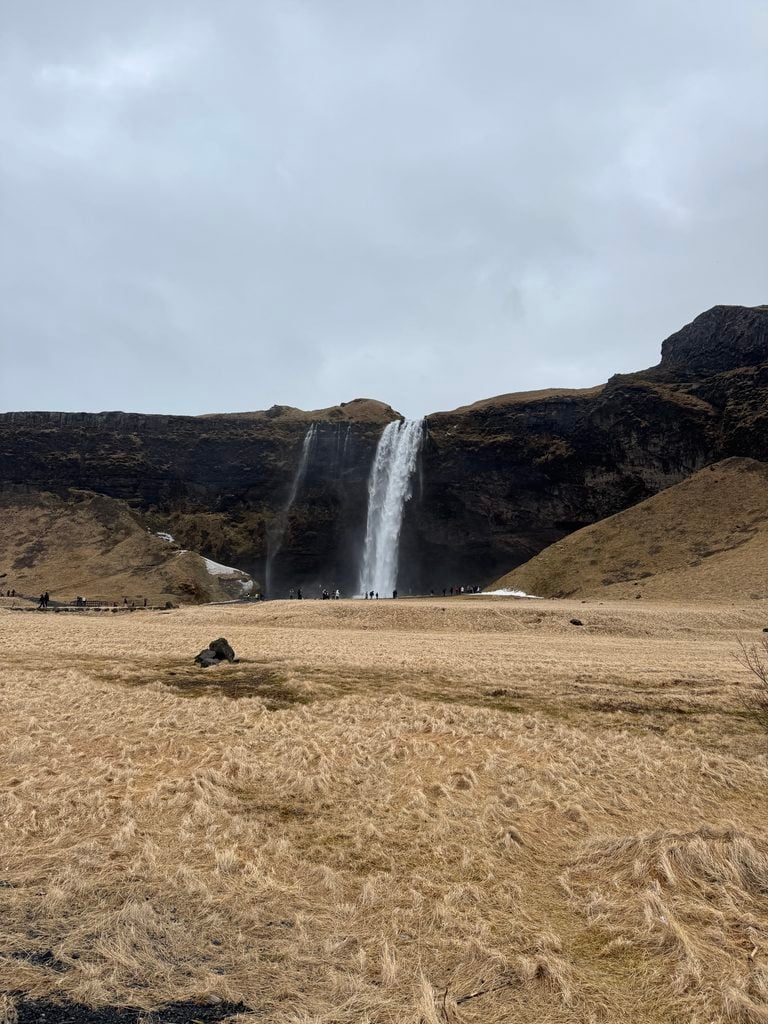
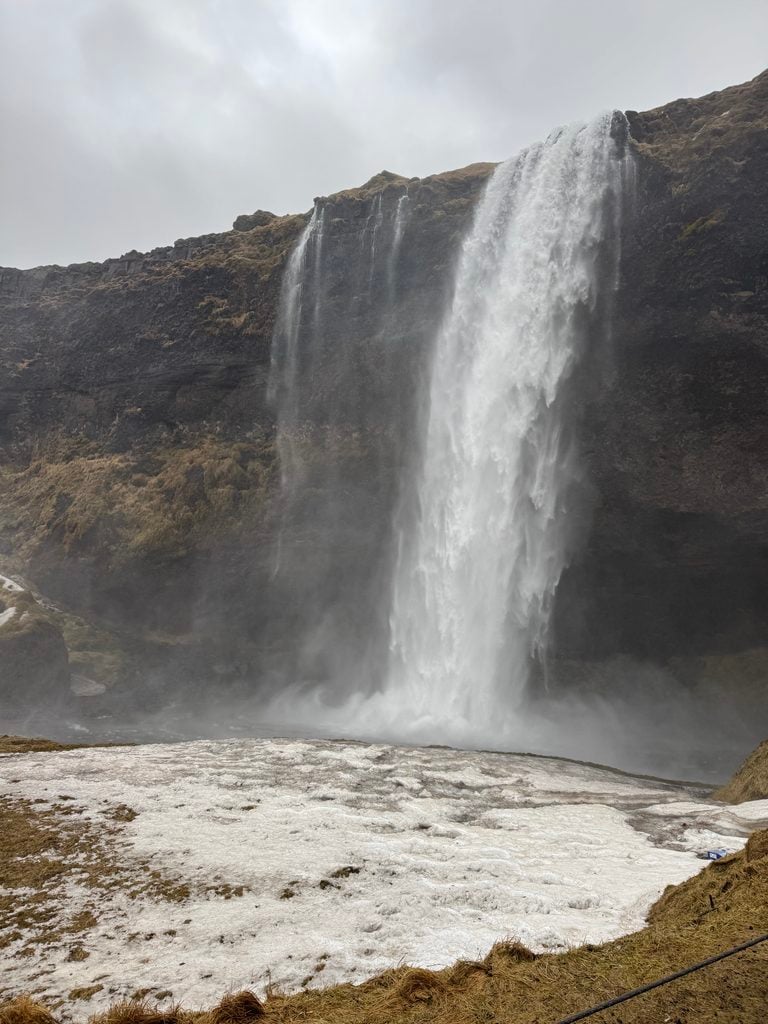
Our first major stop was one of Iceland’s most recognisable waterfalls.
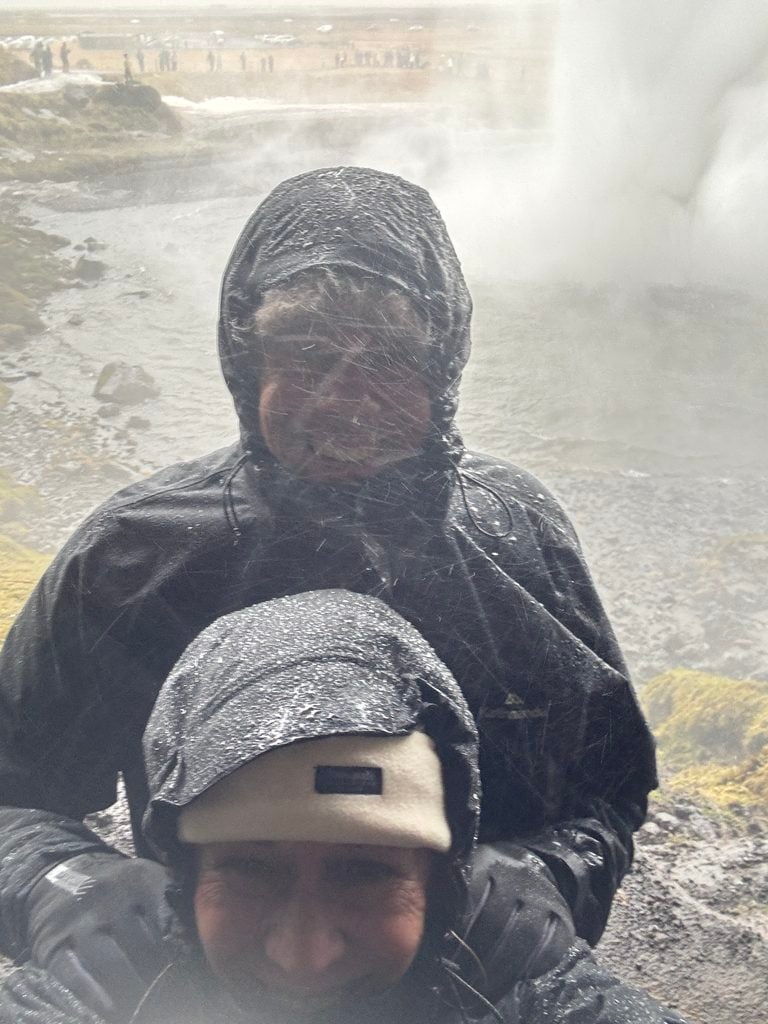
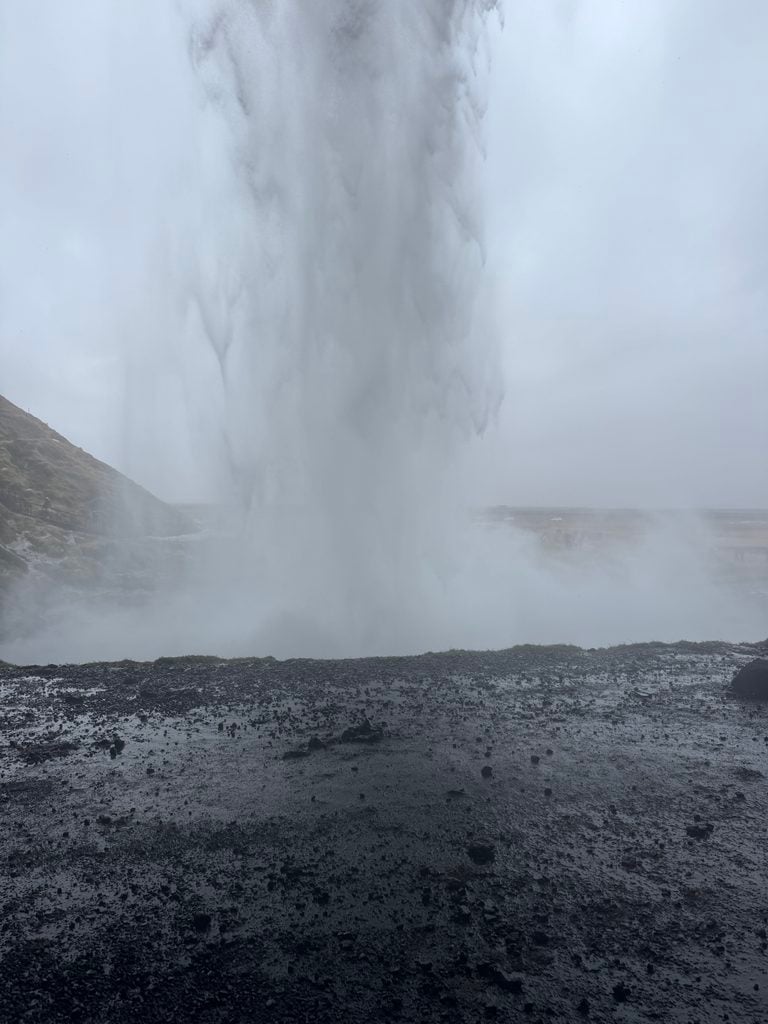
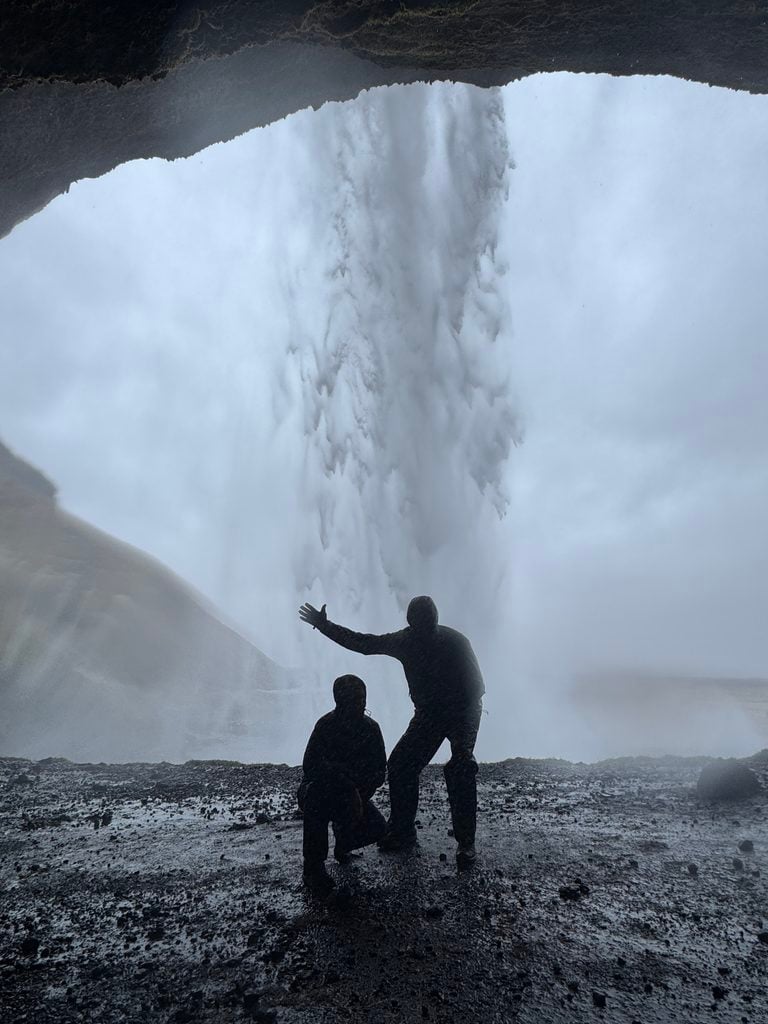
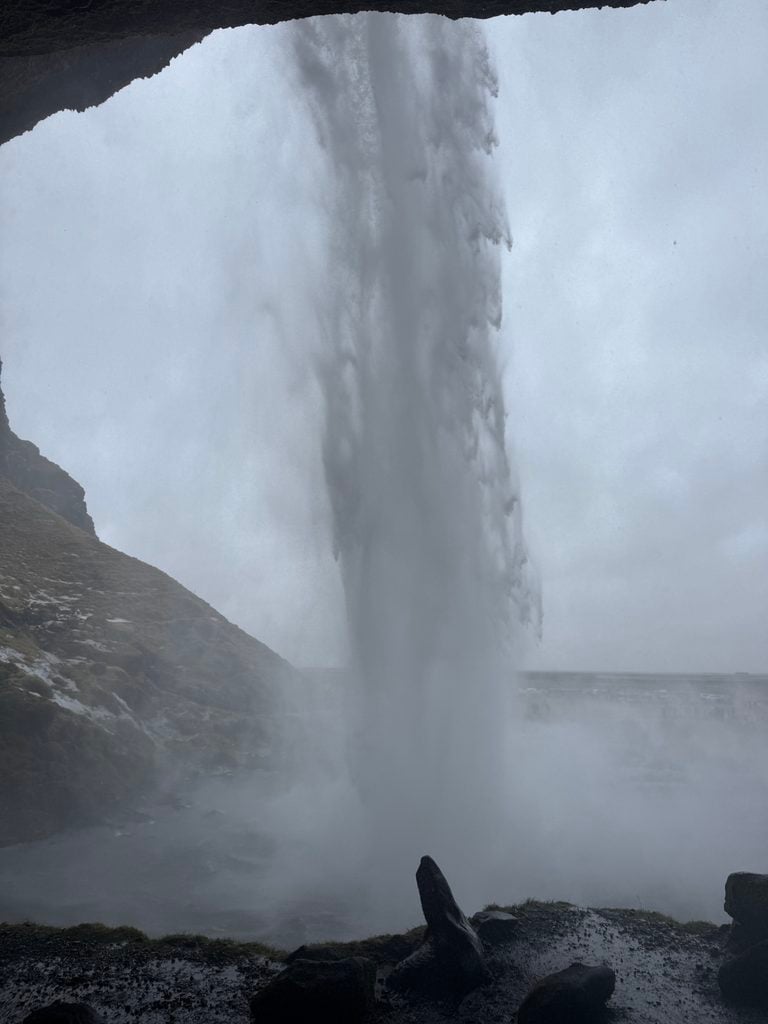
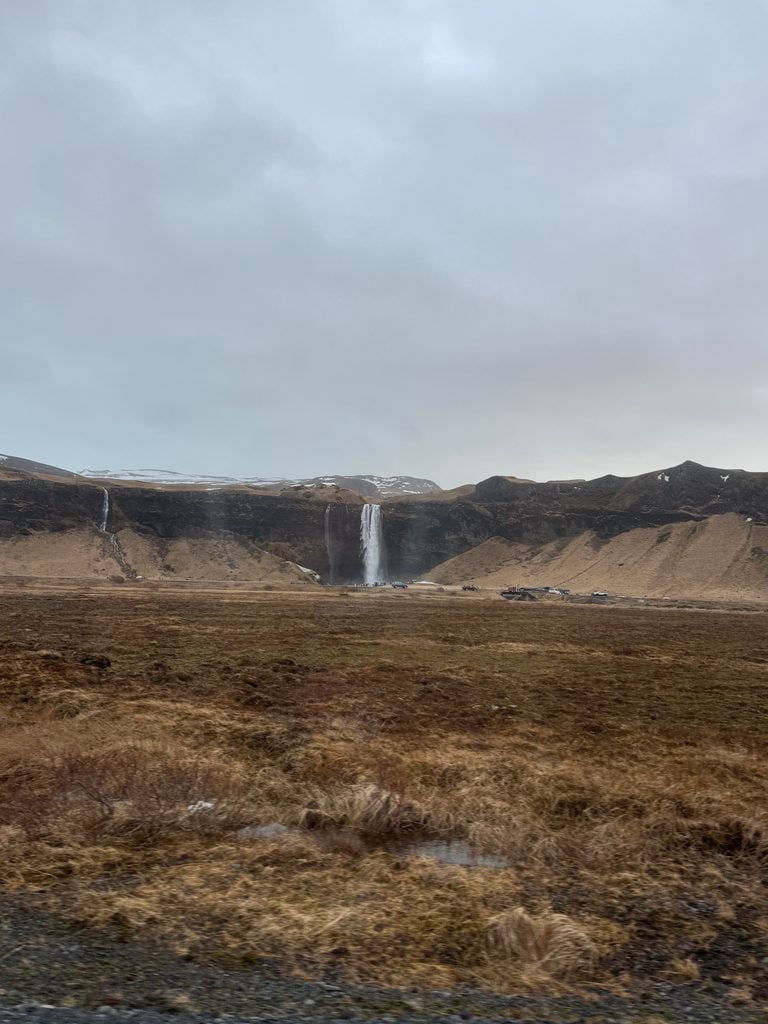
Seljalandsfoss plunges around sixty metres over an ancient sea cliff, but what makes it special isn’t simply its height—it’s the path that allows visitors to walk completely behind the falling water.
Standing beneath tonnes of cascading glacial water while looking back across the Icelandic countryside is an experience that’s difficult to describe.
The roar becomes deafening.
Mist fills the air.
Every surface is slippery.
And no matter how good your waterproof jacket is, you’ll get wet.
Completely wet.
It was impossible not to smile.
This wasn’t simply sightseeing.
It felt like stepping inside the landscape itself.
Nearby, the café provided an ideal opportunity for a warming coffee before continuing east.
The Hidden Treasure Next Door
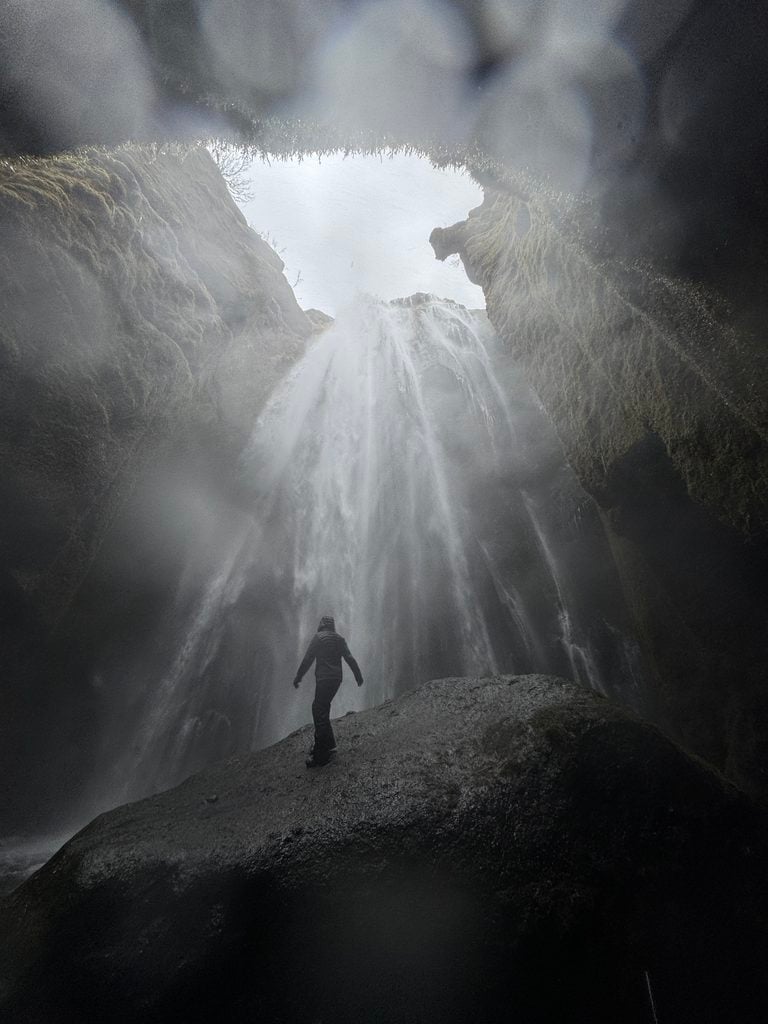
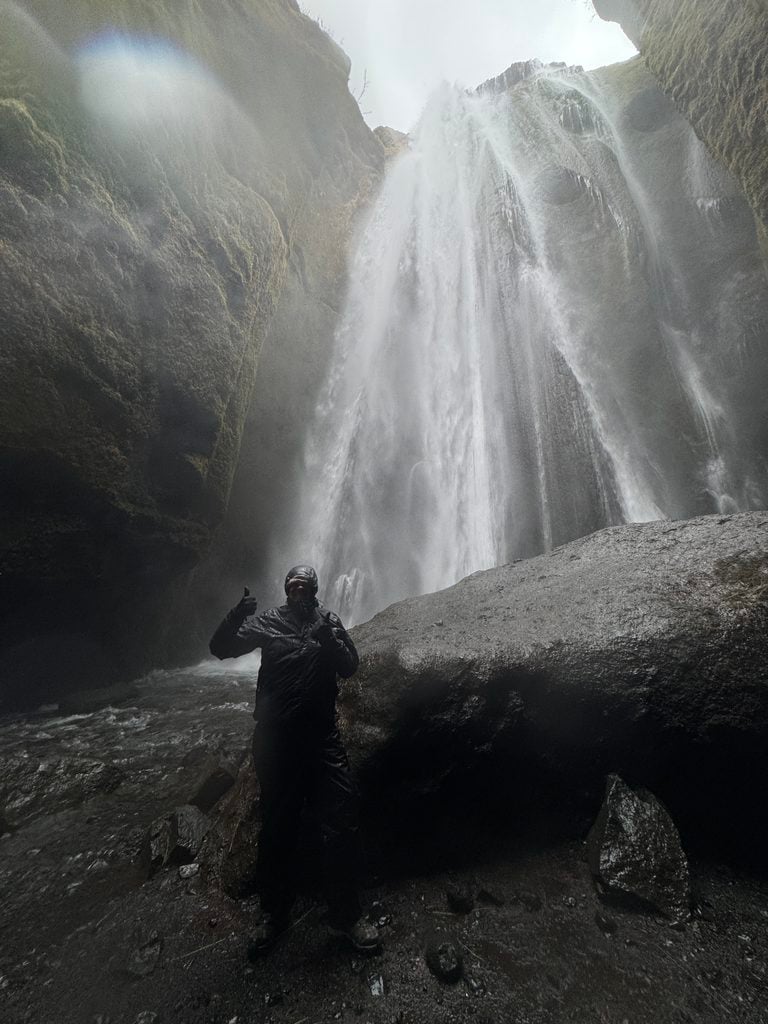
Only a short walk from Seljalandsfoss lies a smal waterfall that many visitors almost miss: Gljufrabui.
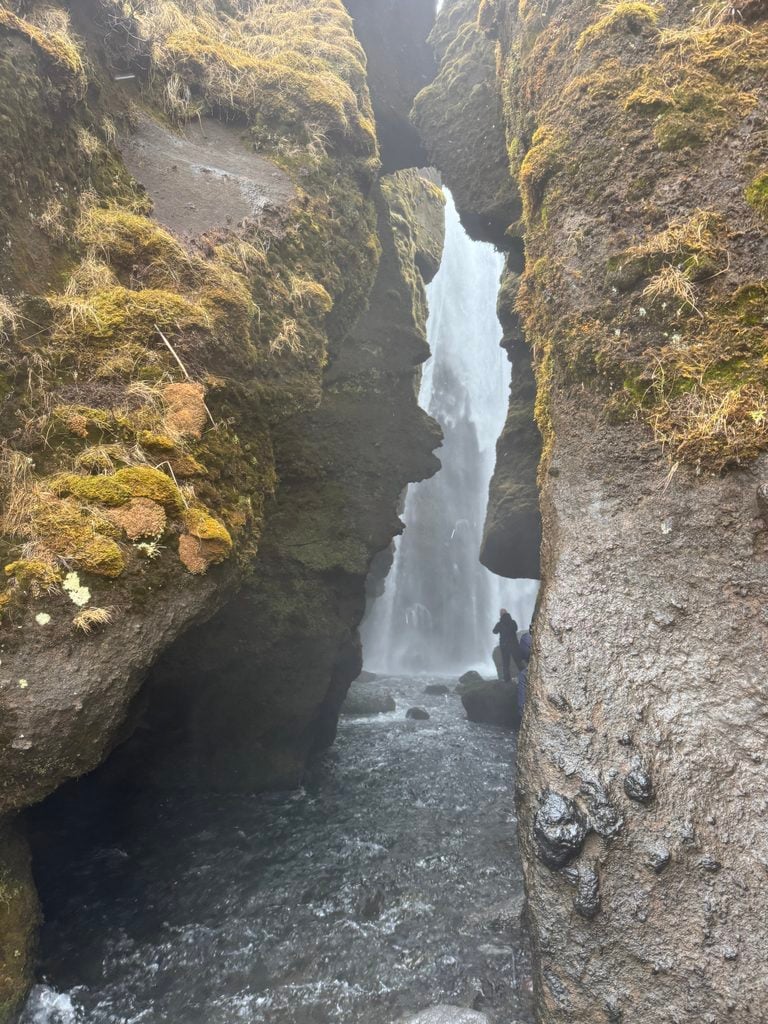
Gljúfrabúi hides inside a narrow moss-covered canyon.
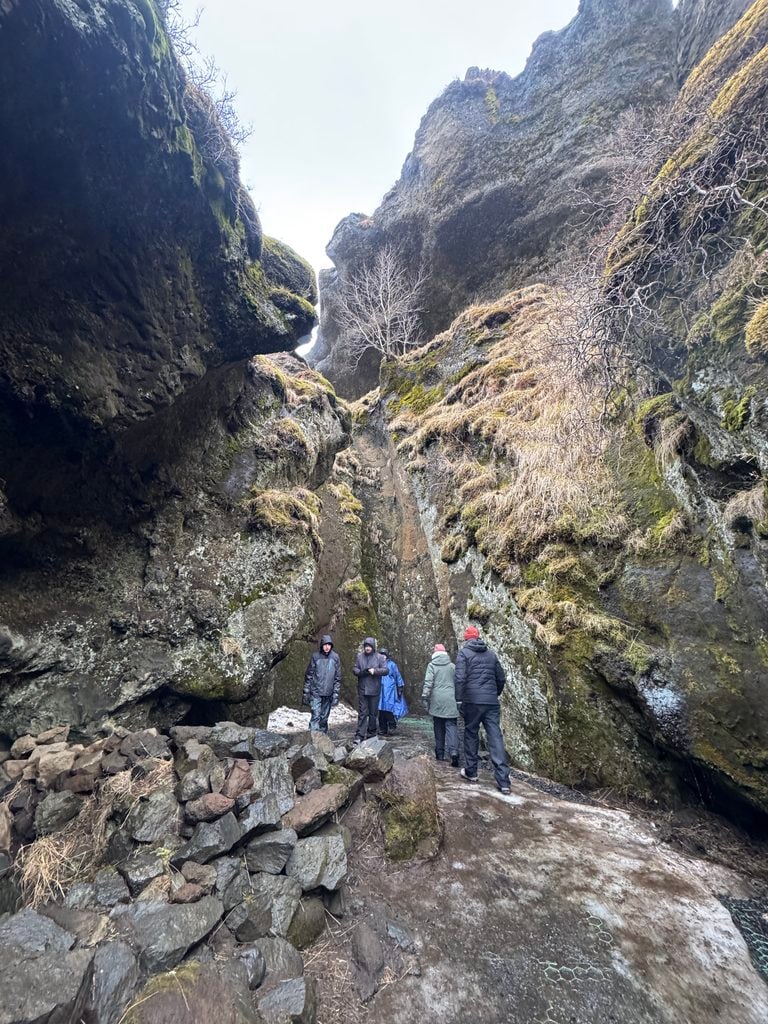
From the outside, you can barely see it.
The entrance is little more than a crack in the cliff.
Stepping carefully across the stream and squeezing between the canyon walls feels like discovering a secret entrance into another world.
Then suddenly the canyon opens.
Towering walls surround you.
Above, a waterfall crashes through the narrow opening overhead.
Unlike Seljalandsfoss, this place feels intimate.
Almost enclosed.
It’s one of those magical locations that reminds you why it’s worth walking just a little further than everyone else.
Skógafoss – Power You Can Feel
Continuing east, another giant soon appeared beside the Ring Road.
Skógafoss doesn’t sneak up on you.
You can hear it before you reach it.
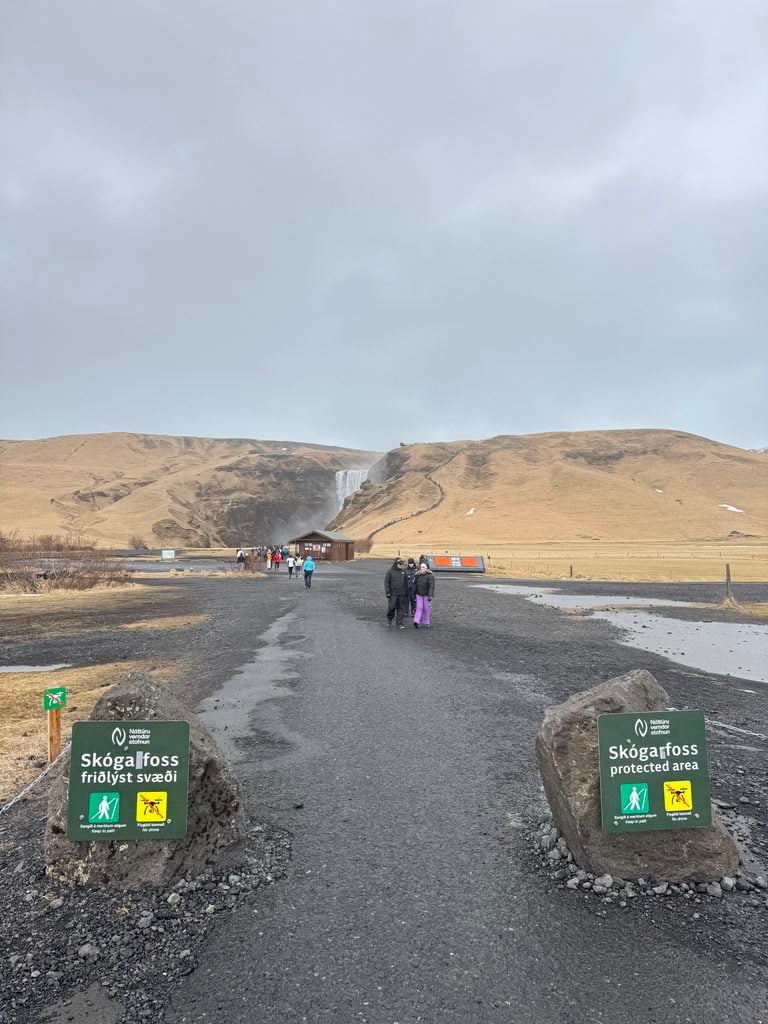
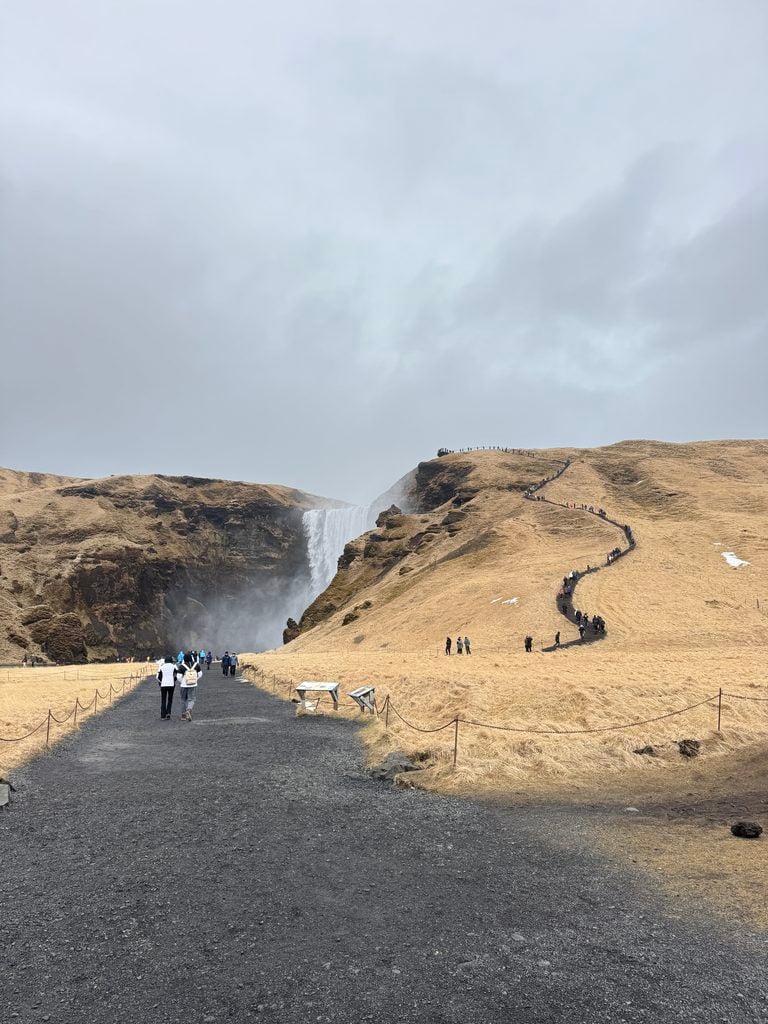
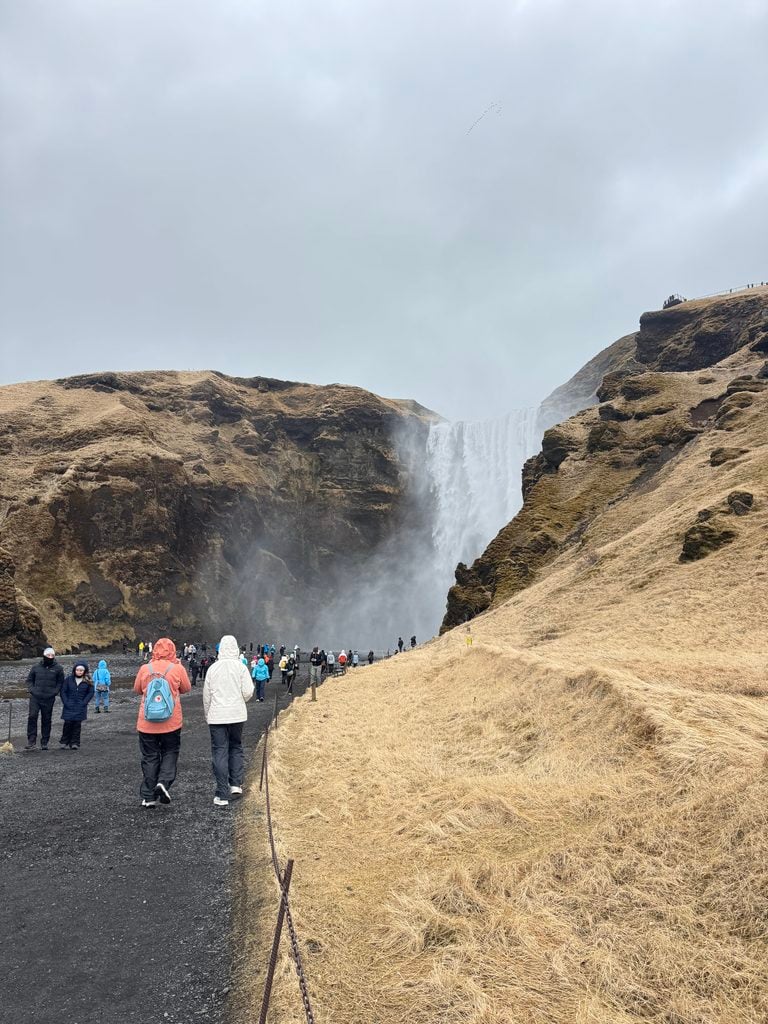
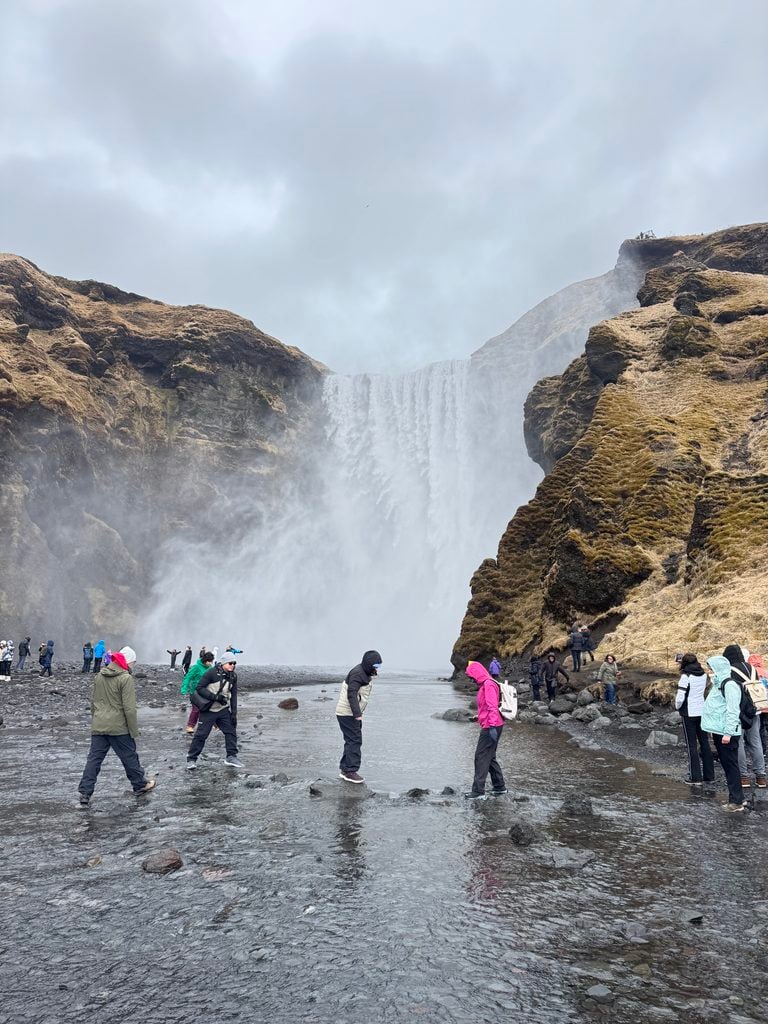
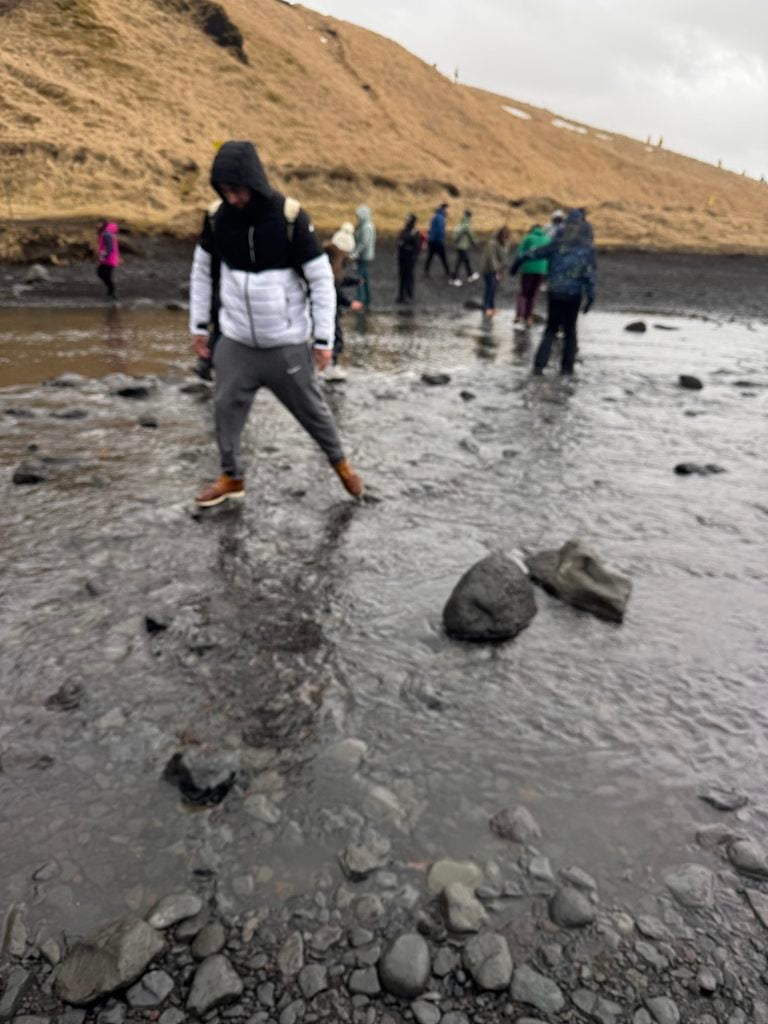
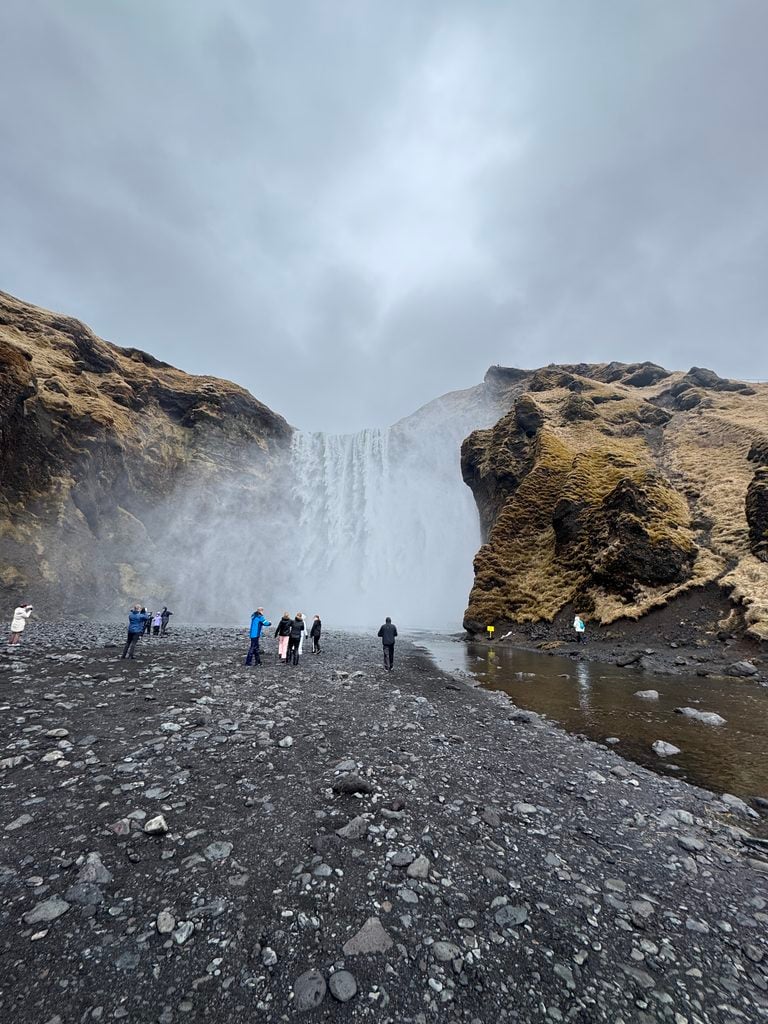
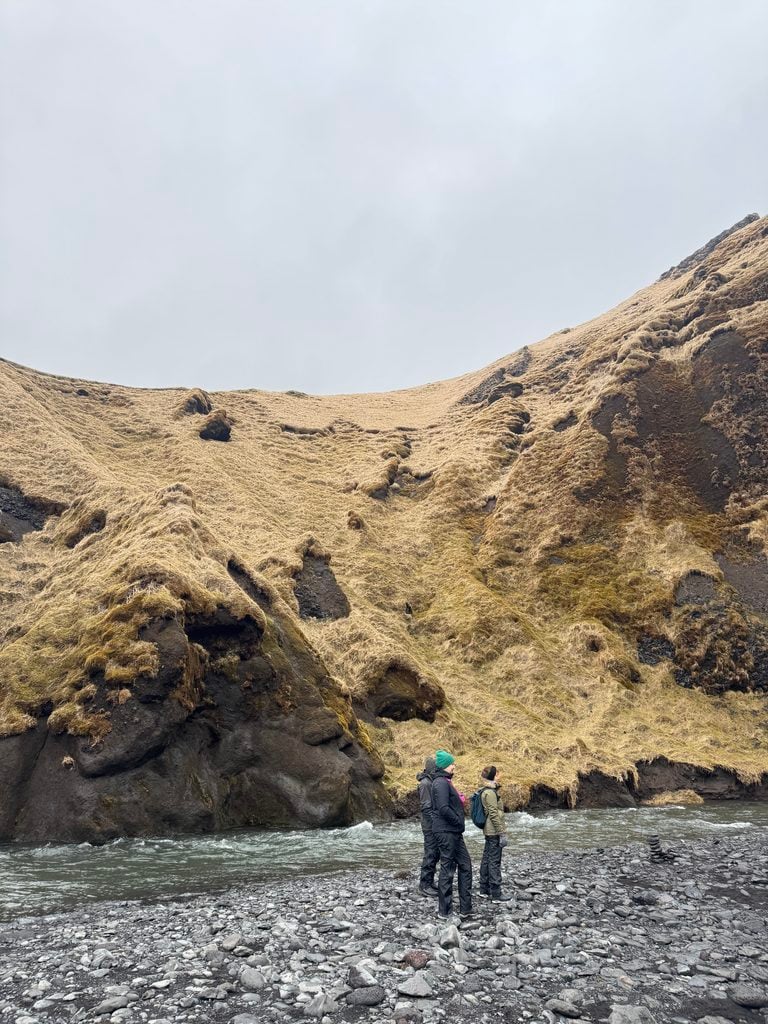
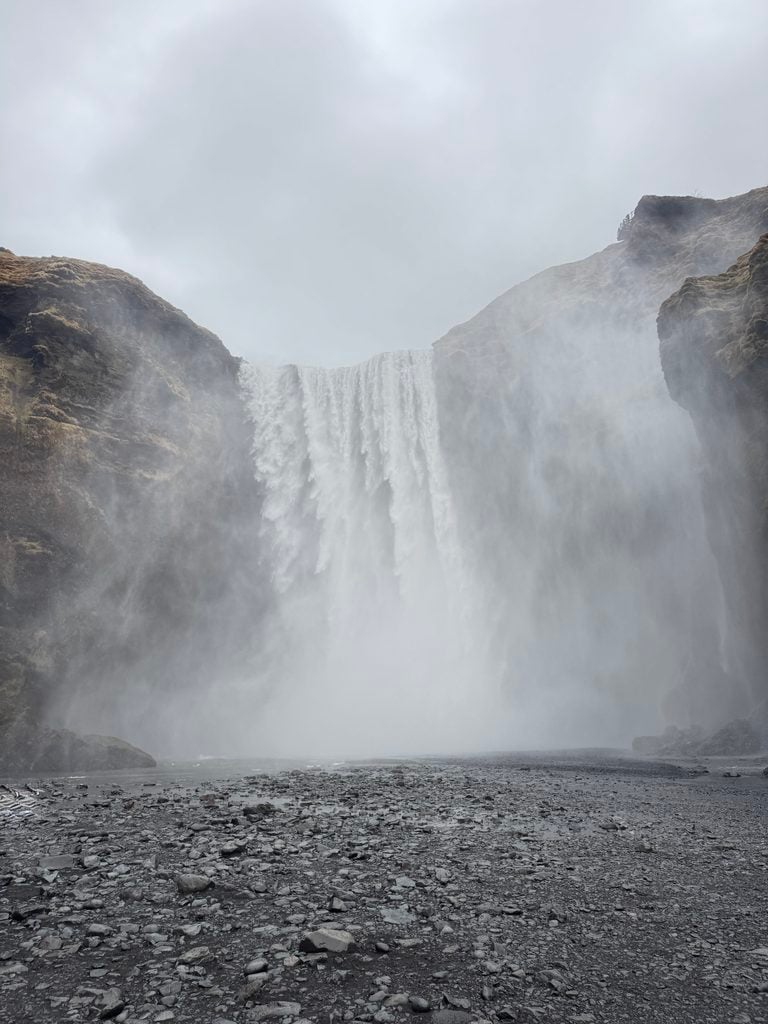
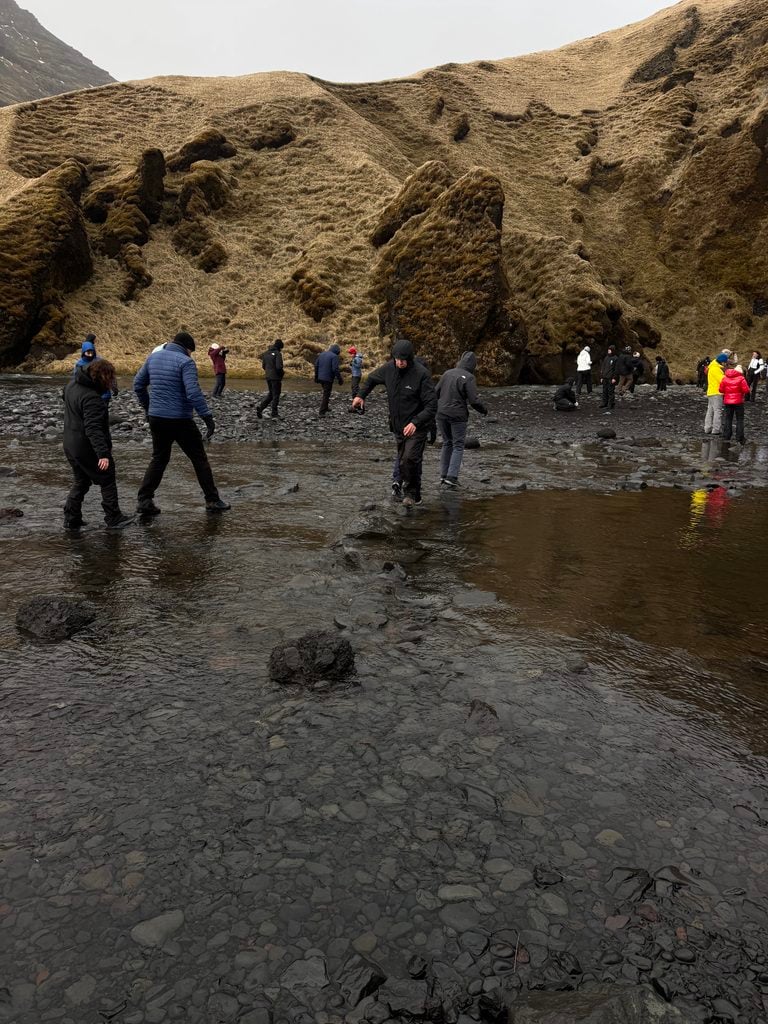
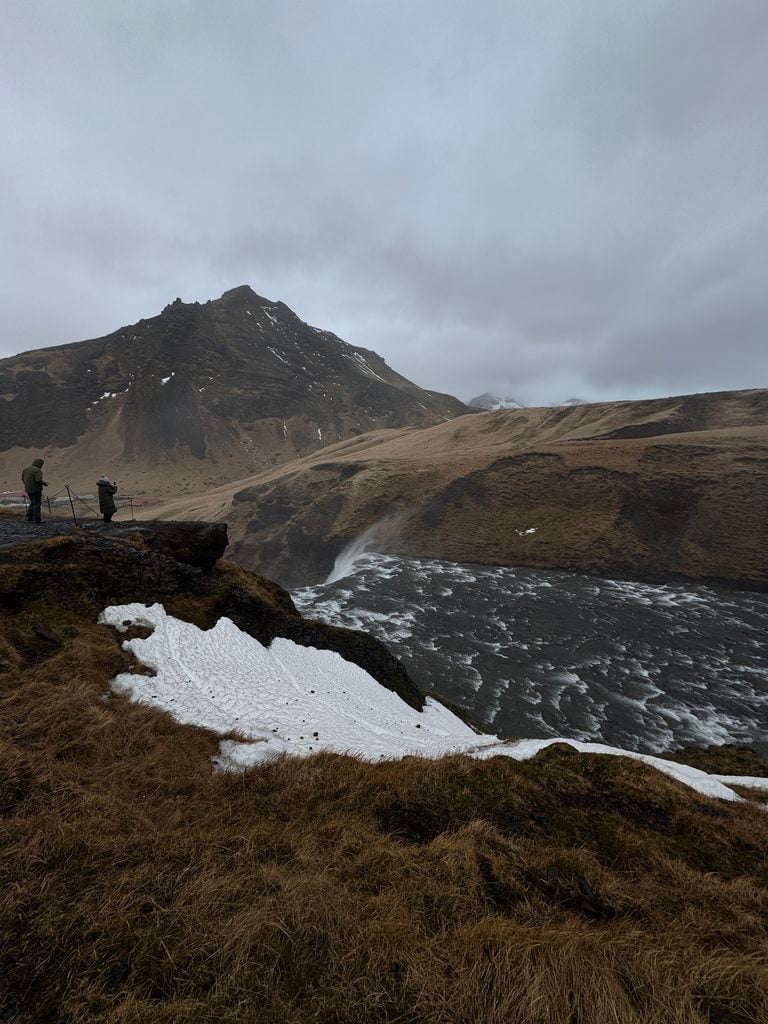
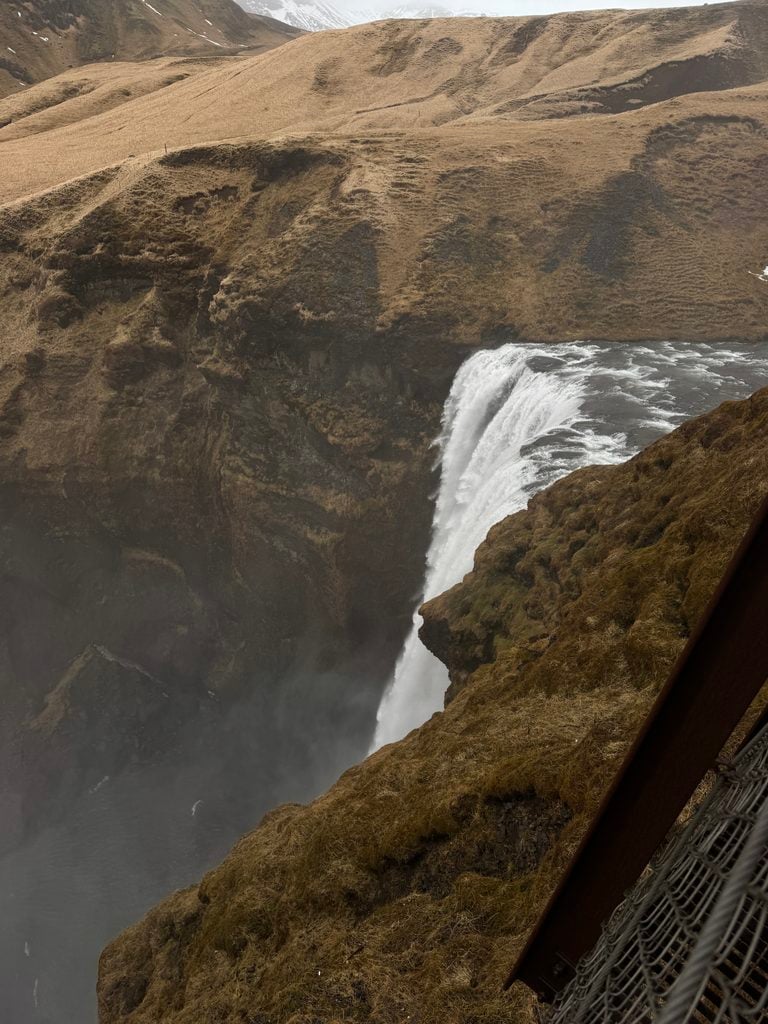
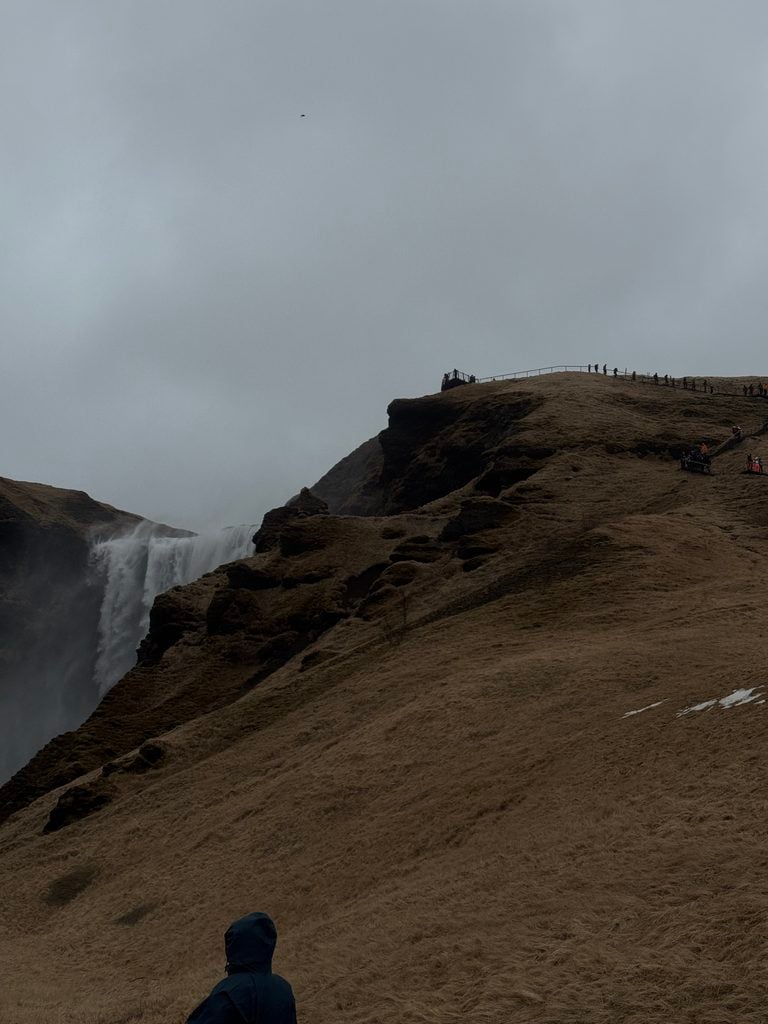
The waterfall is enormous—sixty metres high and twenty-five metres wide—and throws such a volume of water into the air that rainbows frequently dance across the spray whenever the sun appears.
Standing at its base makes you feel wonderfully insignificant.
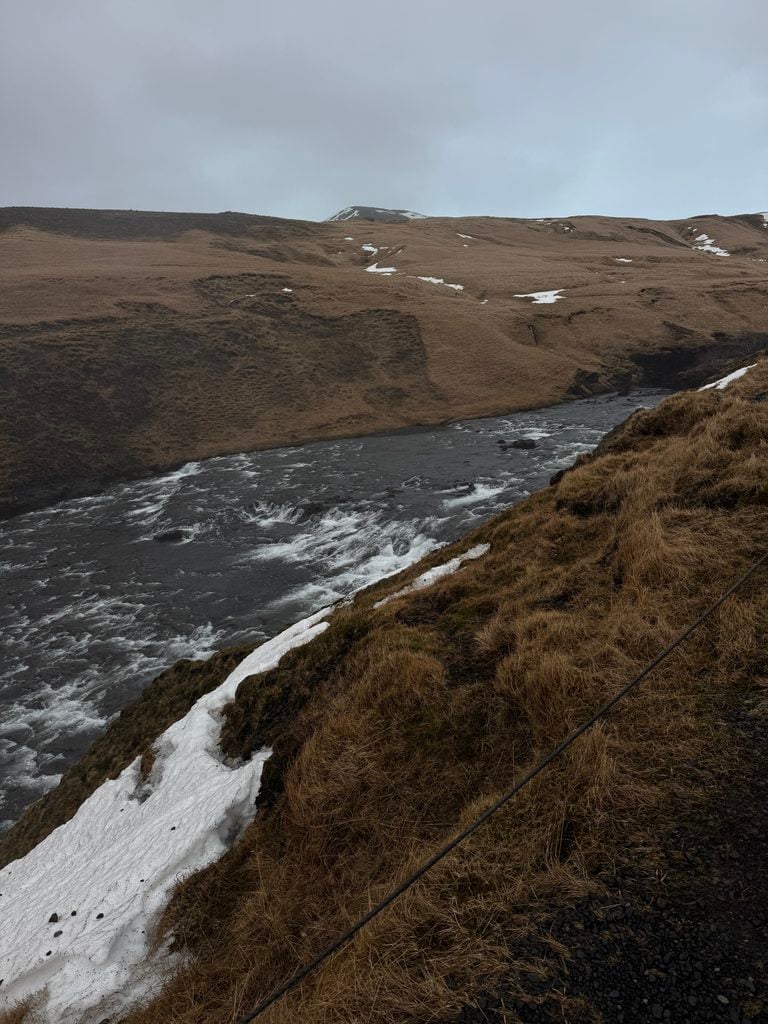
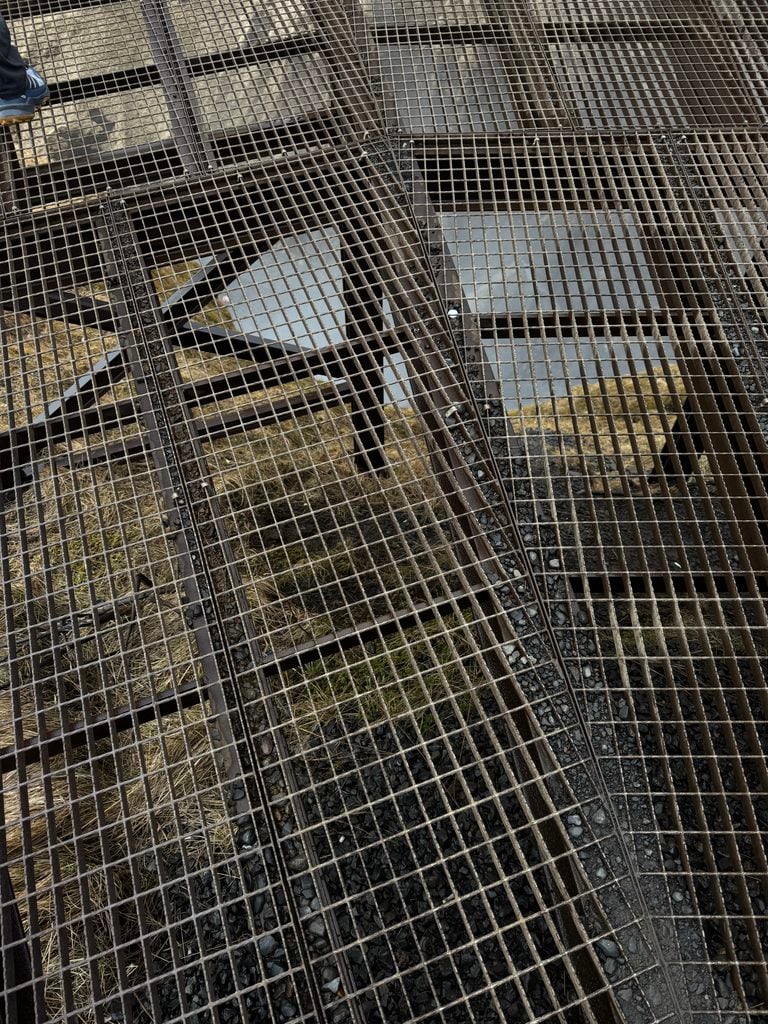
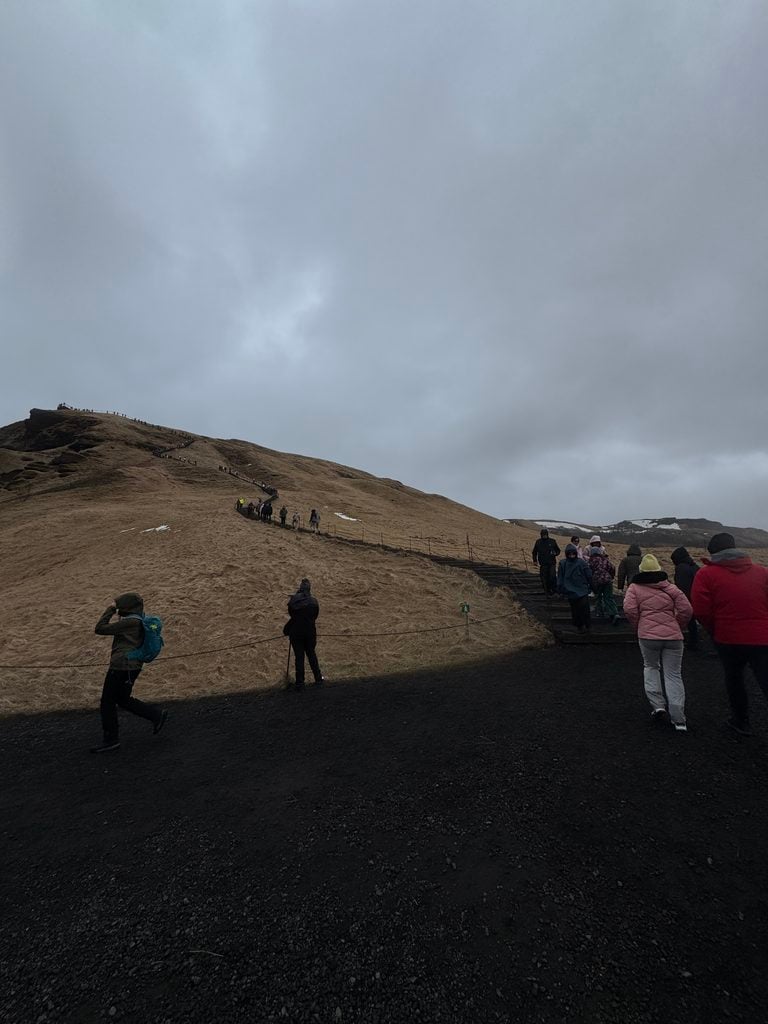
We climbed the long staircase beside the falls to the viewing platform above.
The climb leaves your legs protesting, but the reward is worth every step.
A Short Walk to Somewhere Quieter
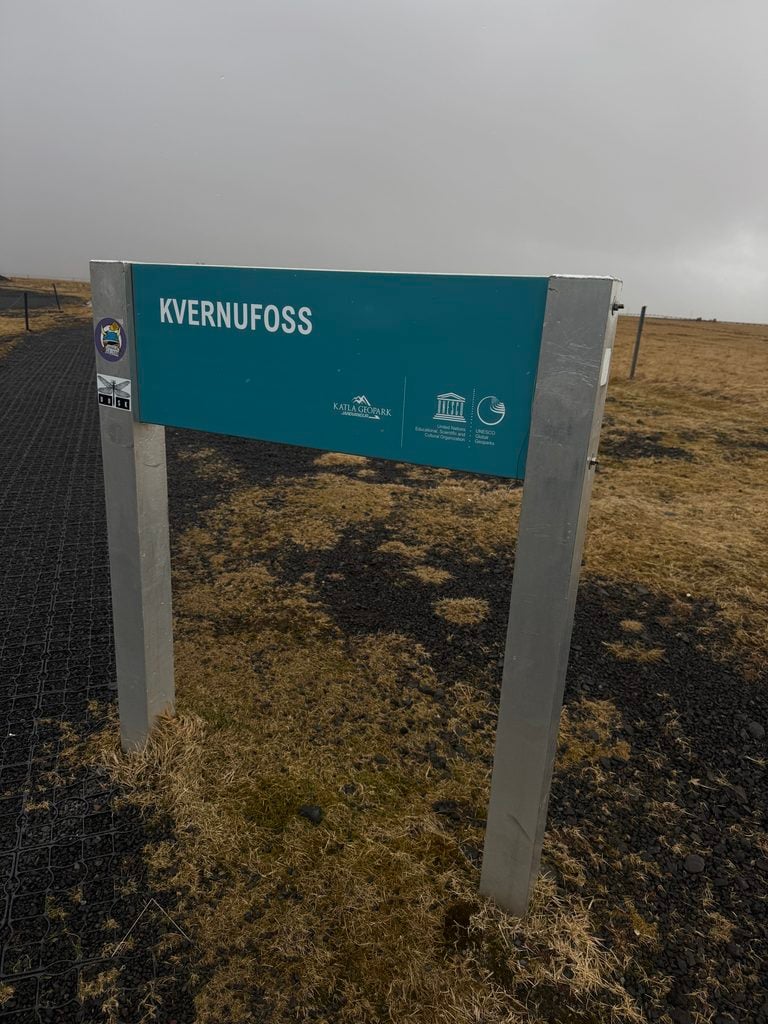
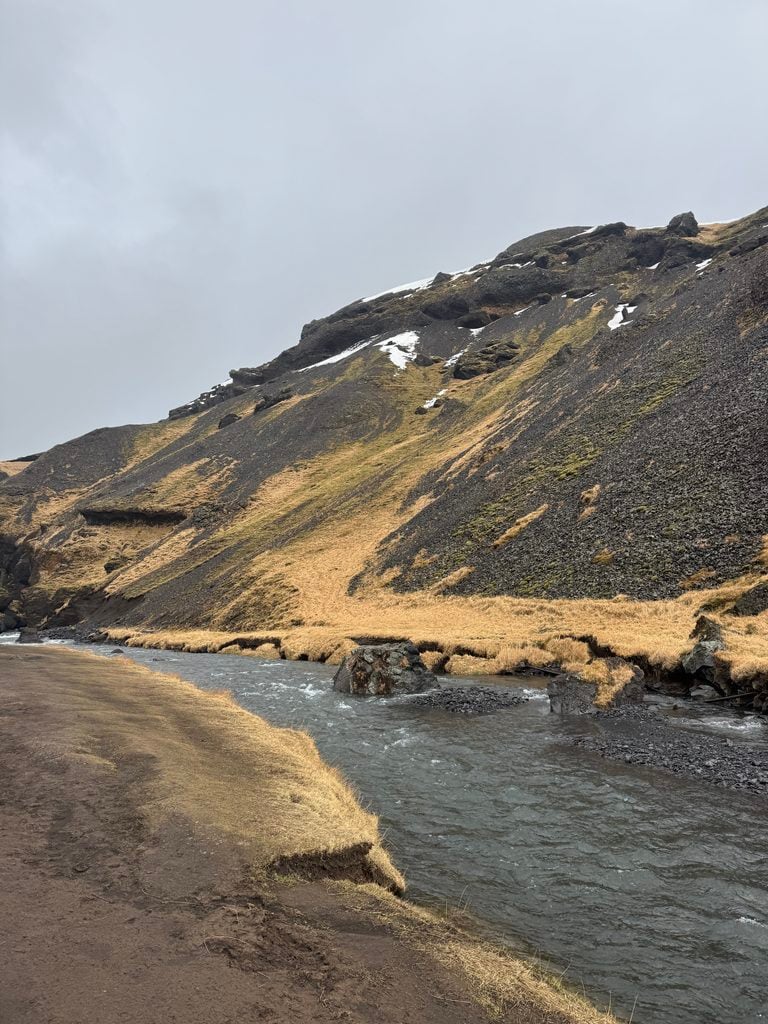
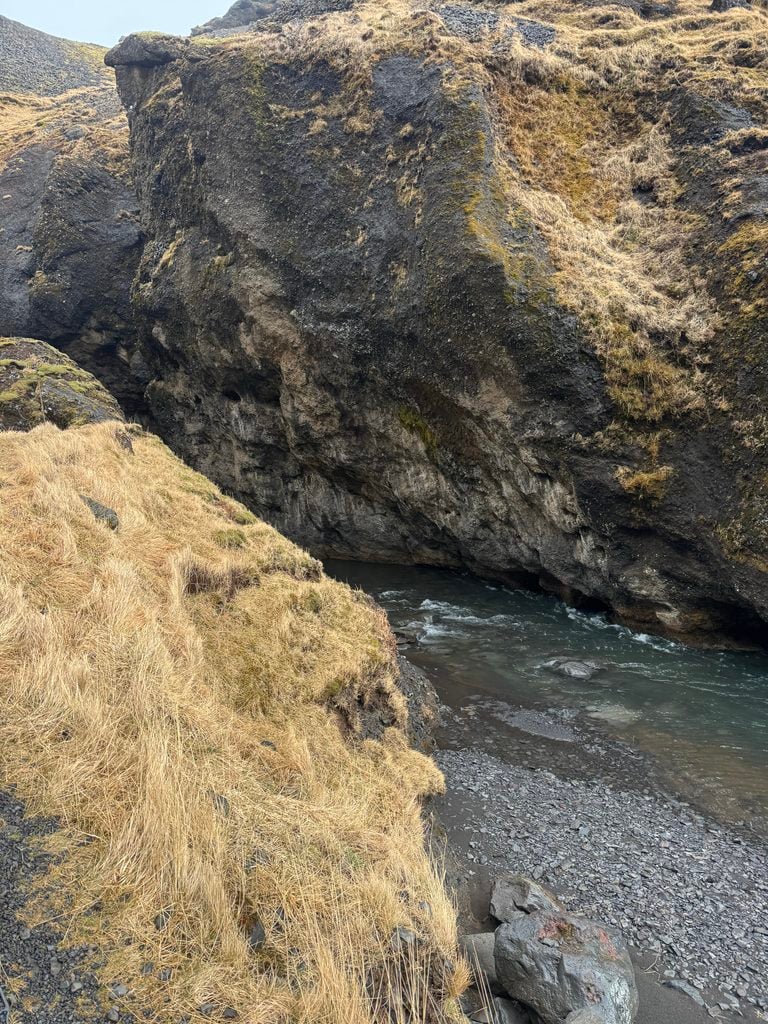
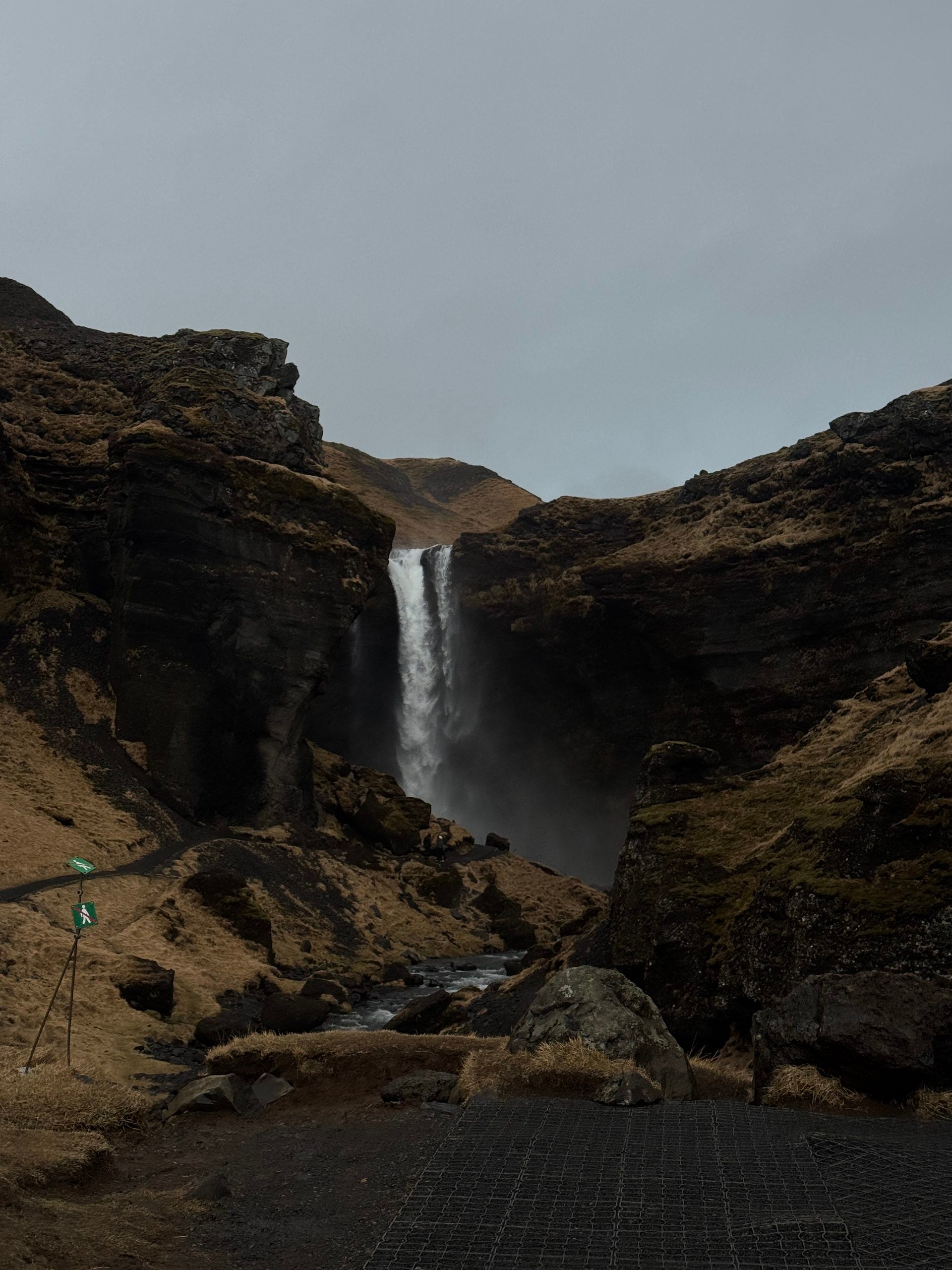
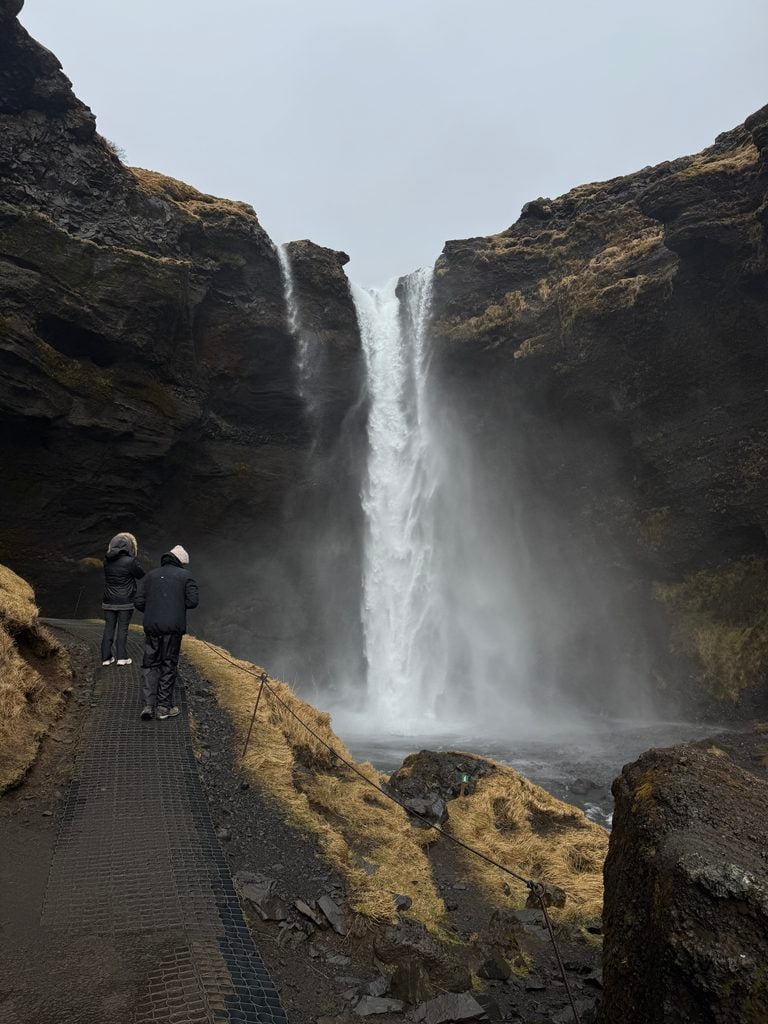
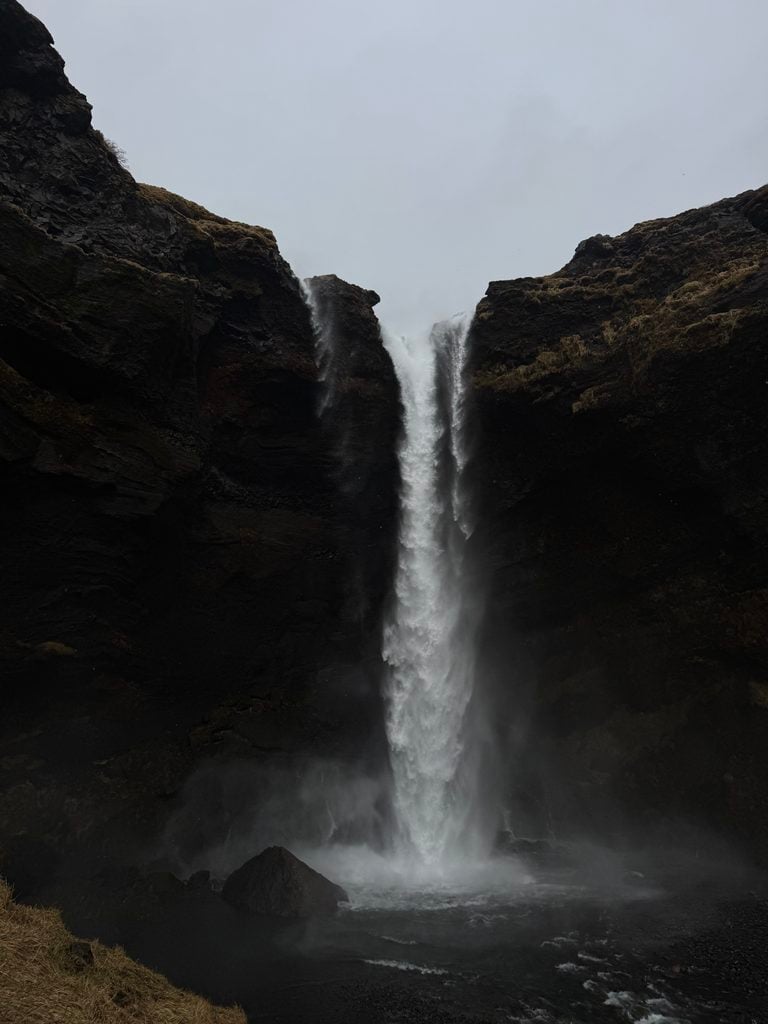
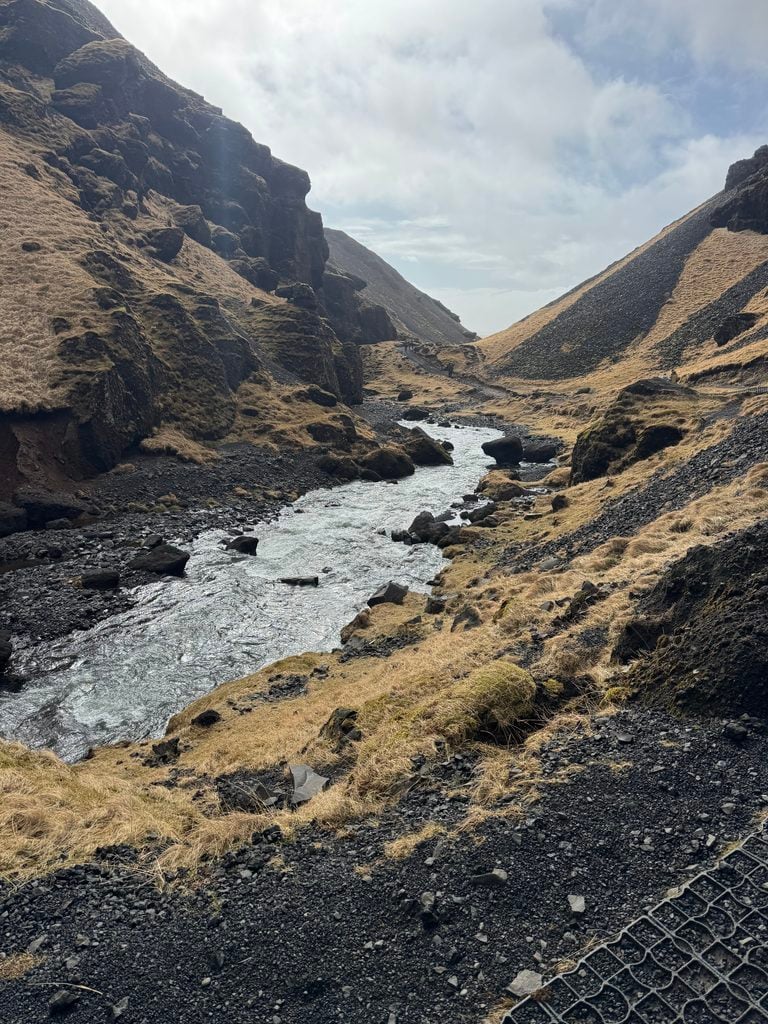
Around twenty minutes away sits Kvernufoss, another spectacular waterfall hidden inside a narrow gorge.
Unlike its famous neighbour, there were very few people here.
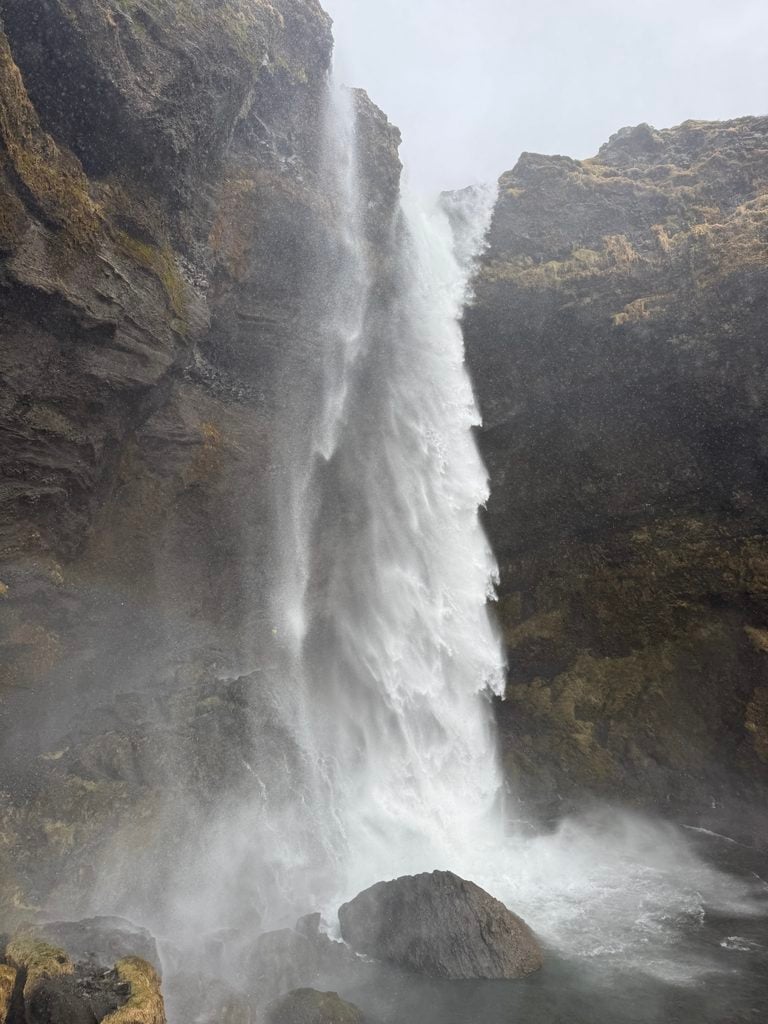
The peaceful walking trail followed a gentle stream before revealing yet another waterfall that you can walk behind.
If Seljalandsfoss feels like Iceland’s celebrity, Kvernufoss feels like discovering a local favourite.
It quickly became one of our favourite waterfalls of the trip.
Sometimes the places with fewer people leave the biggest impression.
Ice, Fire and Ancient Volcanoes
Our next stop introduced us to another side of Iceland.
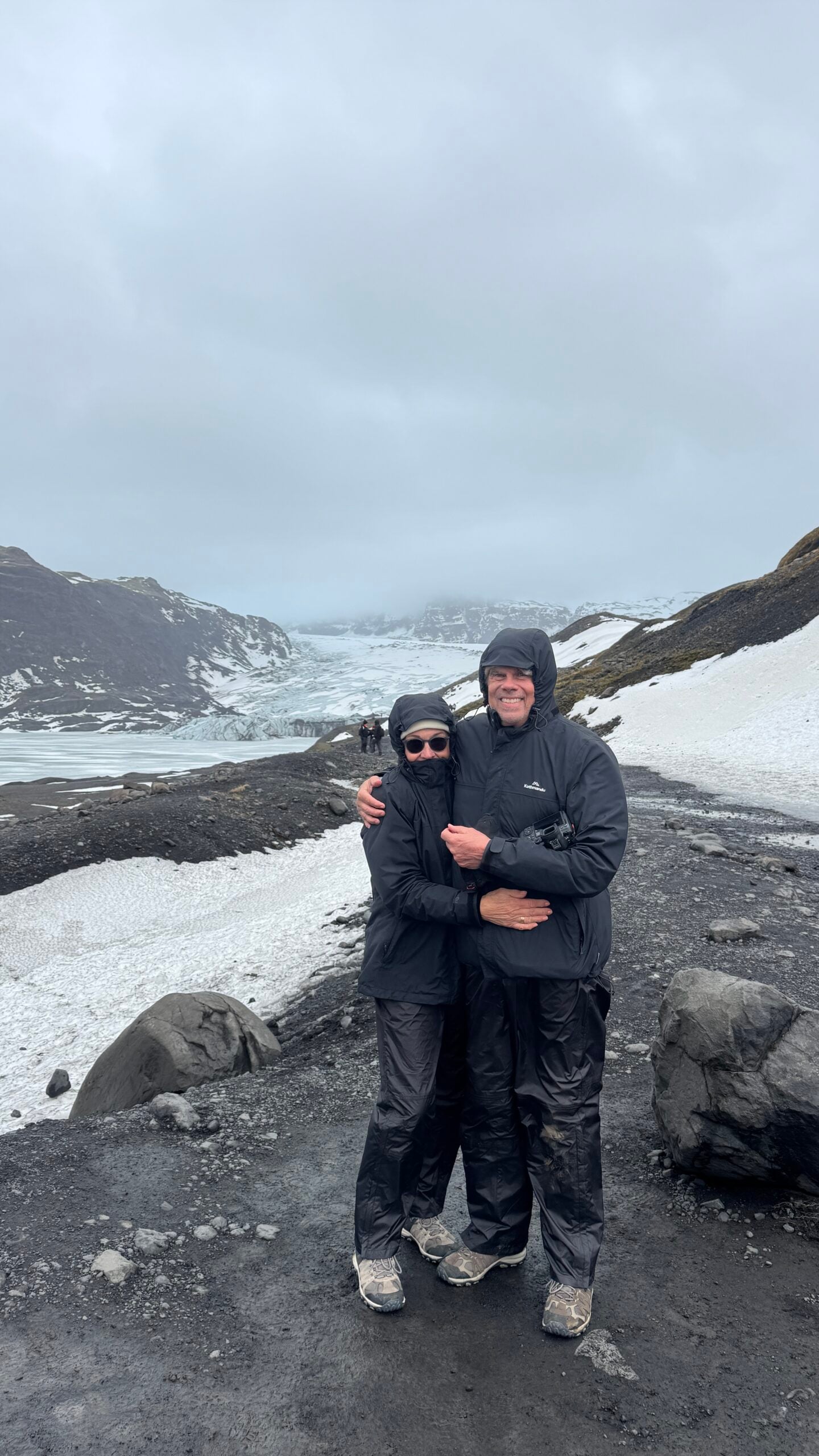
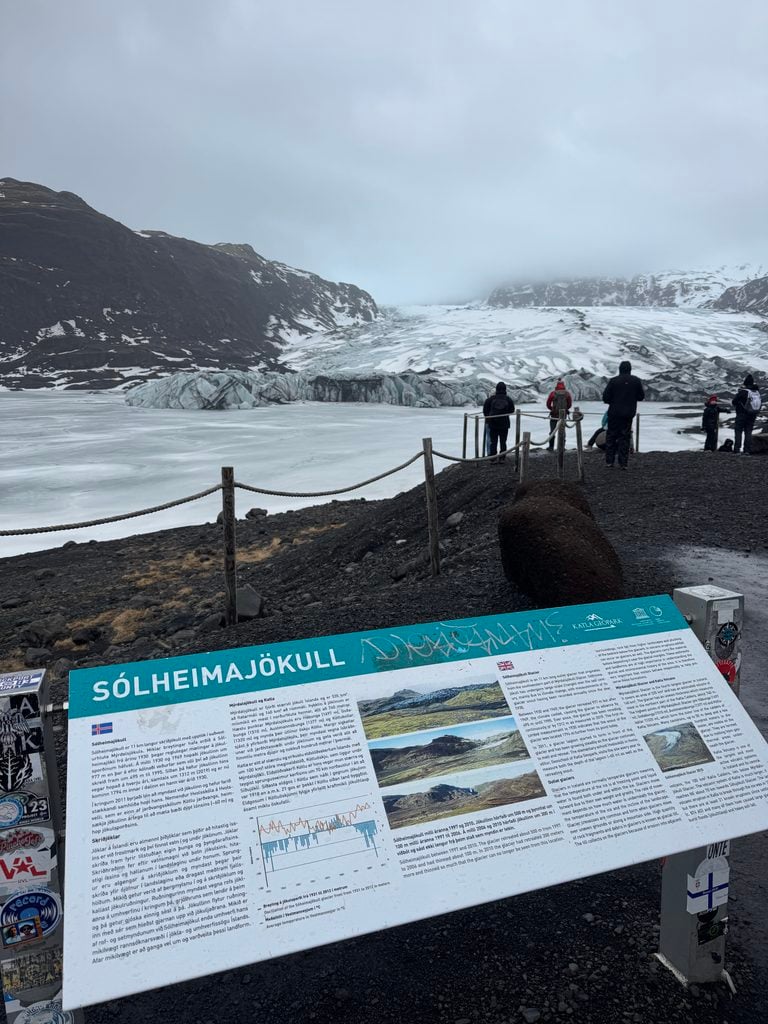
Solheimajökull Glacier stretches down from the mighty Mýrdalsjökull ice cap, its brilliant blue ice streaked with black volcanic ash laid down by centuries of eruptions.
It perfectly illustrates Iceland’s constant battle between fire and ice.
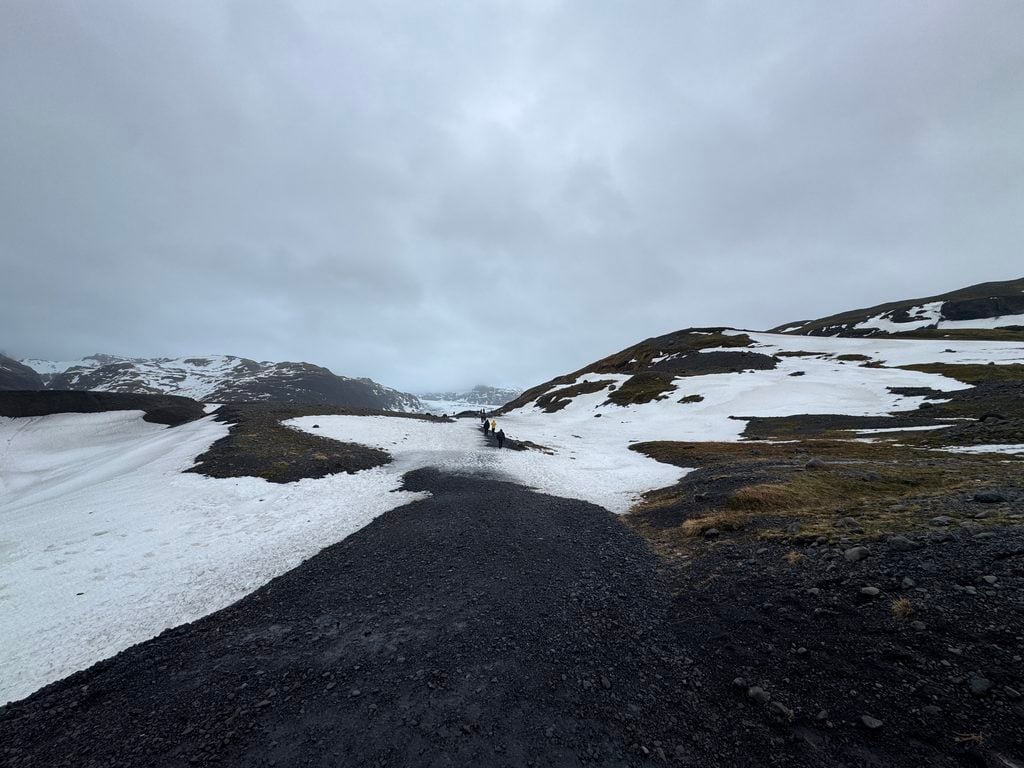
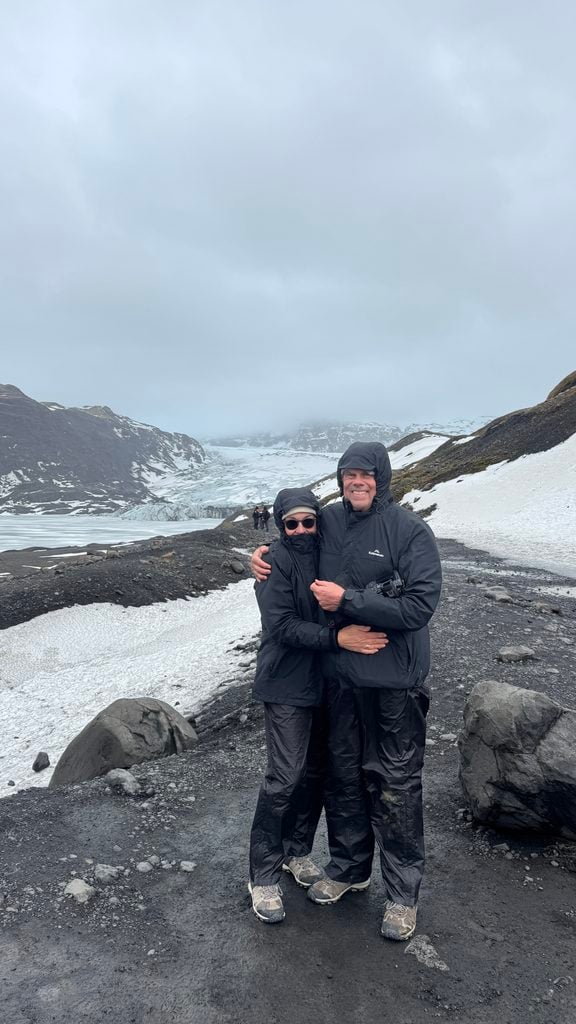
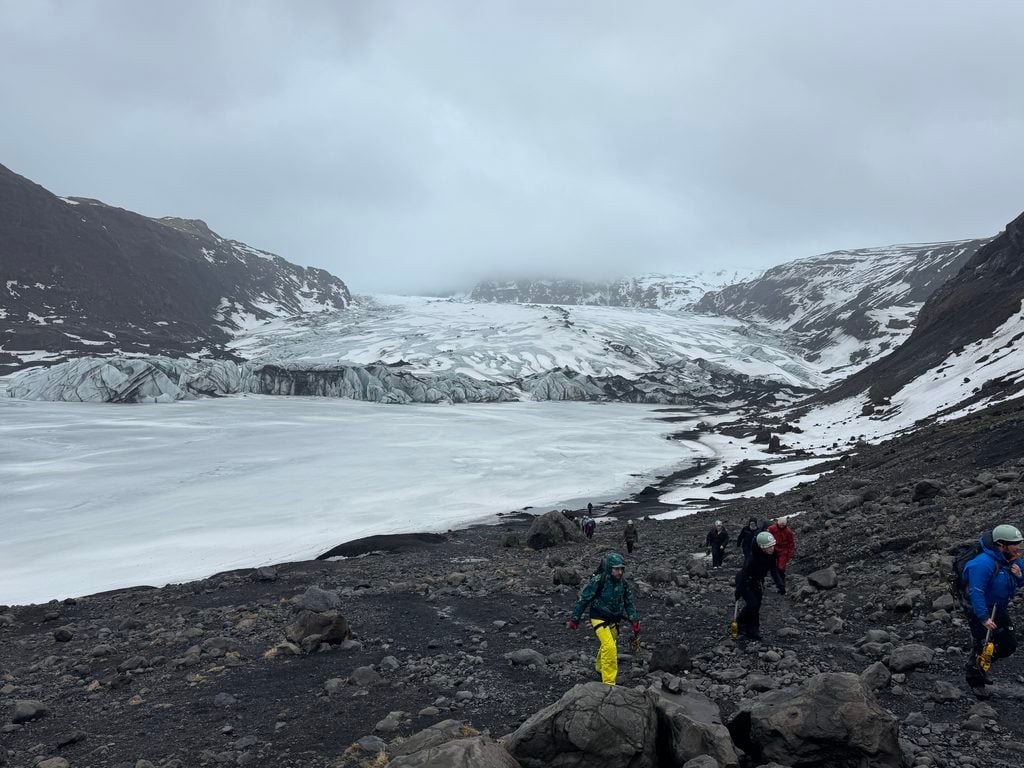
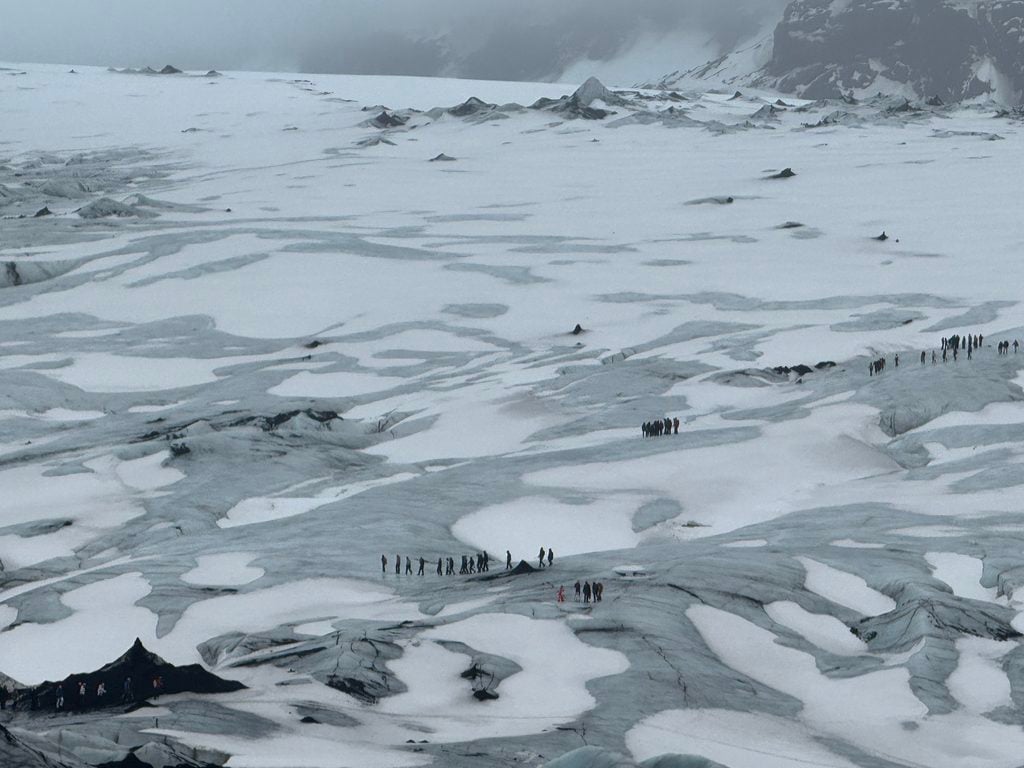
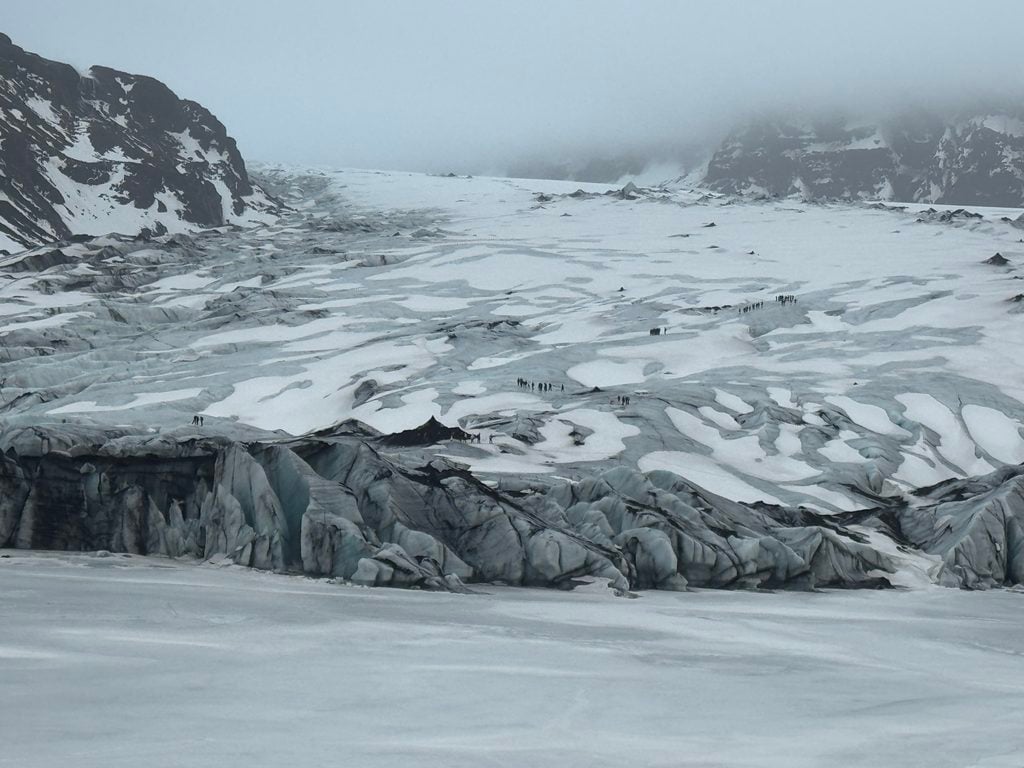
The walk from the car park isn’t difficult, and with every step the glacier grows larger until you’re standing surprisingly close to this slow-moving river of ice.
The dark ash lines threading through the glacier looked almost like brushstrokes across a frozen canvas.
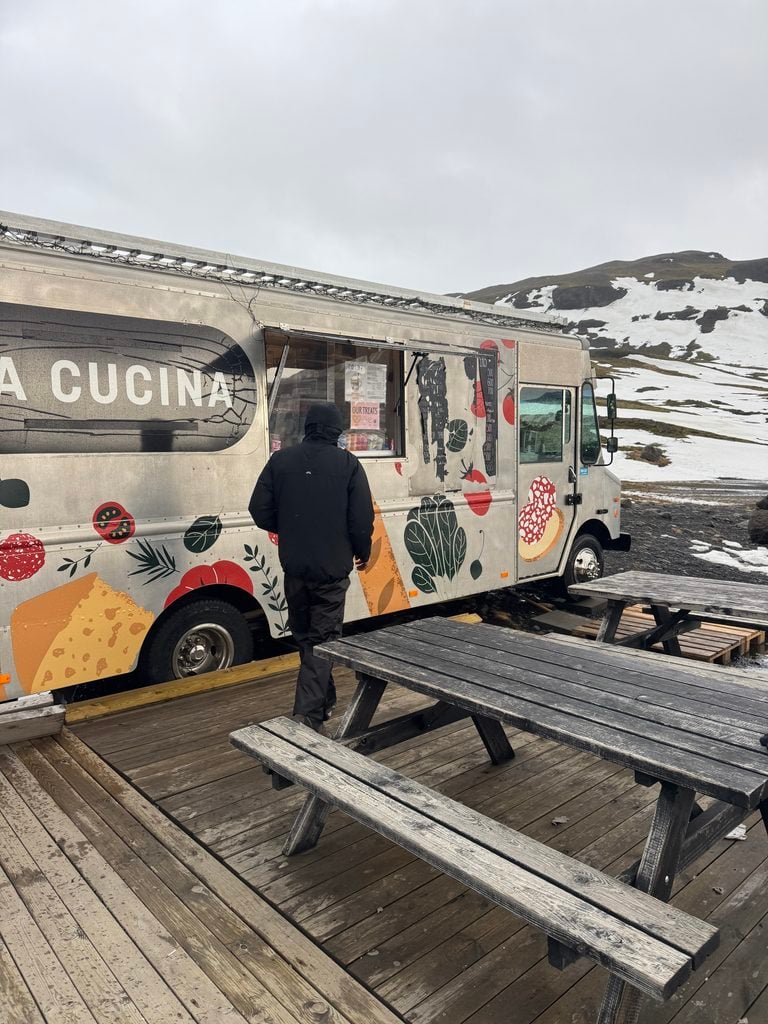
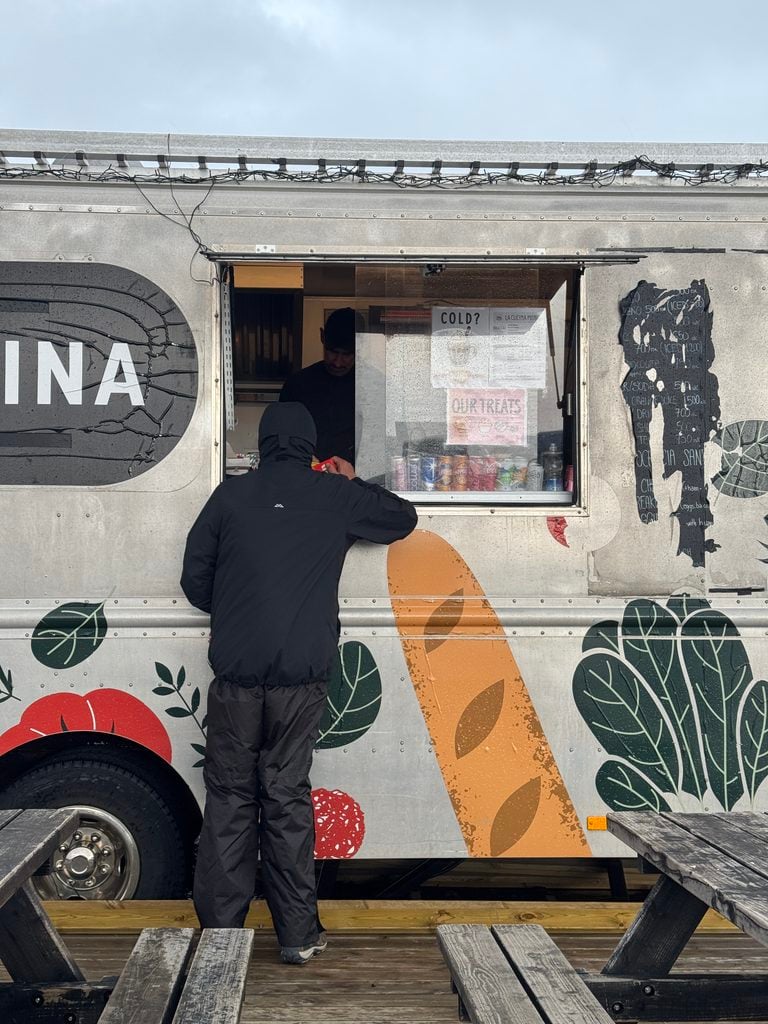
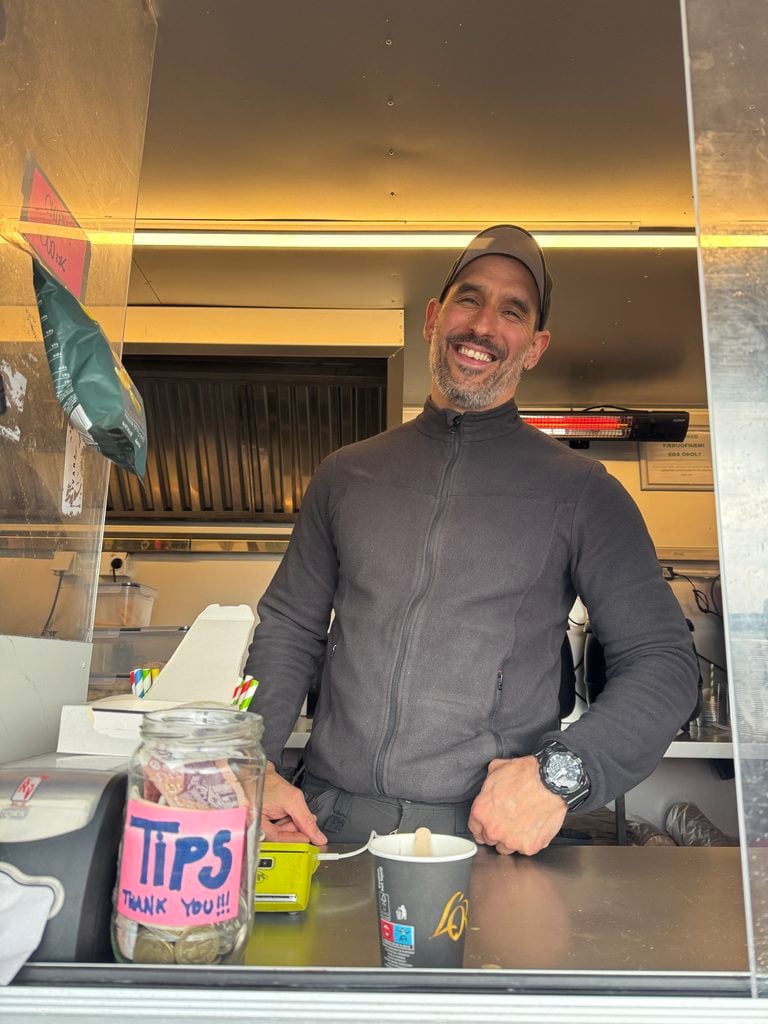
Nearby, a converted bus café called La Cucina provided exactly what we needed.
Hot coffee.
Warm food.
And a chance to thaw out before continuing our journey.
It quickly became one of our favourite roadside stops.
Dyrhólaey – Where Land Meets Ocean
Twenty kilometres off the Ring Road, a road climbs to the Dyrhólaey Peninsula.
It was a detour we never regretted.
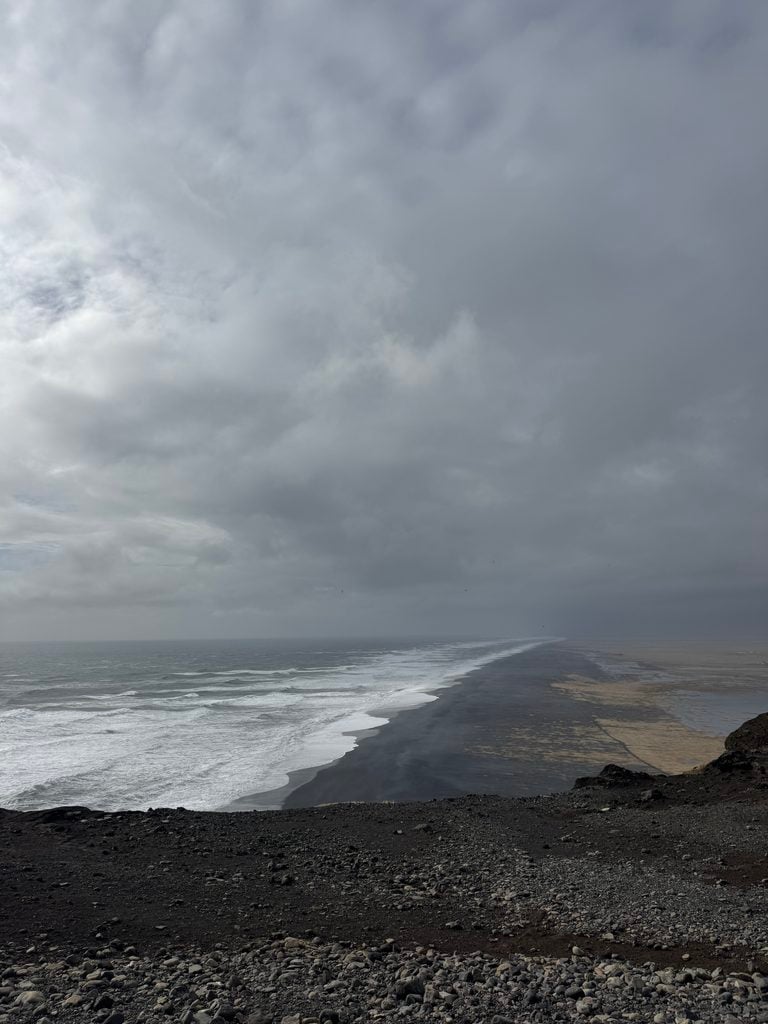
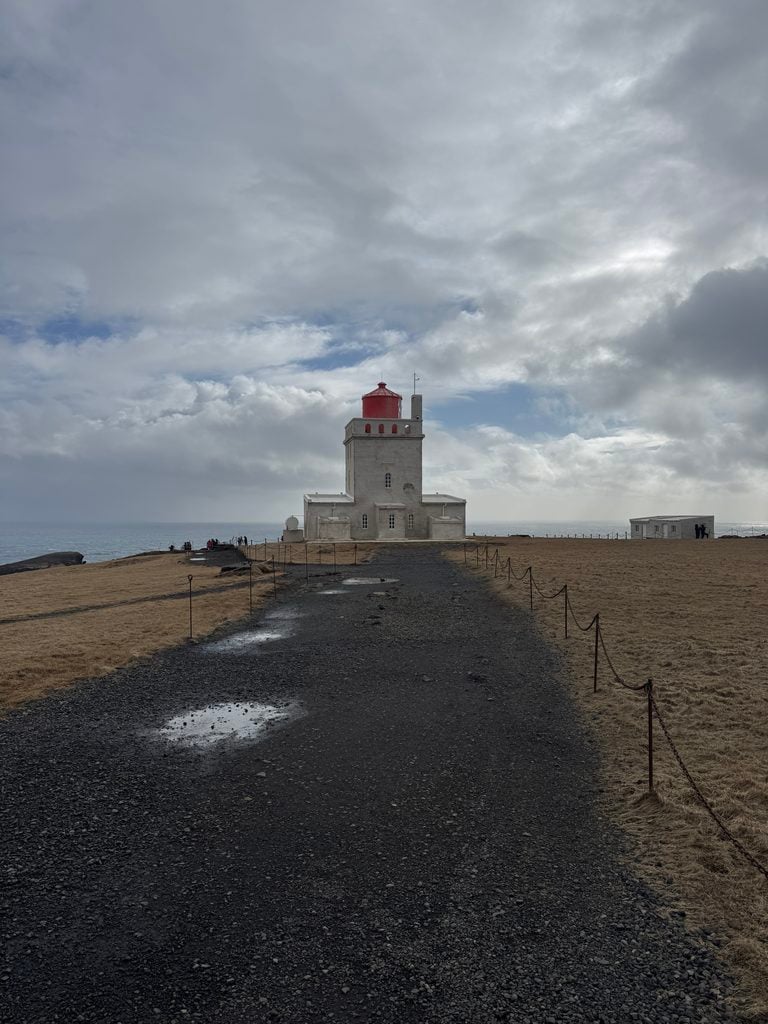
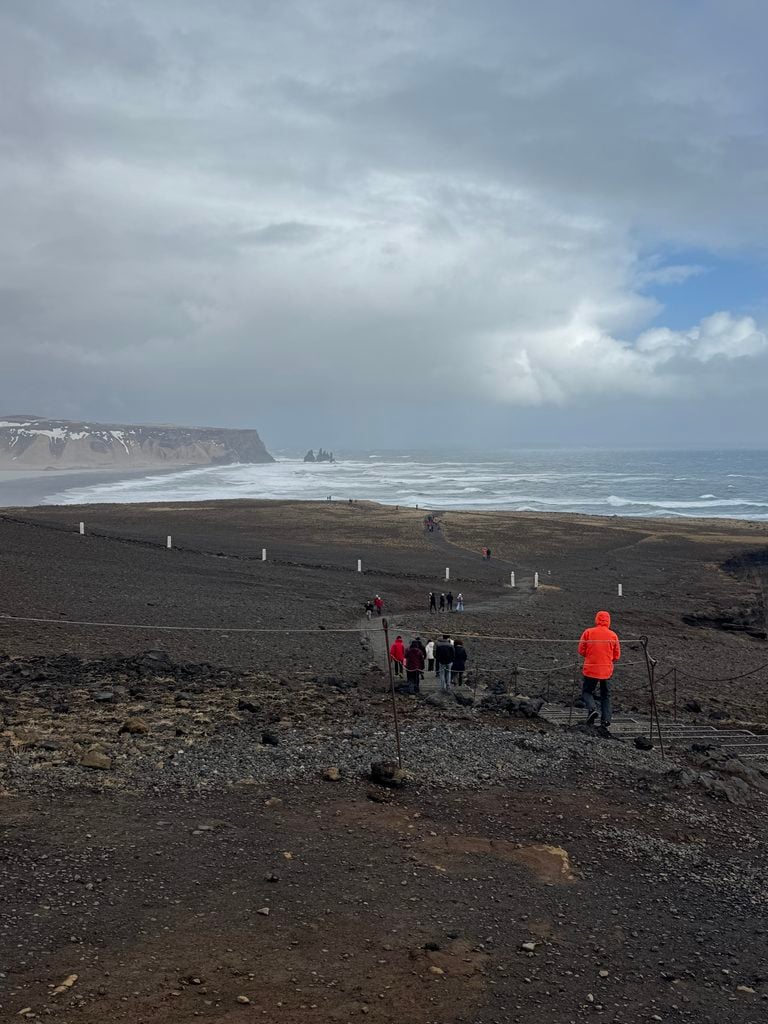
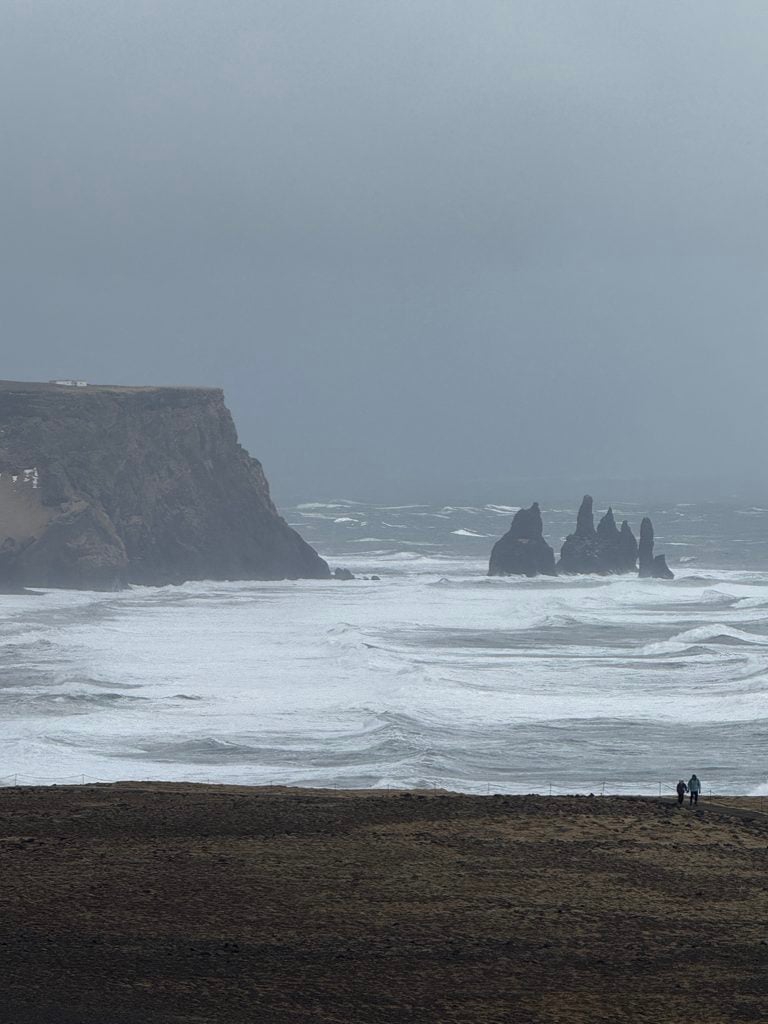
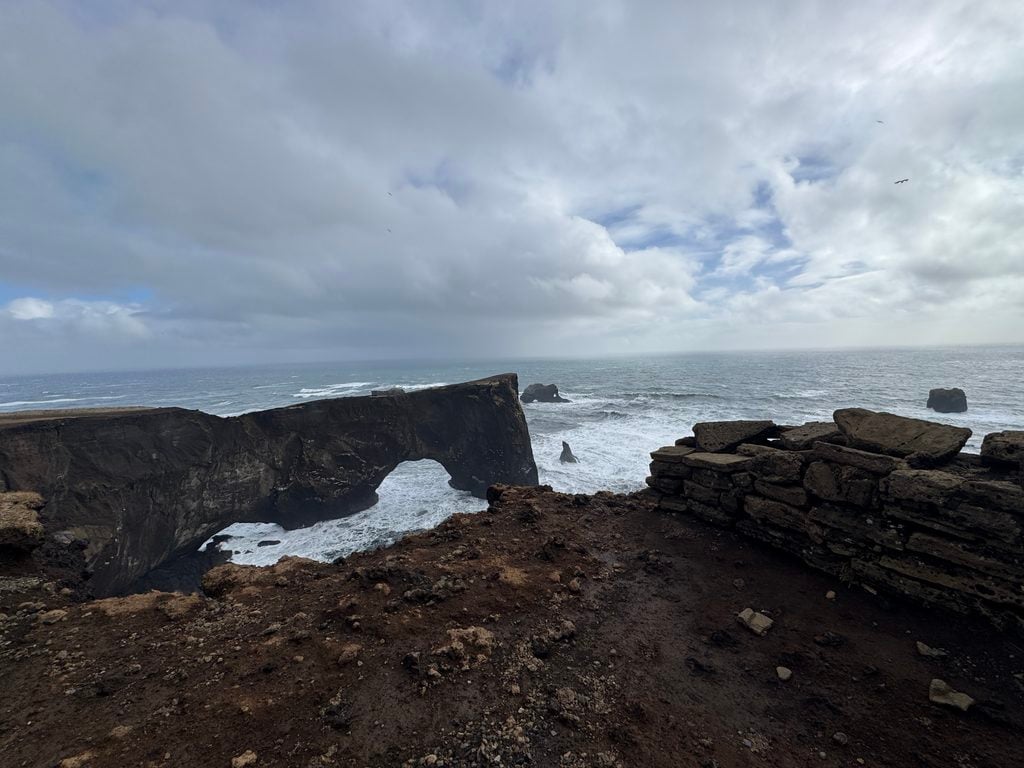
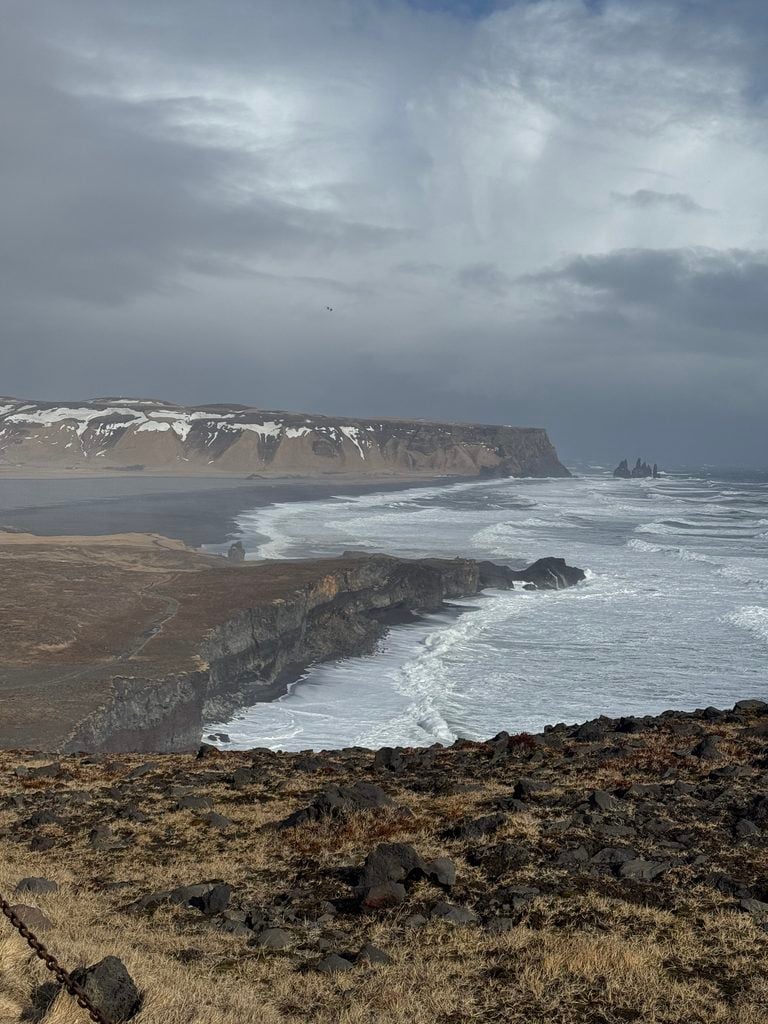
From the lighthouse perched on the cliffs, southern Iceland stretches away in both directions.
To one side, endless black beaches.
To the other, towering cliffs dropping into the Atlantic Ocean.
Far below, enormous waves pounded the shoreline.
The famous sea arch stood proudly offshore, carved by centuries of relentless Atlantic storms.
In summer this is one of Iceland’s best puffin-viewing locations, although our April visit came just before the nesting season.
Even without the birds, the views were extraordinary.
Sometimes the scenery is enough.
Reynisfjara – Beautiful… and Dangerous
Our final major stop before reaching Vík was perhaps Iceland’s most famous beach.
Reynisfjara is breathtaking.
Jet-black volcanic sand stretches endlessly beneath towering basalt cliffs while the Reynisdrangar sea stacks rise dramatically from the ocean just offshore.
It is also one of Iceland’s most dangerous tourist attractions.
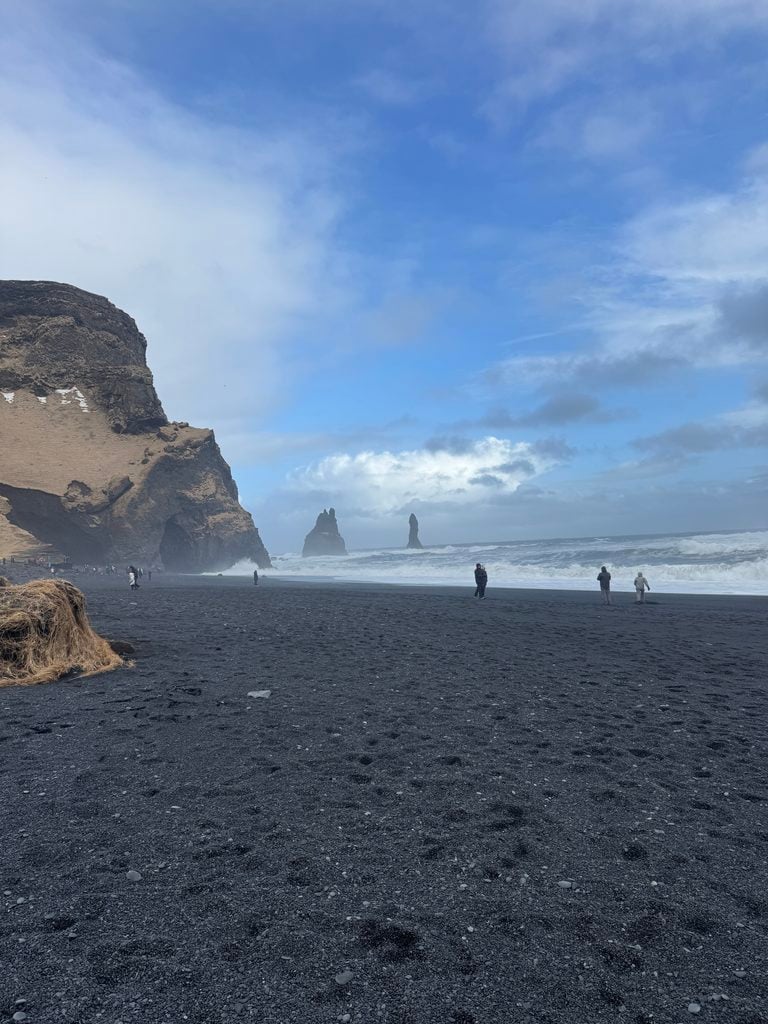
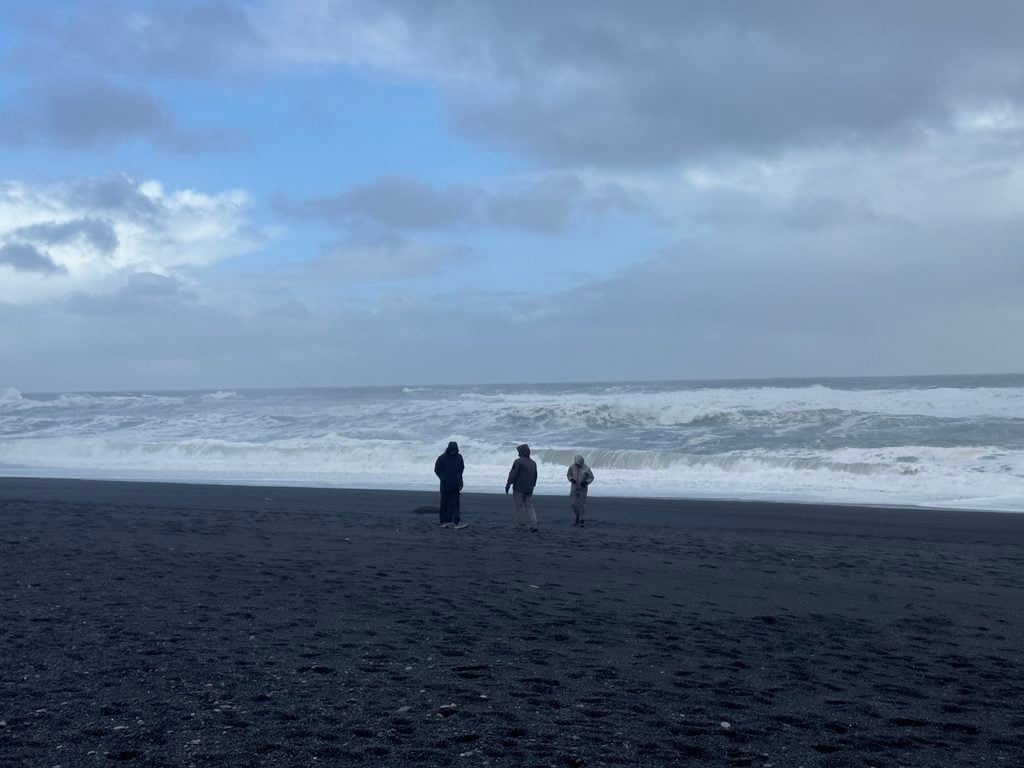
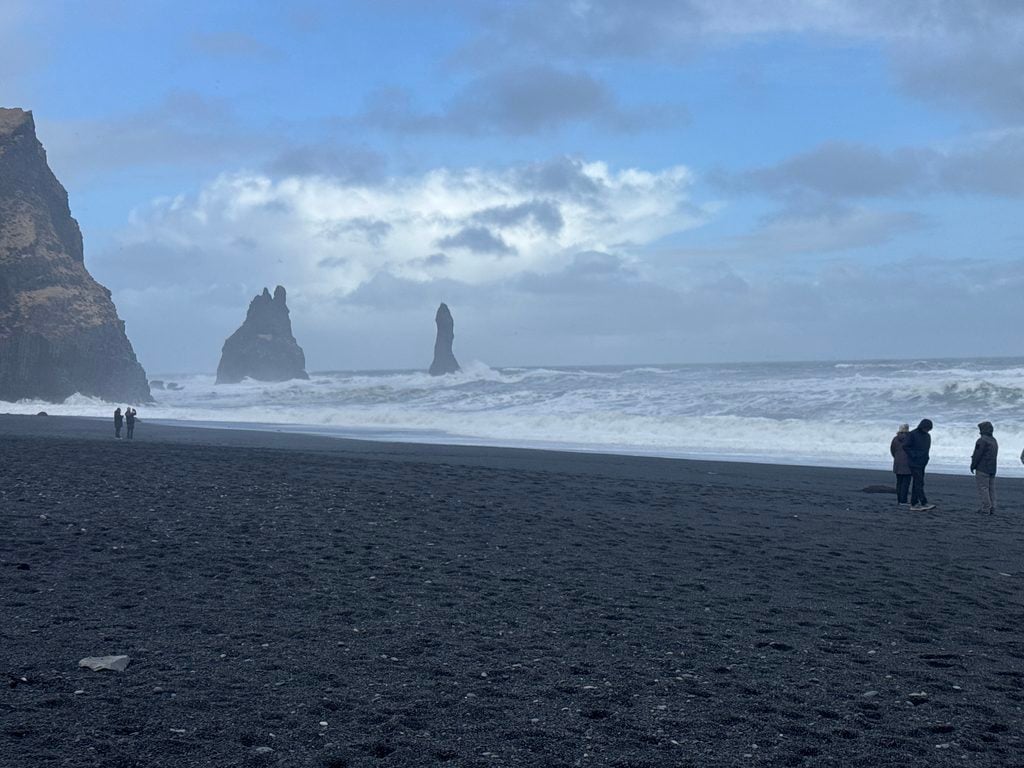
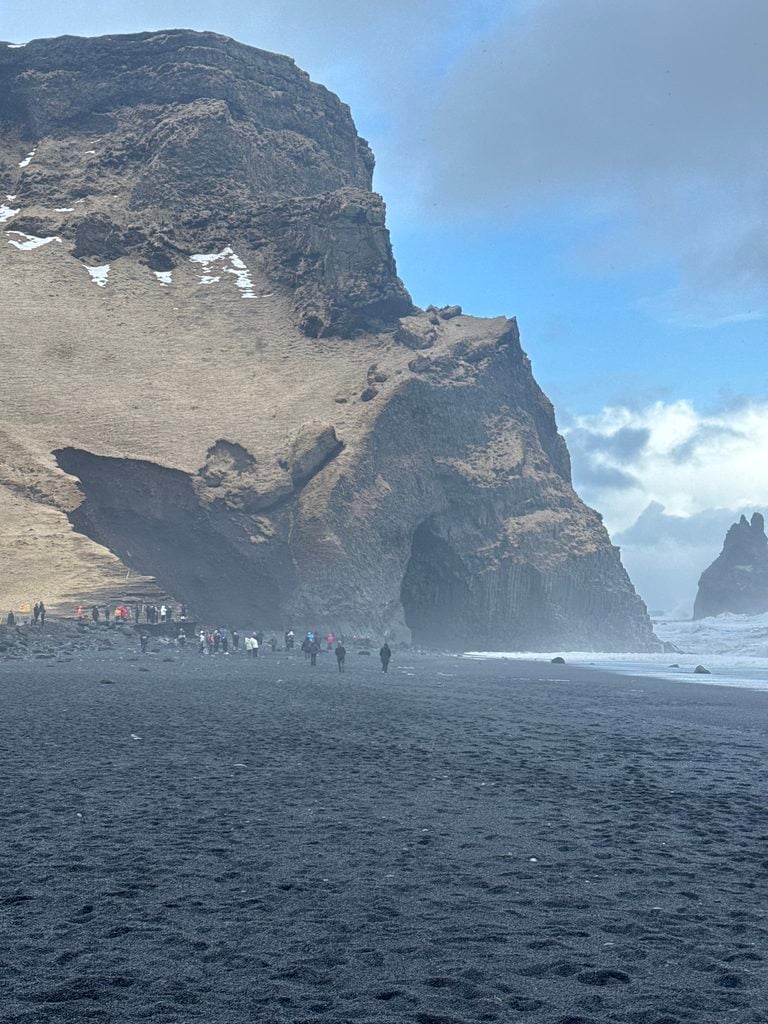
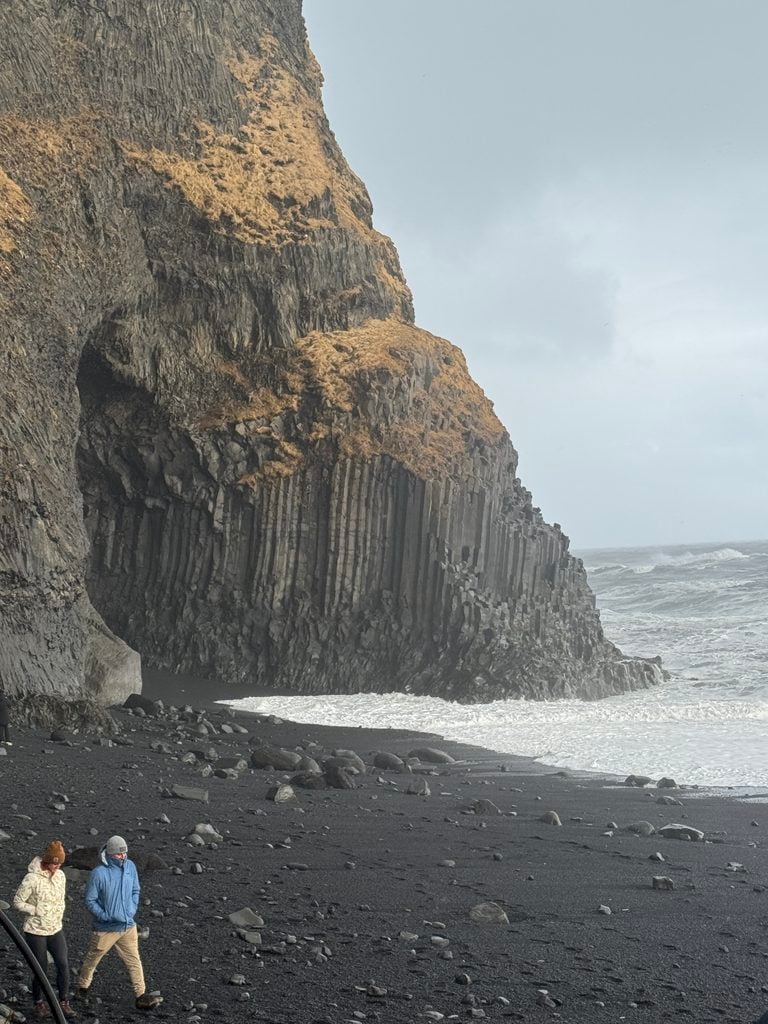
Large warning signs explain the danger posed by “sneaker waves”—powerful waves that arrive unexpectedly, rushing much further up the beach than previous waves before dragging anything in their path back towards the ocean.
Even after reading the warnings, we watched several tourists edge dangerously close to the water for photographs.
Others climbed around the basalt cave despite repeated announcements asking visitors to stay clear.
It was one of the few moments during our trip where we genuinely felt uneasy watching other people’s decisions.
No photograph is worth risking your life.
We admired the scenery from a safe distance.
The beach was magnificent.
It deserved respect.
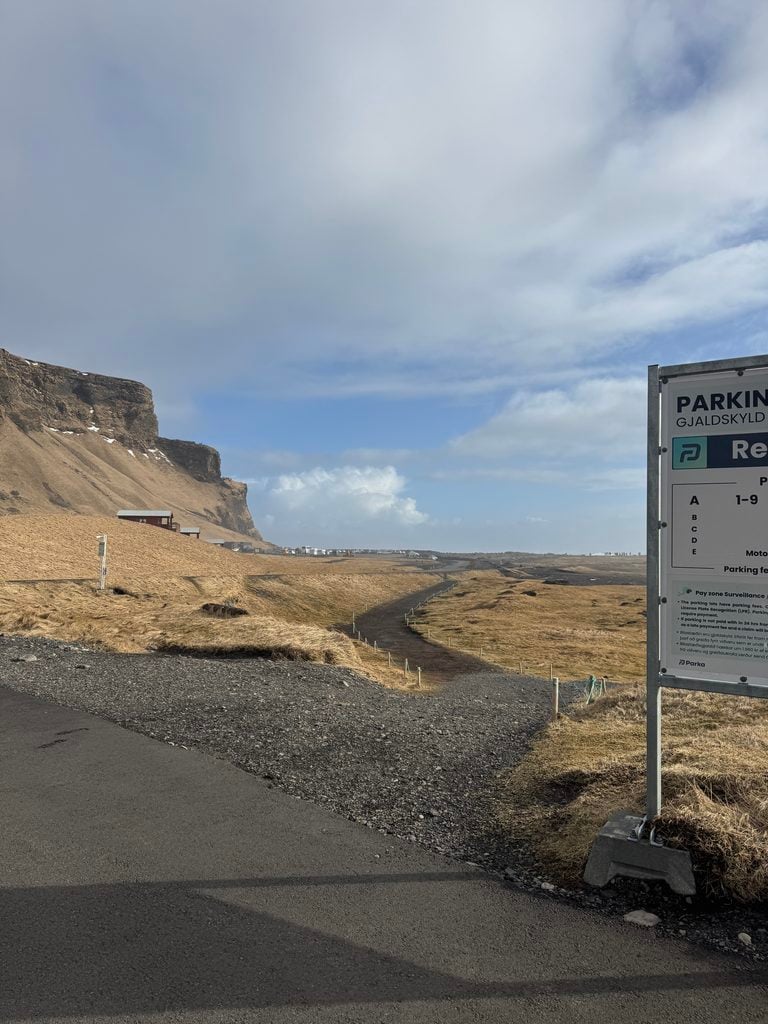
Good to know: When you arrive at the parking site, remember there are two. We parked in the one furthest away from the beach; suggest you try the one right near the beach first.
Arriving in Vík
By late afternoon we rolled into Vík, Iceland’s southernmost village.
Perched above the town stands the iconic red-roofed church.
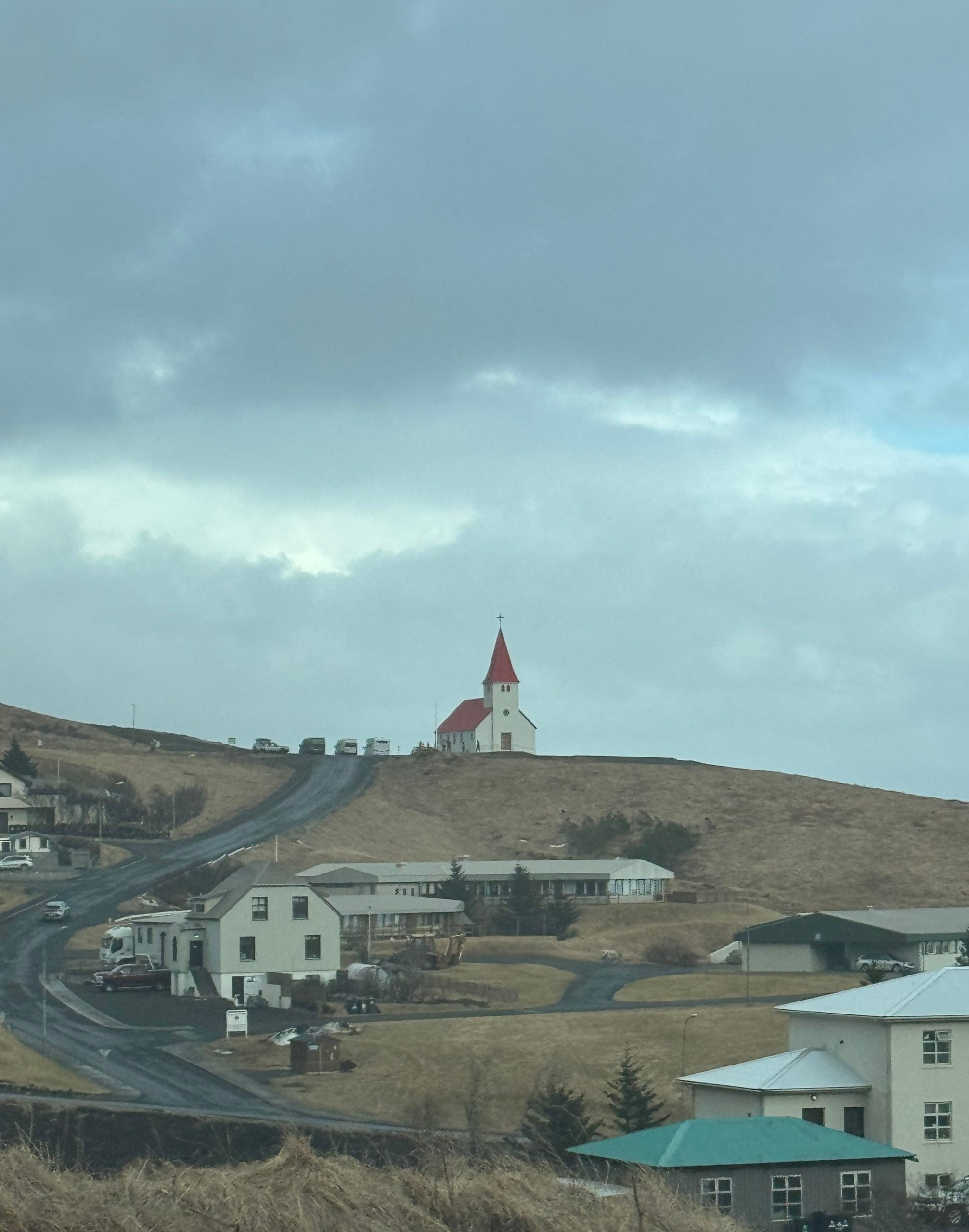
The short drive to the viewpoint rewards visitors with sweeping views across the village, black sand beaches and the Atlantic Ocean beyond.
After a day packed with waterfalls, glaciers and dramatic coastlines, it was the perfect place to pause and appreciate just how much we’d already experienced.
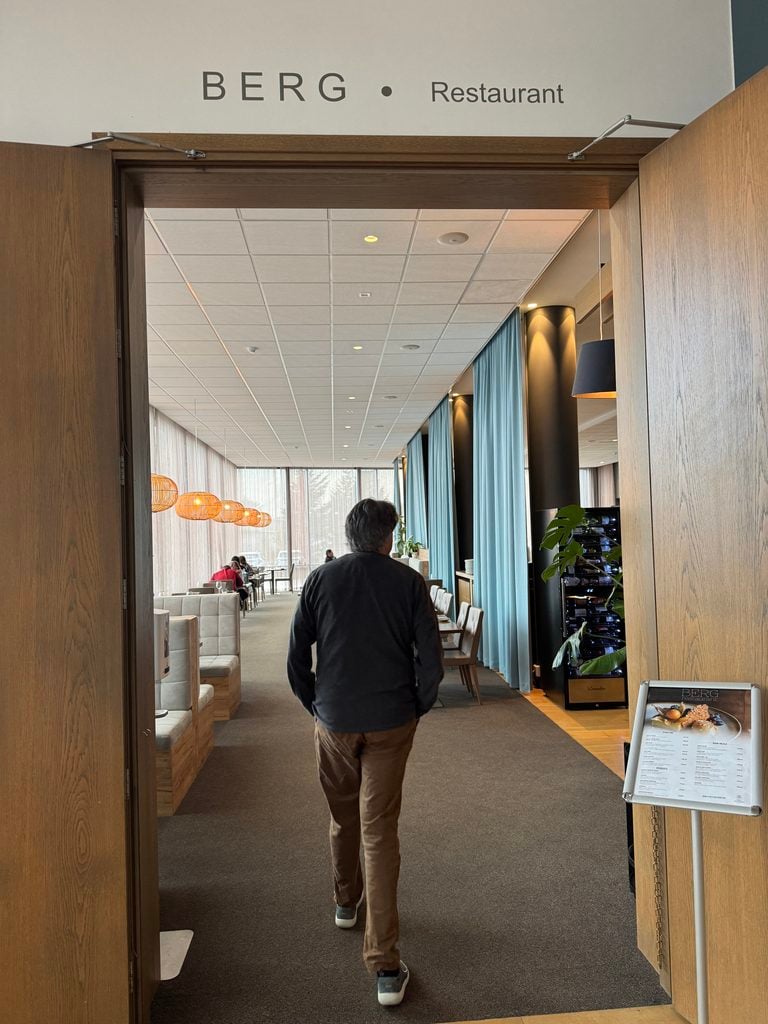
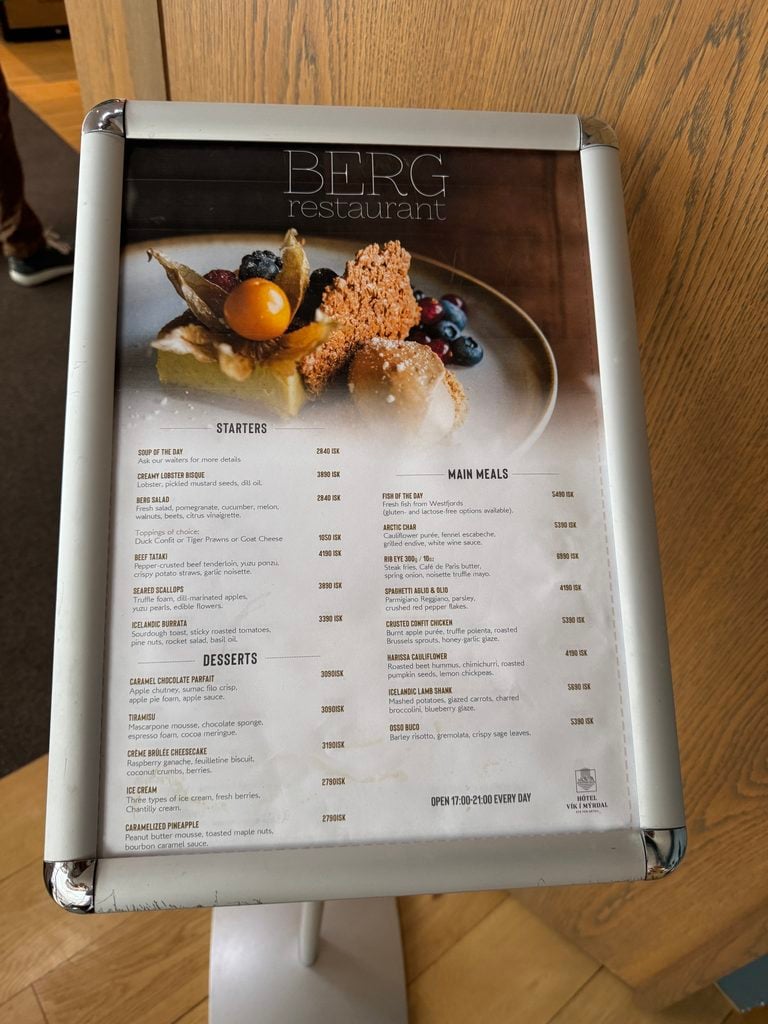
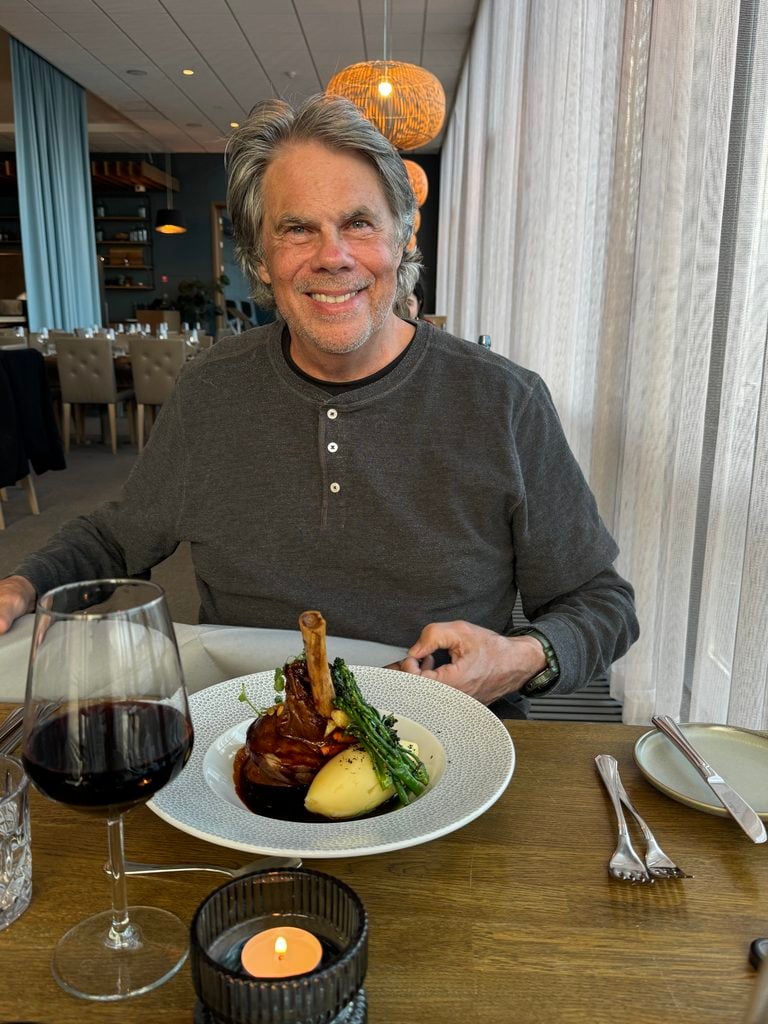
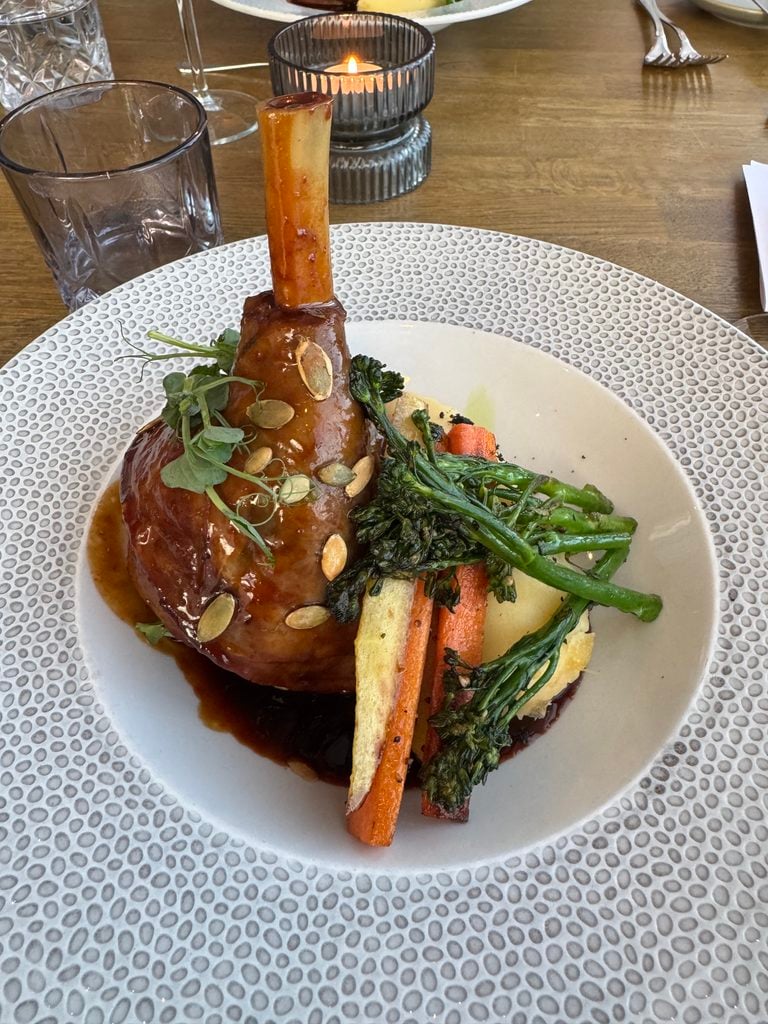
Dinner that evening at Berg Restaurant provided a fitting end to our first full day on the Ring Road.
As we reflected on the day, it became clear that Iceland wasn’t simply living up to expectations.
It was quietly exceeding them.
Highlights
Walking behind the cascading waters of Seljalandsfoss.
Discovering the hidden beauty of Gljúfrabúi.
Climbing above Skógafoss for spectacular panoramic views.
Finding peaceful Kvernufoss, one of the South Coast’s hidden gems.
Standing beside Sólheimajökull Glacier, where volcanic ash meets ancient ice. (Next time we come to Iceland we’ll book a guide and walk on the glacier.)
Looking across the Atlantic from Dyrhólaey Lighthouse.
Experiencing the dramatic beauty—and power—of Reynisfjara Black Sand Beach.
Watching the sun set over Vík after an unforgettable first day on the Ring Road.
Coming Next: Day 4 — Icebergs, Lava Fields and Iceland’s Wild Southeast
Today the scenery became even more dramatic. We ventured through ancient lava fields, stood on the edge of a canyon carved over millennia, watched blue icebergs drift silently across glacier lagoons, and finished the day beneath the jagged peaks of Vestrahorn—where Iceland’s legendary winds reminded us why locals treat the weather with such respect.
Disclaimer:
This blog post is based entirely on our own experiences during our trip to Iceland in April 2026. Everything we share reflects what we personally saw, did, learned and experienced during our holiday.
We have done our best to make sure the information is correct. However, things can change, including prices, road conditions, weather etc. If you are considering travelling to Iceland, we recommend you check current information with official Icelandic sources before making bookings. Any opinions, recommendations and suggestions shared on Monty&Me are our own.

vicki@montyandme.com.au
Vicki Montague is a freelance writer with a predilection for travel, European fashion, architecture that oozes history and charm, and objects that tell a story. She and her partner John are empty nesters - their three adult children have left the comforts of home to carve out their own paths in life. Vicki’s professional background is in marketing and public relations.

Leave a Reply